
Understanding Air-Gapped and Layered Security Architectures
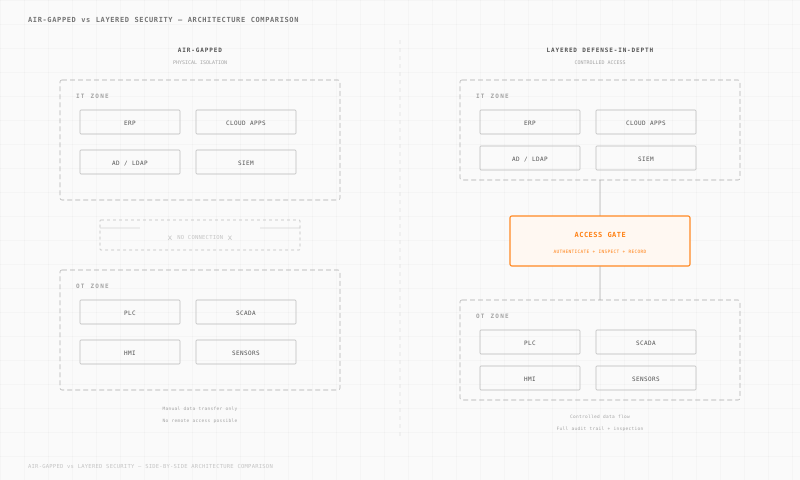
Should you physically isolate your OT network or defend it with multiple overlapping security layers? The answer depends on your operational constraints, compliance requirements, and threat model. Air-gapped architectures maximize isolation but limit data flow and operational flexibility. Layered architectures allow connectivity while deploying defense-in-depth. This post compares both approaches for protecting OT environments.
What is an Air-Gapped Architecture?
An air-gapped architecture refers to a network security measure where critical systems are physically isolated from unsecured networks, including the internet. This separation prevents digital data from entering or exiting the air-gapped environment without manual intervention, such as using removable media.
Advantages of Air-Gapped Systems
- Isolation from External Threats: By design, air-gapped systems are not directly accessible from external networks, significantly reducing the risk of remote cyber attacks.
- Controlled Data Transfer: Data can only be transferred in or out of the network through physical means, allowing for stringent control and monitoring.
- Enhanced Security for Sensitive Data: Government agencies and industries handling highly sensitive information often prefer air-gapped systems to secure critical data.
Limitations of Air-Gapped Systems
- Operational Inconvenience: The need for manual data transfer can lead to operational delays and increased workload on personnel.
- Potential Insider Threats: Security relies heavily on internal controls and practices, making it vulnerable to insider threats.
- Lag in Software Updates: Updating software and patches can be slow, leaving systems exposed to exploits discovered after the last update.
Layered Security Architecture: A Multi-Faceted Approach
Layered security, also known as defense-in-depth, involves multiple security controls placed throughout an IT system. This strategy encompasses a variety of measures at different layers of the network to protect against diverse threats.
Benefits of Layered Security
- Comprehensive Coverage: By deploying multiple layers of security, organizations can address a broader spectrum of threats, including both external and internal attacks.
- Resiliency Against Breaches: If one security layer is breached, others are in place to mitigate the attack, preventing full system compromise.
- Flexibility and Scalability: Layered security can be adjusted and expanded as organizational needs and threats evolve.
Challenges of Layered Security
- Complexity: Implementing a layered security architecture can be complex, requiring careful planning and integration of various technologies.
- Resource Intensive: Maintaining and managing multiple security solutions can be resource-intensive, demanding skilled personnel and financial investment.
- Overlap and Redundancy: Without careful coordination, security measures may overlap, leading to inefficiencies and unnecessary costs.
Comparing Air-Gapped and Layered Security in OT Architecture
Security Posture
- Air-Gapped: Primarily provides a strong defense against remote attacks by isolating critical systems. However, it may not effectively address insider threats or physical security breaches.
- Layered Security: Offers a more holistic approach, protecting against a wider range of threats through multiple, overlapping defenses.
Compliance Considerations
- NIST 800-171 and CMMC: Both frameworks emphasize the importance of protecting Controlled Unclassified Information (CUI) in non-federal systems. While air-gapped systems align well with these requirements by isolating data, layered security can provide more comprehensive compliance through continuous monitoring and auditing capabilities.
Operational Impact
- Air-Gapped: While providing high security, air-gapped systems can impede operational efficiency due to manual data handling processes.
- Layered Security: Facilitates smoother operations by enabling secure and automated data flows, though it may introduce complexity in managing diverse security tools.
Practical Advice for Choosing the Right Architecture
- Assess Your Threat Environment: Evaluate the specific threats your organization faces. High-risk environments may benefit from the isolation of air-gapped systems, while others may require the comprehensive protection of layered security.
- Consider Compliance Requirements: Align your architecture choice with regulatory obligations, ensuring that the selected solution supports necessary compliance measures.
- Balance Security and Operations: Weigh the security benefits against operational impacts to choose a solution that safeguards your network without hindering productivity.
- Plan for Scalability: Anticipate future growth and ensure that your chosen architecture can scale and adapt to evolving security challenges.
Conclusion
Both architectures have clear trade-offs. Air-gapped systems suit environments with strict data sovereignty requirements and minimal need for external connectivity. Layered architectures fit operations that need real-time data sharing with IT systems while maintaining defense-in-depth. Start by mapping your data flows and compliance requirements -- that will determine which architecture fits your OT environment.