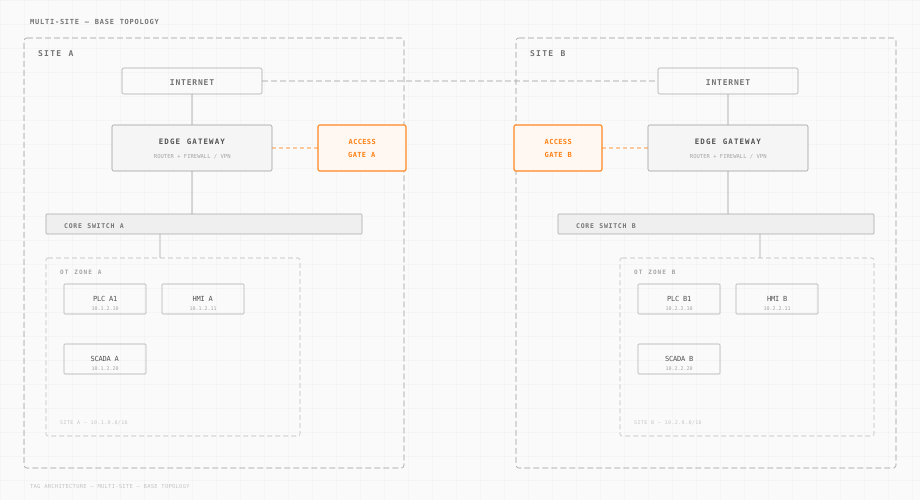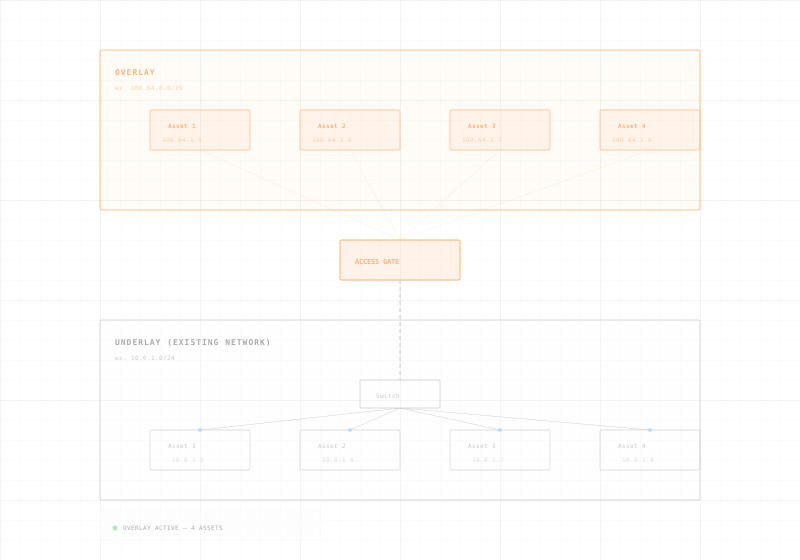
What is overlay networking? A secure layer on the network you already have.
IT teams often ask us how Access Gate's overlay networks really work. The answer is simpler than it sounds. It relies on two standard IP features: routing and bidirectional NAT.
Last updated:
What Is Overlay Networking?
Overlay Networking Explained
A visual walkthrough of how overlay networking works, why it matters for OT security, and how the Access Gate deploys it without touching your existing infrastructure.
Request a DemoTraditional industrial network.
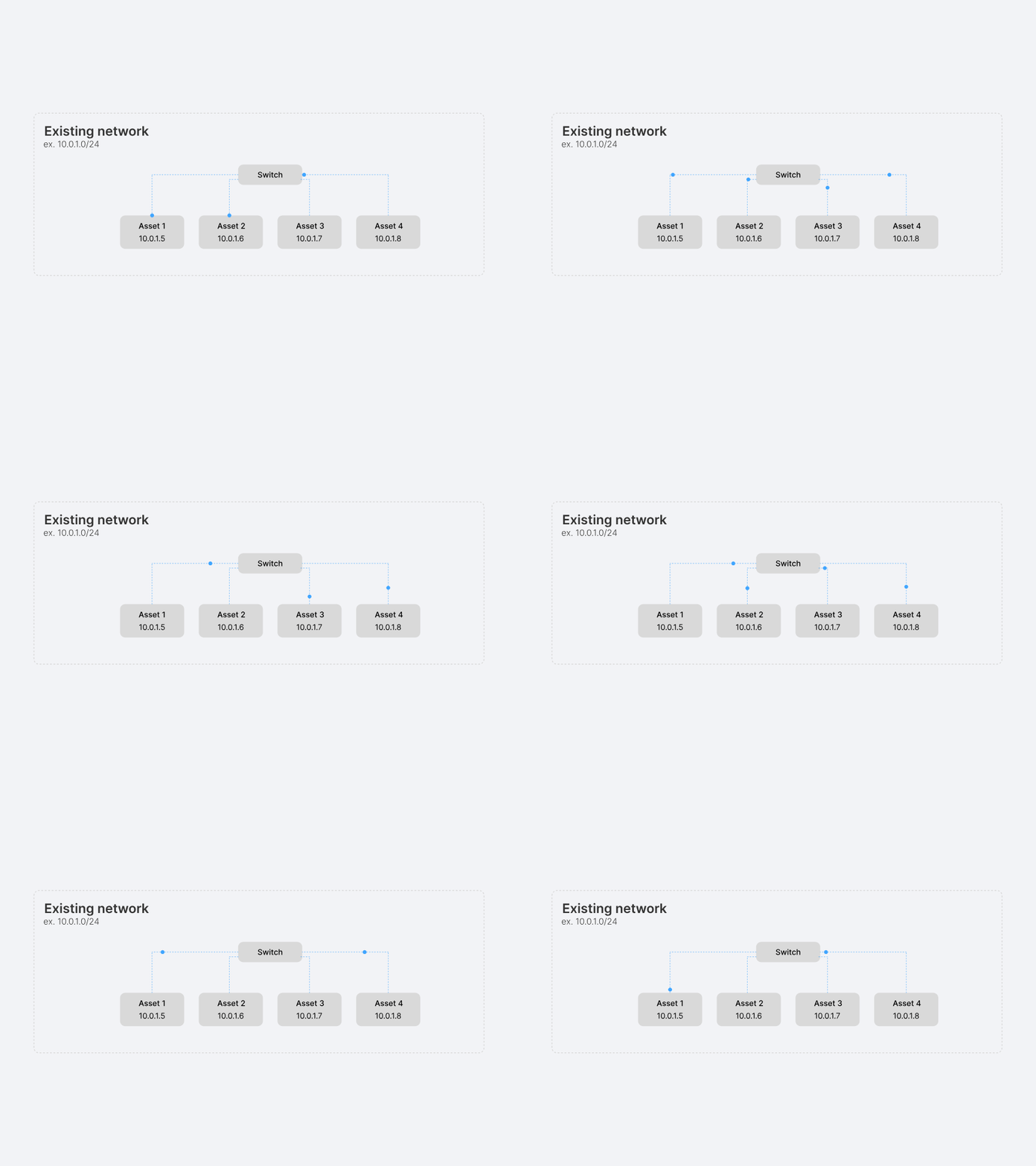
Most industrial networks prioritize uptime over security. They typically rely on flat Layer 2 or VLAN-based architectures with minimal segmentation.
Flat networks.
Devices from multiple zones share subnets, increasing lateral movement risk.
Static trust boundaries.
VLANs and firewalls define access but are error-prone and hard to scale.
Legacy protocols.
OT traffic (Modbus, DNP3, S7) runs unencrypted and unauthenticated.
No identity enforcement.
Access is granted by IP or MAC, with limited visibility or auditability.
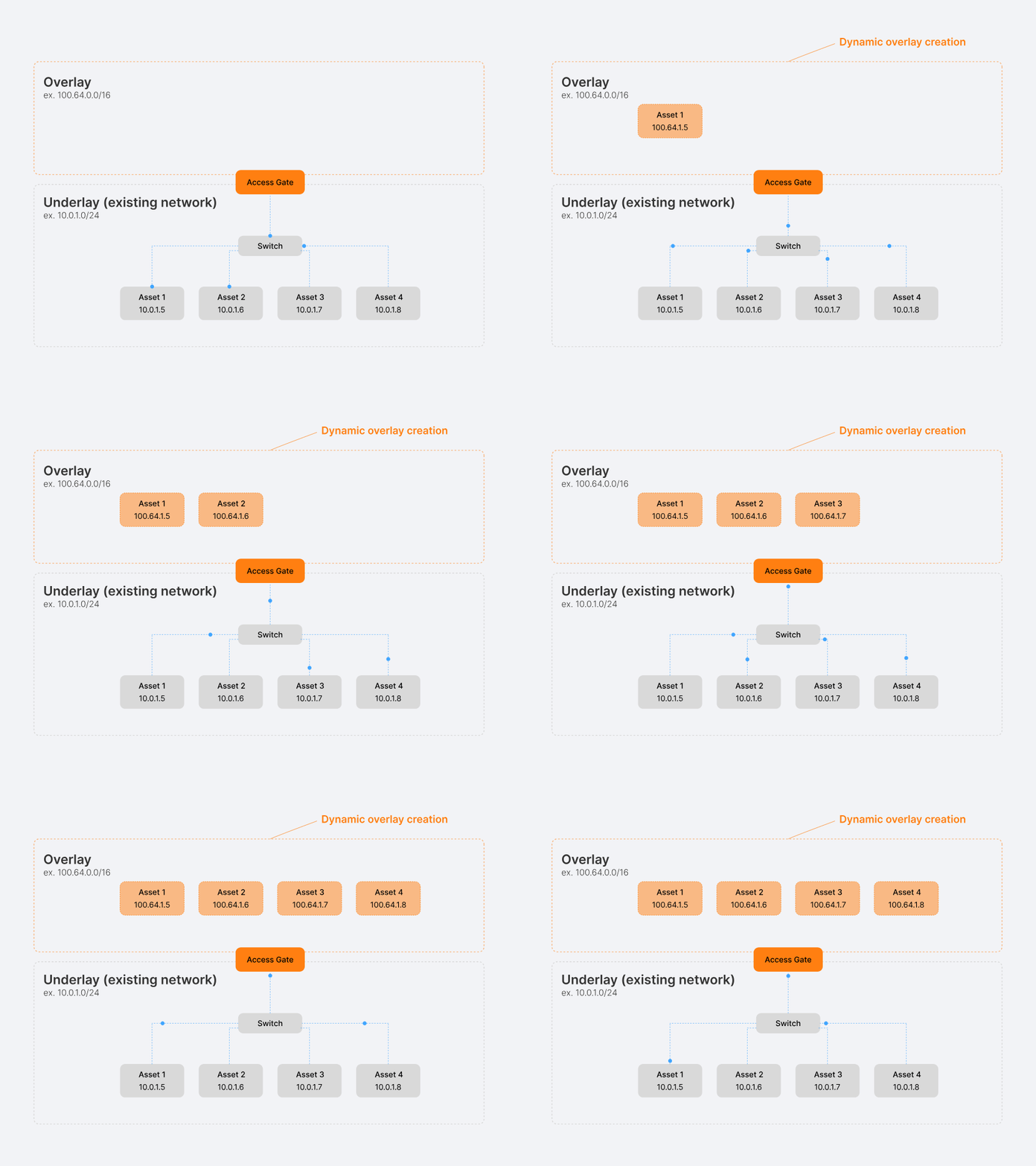
Deploy an Access Gate.
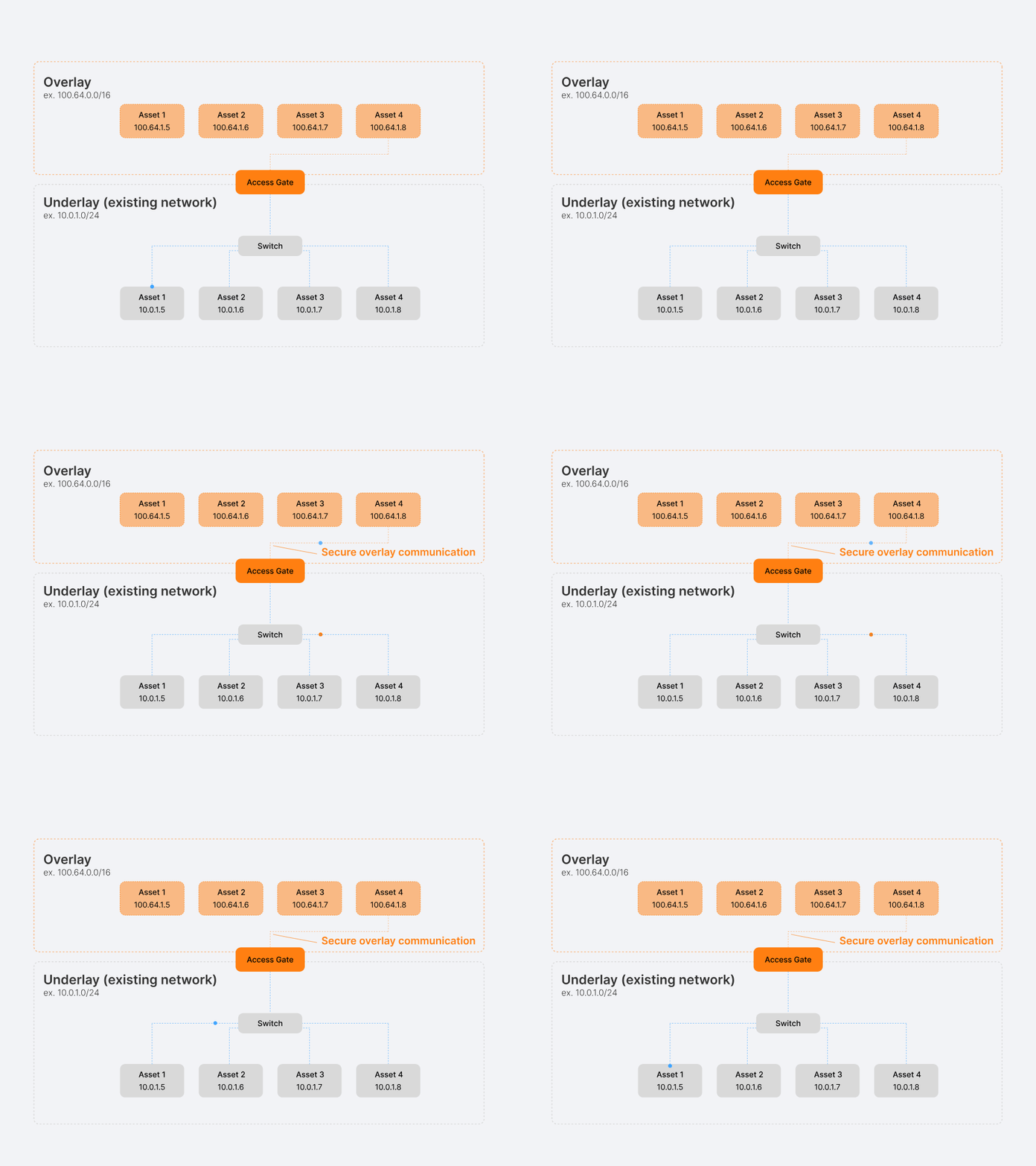
Access Gate gives every device an address in the overlay automatically. The existing underlay network is untouched. No VLAN redesign, no production downtime.
Dynamic overlay creation.
Builds a virtual network layer (e.g. 100.64.0.0/16) that scales independently of VLAN size limits or physical layout.
Access Gate mirrors the network.
Access Gate mirrors the physical network by building a secure virtual overlay, which is later used for routing traffic.
Nothing to install on machines.
DNS resolves overlay addresses automatically. There is no need to reconfigure assets or install agents.
Note: The overlay network uses the 100.64.0.0/16 address space, which falls within the CGNAT range. This ensures it won't interfere with public IP routing or internet access.
Secure overlay communications.
Communications start to be routed through Access Gate. It acts as a control point and enforces security and visibility without changing the physical infrastructure.
Security enforcement.
Traffic flows through Access Gate, where real-time authentication, access control, and logging are enforced.
Two-legged proxy communication.
When Access Gate parses the protocol, it terminates the session on both legs and enforces at the function-code level. For example, it allows a Modbus FC3 read on TCP 502 and denies an FC6 or FC16 write. It can allow OPC UA Read and Subscribe on 4840 and deny Write and Call.
Encrypted tunnel fallback.
If proxying isn't possible, the system defaults to end-to-middle encrypted tunnels, still providing stronger isolation than the underlying network.
Zero-downtime migration.
Assets can transition incrementally to the overlay, avoiding disruptions or changes to existing wiring or configurations.
Note: Using a dual DNS naming scheme simplifies migration: each device is accessible via both its original IP (e.g. 10.0.1.8.fabcore.tr-sec.net) and a human-readable alias (asset4.fabcore.tr-sec.net). This maintains backward compatibility while enabling clear, structured overlay addressing.
Lock down the underlay.
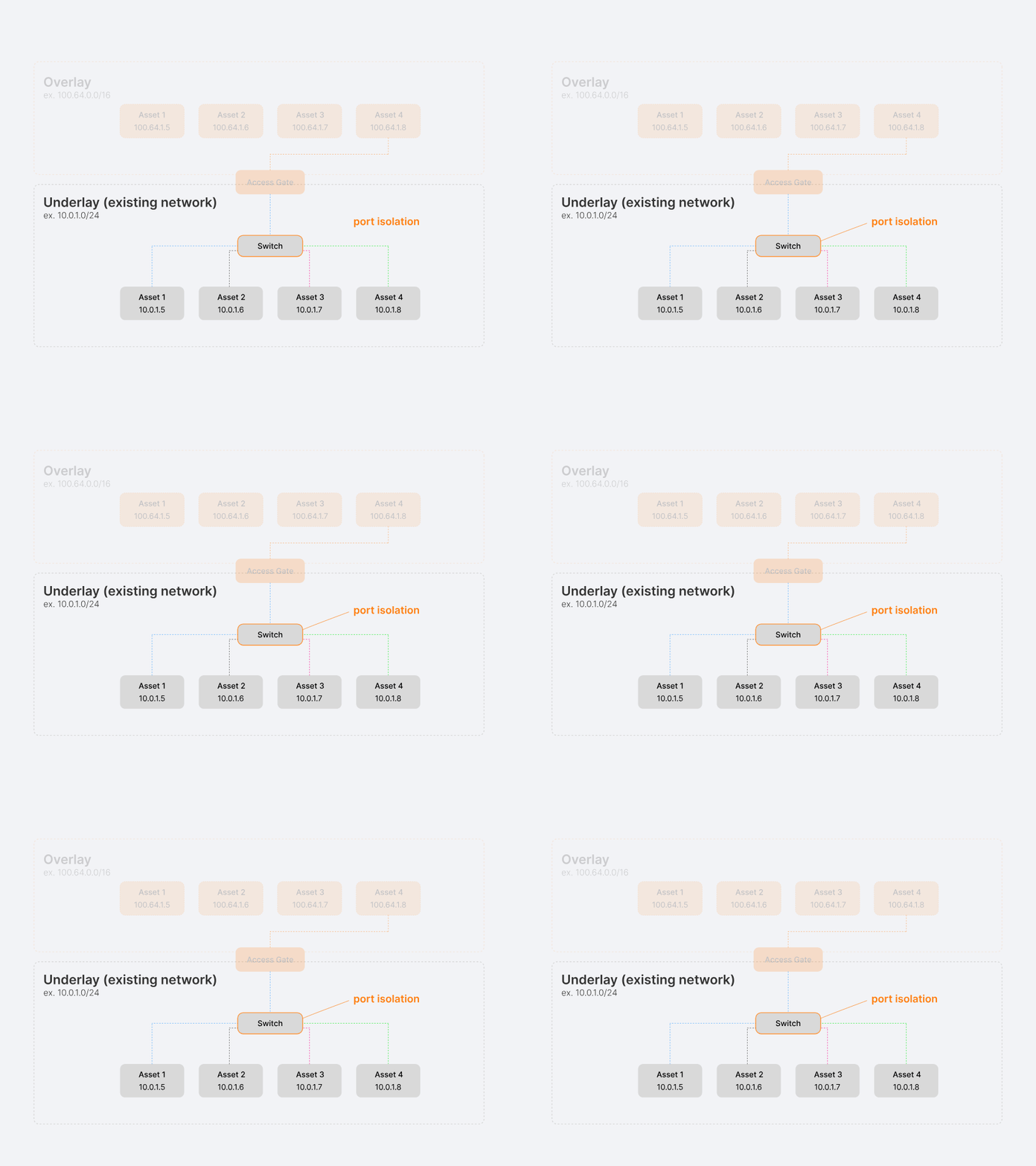
Once communications shift to the secure overlay, the physical network, the underlay, can be locked down. By applying port isolation and targeted firewall rules, it becomes a controlled layer that only allows authenticated overlay traffic.
Switch-level isolation.
Enable port isolation features to create physical barriers that prevent any direct device-to-device communication on the underlying network infrastructure.
Gateway-only traffic policies.
Deploy stateful firewall rules that exclusively permit traffic originating from Access Gate, effectively making it the single point of network entry and control.
Zero Trust architecture.
Establish a security model where routable access sessions must cross the monitored overlay. Unauthorized or unmonitored access paths disappear. Cyclic controller-to-I/O traffic stays on the underlay. Only routable supervisory, engineering and vendor sessions ride the overlay, so the real-time control loop keeps its determinism.
See overlay networking in action.
Deploy a secure overlay on your industrial network in a day. Nothing to install on machines, no rewiring, no downtime. Talk to our team.
How overlay networking goes beyond the Purdue model.
The Purdue model has long been the basis for building industrial networks with defense in depth. Beyond Purdue is a newer model that applies Zero Trust to industrial and critical environments.
More videos.
The Trout YouTube channel has more videos on Access Gate. See how overlay networking protects plants and supports compliance, without rewiring.
Access Gate adapts to your network
Pick your environment to see where the Access Gate sits, how much Zero-Trust coverage you get, and the migration path, from full coverage to partial coverage.
Common questions about overlay networking.
agents required. Access Gate builds the overlay at the network level and brokers the sessions that ride it. It connects to your existing network, and you steer through it only the flows you want protected.
An overlay network is a virtual network layer built on top of your existing physical infrastructure. A VPN creates point-to-point tunnels for remote access. An overlay creates a full network topology, with its own addressing, routing and segmentation, alongside the underlay. Access Gate manages this overlay dynamically, with no manual tunnel configuration.
No. The overlay is built on top of your existing infrastructure using standard IP routing and bidirectional NAT. No VLAN changes, no IP renumbering, no recabling. The underlay keeps working exactly as before. The overlay adds a secure layer without touching it.
No. The Access Gate operates at the network level. DNS automatically resolves overlay addresses so devices communicate through the overlay without any software changes. Legacy PLCs, HMIs, and SCADA systems work without modification.
Initially, both networks coexist. Assets transition incrementally to the overlay with zero downtime. Once migration is complete, the underlay can be locked down using port isolation and gateway-only firewall rules, so all traffic must traverse the monitored overlay.
The overlay uses the 100.64.0.0/16 range, which falls within the CGNAT (Carrier-Grade NAT) space. This ensures it won't collide with your existing private IP addresses or interfere with public internet routing.
Yes. Access Gate supports two-legged proxy communication for the protocols it understands. That enables protocol-aware inspection and access control. For protocols that cannot be proxied, it falls back to end-to-middle encrypted tunnels. These still give stronger isolation and encryption than the flat underlay.