A single network loop can flood an entire flat Layer 2 network with broadcast traffic, saturating bandwidth and taking down PLCs, HMIs, and SCADA hosts in seconds. That is a broadcast storm. Layer 3 segmentation stops it by breaking the network into routed subnets, each with its own broadcast domain. For the broader flat network vs segmented network trade-offs (security, compliance, operational cost), start with our companion guide. This post explains how broadcast storms happen, why Layer 2 spanning tree alone is not enough, and how to design Layer 3 boundaries that contain failures and keep production running.
Understanding Broadcast Storms
Broadcast storms occur when a network is overwhelmed by continuous broadcast traffic, typically due to a loop in the network. This phenomenon can quickly consume all available bandwidth, rendering the network unusable.
Causes of Broadcast Storms
- Network Loops: If there are multiple paths between two network devices, a loop can form, causing broadcast messages to circulate indefinitely.
- Misconfigured Network Devices: Incorrect configurations can result in devices sending excessive broadcast traffic.
- Faulty Network Interface Cards (NICs): A malfunctioning NIC can continuously send out broadcast packets.
Broadcast storms not only degrade network performance but also increase the load on network devices, potentially leading to hardware failures.
The Role of Layer 3 Segmentation
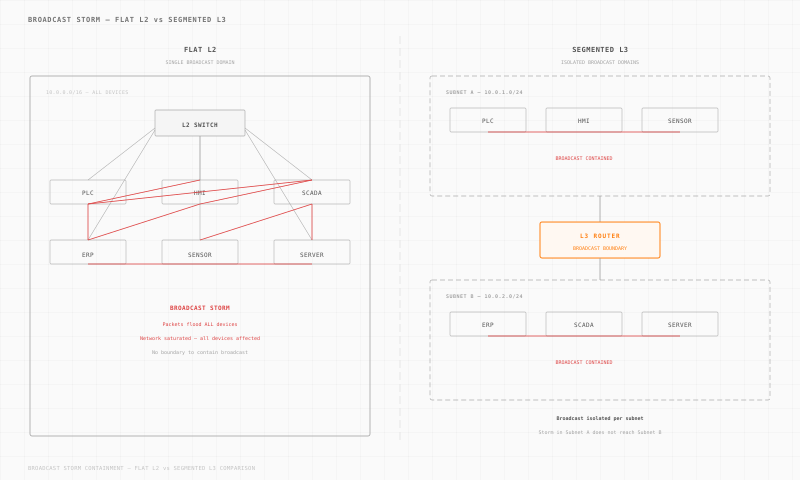
Layer 3 segmentation, implemented through IP routing, divides a network into smaller, manageable segments. This segmentation is crucial in controlling broadcast domains and preventing storms from spreading across the network.
Benefits of Layer 3 Segmentation
- Isolates Broadcast Traffic: By breaking down the network into subnets, broadcast traffic is contained within its subnet, preventing it from overwhelming the entire network.
- Improves Network Performance: Reduces unnecessary traffic, allowing for more efficient use of bandwidth.
- Enhances Security: Segmentation restricts access between different network segments, limiting the potential for lateral movement by a threat actor.
Implementing Layer 3 Segmentation
To effectively employ Layer 3 segmentation, follow these steps:
1. Network Assessment
Conduct a thorough assessment of your current network architecture. Identify all devices, connections, and potential points of failure. This assessment will help you understand the current traffic flow and where segmentation can be most beneficial.
2. Define Subnet Boundaries
Based on your assessment, define subnet boundaries. Each subnet should represent a logical grouping of devices that frequently communicate. Consider factors such as departmental needs, device functions, and security requirements.
3. Configure Routing
Implement routing between subnets using routers or Layer 3 switches. Ensure that each subnet has a unique IP address range and that routing is configured to allow necessary communication while blocking unwanted traffic.
4. Monitor and Adjust
Continuously monitor network performance to ensure that segmentation is effective. Be prepared to adjust subnet boundaries and routing rules as network demands change.
Compliance Considerations
When implementing Layer 3 segmentation, it's crucial to align with relevant standards and frameworks to ensure compliance and security.
NIST 800-171
NIST 800-171 emphasizes the importance of protecting Controlled Unclassified Information (CUI) in non-federal systems. Network segmentation can help achieve this by isolating sensitive data and restricting access.
CMMC
The Cybersecurity Maturity Model Certification (CMMC) requires defense contractors to implement security measures across their networks. Layer 3 segmentation aligns with several CMMC practices, particularly in access control and network monitoring.
NIS2
The NIS2 directive requires organizations to implement measures that enhance the security of network and information systems. Segmentation supports these requirements by reducing the risk of network disruptions and data breaches.
Practical Tips for Effective Segmentation
- Use VLANs: Virtual Local Area Networks (VLANs) can help create logical segmentations without requiring physical separation, enhancing flexibility.
- Implement Access Control Lists (ACLs): Use ACLs to define precise traffic rules between segments, enhancing security.
- Leverage Network Monitoring Tools: Tools like NetFlow and SNMP can provide visibility into traffic patterns and help detect anomalies indicative of broadcast storms.
Conclusion
If your OT network is still running as a single flat Layer 2 domain, a broadcast storm is not a question of "if" but "when." Identify your largest broadcast domain, split it into routed subnets at the next maintenance window, and test failover. That single change eliminates the most common cause of network-wide OT outages.