
Understanding Industrial Protocol Anomalies
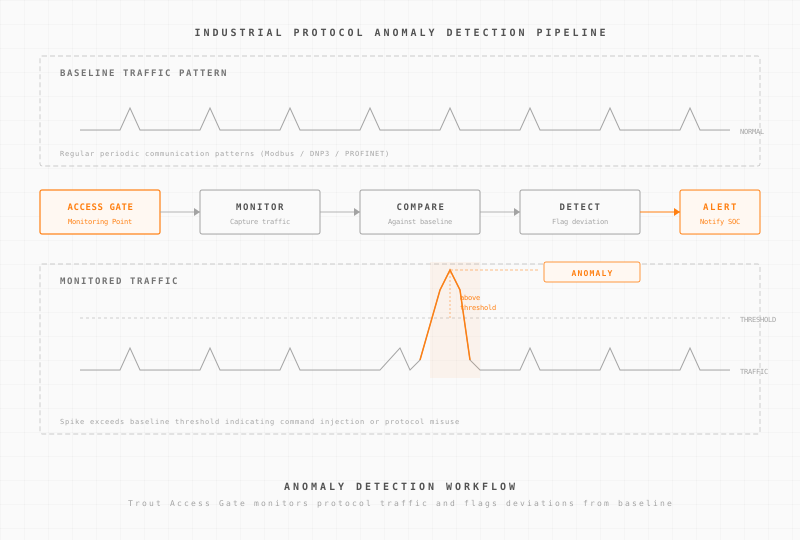
Industrial protocols like Modbus, DNP3, and PROFINET carry commands that directly control physical processes. An unauthorized write to a PLC register or an unexpected function code can mean compromised equipment, production defects, or safety incidents. Industrial protocol anomaly detection identifies these deviations from normal behavior, whether they come from an attacker, a misconfiguration, or a failing device, and flags them before they cause damage.
The Importance of Anomaly Detection in Industrial Protocols
Industrial protocols like Modbus, DNP3, and PROFINET are foundational to ICS and OT networks, facilitating communication between devices. These protocols were not originally designed with security in mind, making them vulnerable to attacks. Anomaly detection in these protocols helps to:
- Identify unauthorized access or malicious activities.
- Detect misconfigurations or errors that could lead to operational disruptions.
- Ensure compliance with standards like NIST 800-171 and CMMC by maintaining a secure environment.
Common Anomalies in Industrial Protocols
1. Command Injection
Command injection involves unauthorized commands being sent to devices, often through vulnerable protocol functions. Detecting anomalies such as unexpected or out-of-sequence commands can prevent potentially harmful operations.
2. Protocol Misuse
Misuse of protocol features, like function codes in Modbus, can signal an attempted breach. Anomaly detection systems should flag deviations from normal protocol usage patterns.
3. Traffic Volume Anomalies
Sudden spikes or drops in traffic volume can indicate a problem. For example, a Denial of Service (DoS) attack might flood the network, while a sudden drop could suggest a device is down or compromised.
Implementing Anomaly Detection: Best Practices
1. Establish a Baseline
Before anomalies can be detected, you need to understand what normal traffic looks like. This involves:
- Monitoring network traffic over time to identify typical patterns and behaviors.
- Using tools like deep packet inspection to analyze protocol-specific traffic.
2. Deploy Protocol-Specific Detection Tools
Utilizing tools designed for specific industrial protocols can enhance detection accuracy. These tools are capable of understanding the nuances of each protocol, leading to more precise anomaly identification.
3. Integrate with Existing Security Systems
Anomaly detection should be part of a broader security strategy, integrating with Intrusion Detection Systems (IDS) and Security Information and Event Management (SIEM) solutions for full protocol and traffic coverage.
Challenges in Anomaly Detection
1. Legacy Systems
Many industrial environments rely on legacy systems that lack modern security features. Implementing anomaly detection in such environments requires non-intrusive methods that do not disrupt operations.
2. False Positives
Anomaly detection systems can generate false positives, leading to alert fatigue. Fine-tuning detection algorithms to accurately differentiate between benign and malicious activities is essential.
Compliance Considerations
NIST 800-171
For organizations dealing with controlled unclassified information, adhering to NIST 800-171 is mandatory. Anomaly detection supports compliance by ensuring continuous monitoring and protection of data.
CMMC
Defense contractors must align with CMMC standards, which emphasize monitoring and auditing capabilities. Anomaly detection systems provide the necessary oversight to meet these requirements.
Conclusion: Strengthening Industrial Security
Industrial protocol anomaly detection closes the gap between protocol-level visibility and real-time threat response. Start by baselining your Modbus, DNP3, or PROFINET traffic, deploy protocol-aware detection at key network boundaries, and integrate alerts into your existing SIEM or incident workflow. Evaluate your current detection coverage against the specific protocols running on your network and close any gaps before they become incidents.