
Introduction: Bridging the Gap Between PLCs and the Cloud
Programmable Logic Controllers (PLCs) generate process data that is critical for analytics, predictive maintenance, and operational dashboards. Moving that data from the factory floor to the cloud means crossing a trust boundary between OT and IT. Get the pipeline wrong, and you either expose control networks to internet-facing threats or lose the data fidelity that makes cloud analytics useful. This article covers how to design a secure, reliable data pipeline from PLC systems to cloud platforms, with attention to network segmentation, protocol translation, and compliance with NIST 800-171, CMMC, and NIS2.
Understanding the Role of PLCs in Industrial Automation
PLCs are specialized computing devices used to control manufacturing processes. They are integral to achieving automation by receiving inputs from sensors, processing data, and sending control commands to actuators. Despite their critical role, integrating PLCs with modern IT systems, particularly cloud infrastructures, poses several challenges. These include network security, data integrity, and compliance with standards such as NIST 800-171, CMMC, and NIS2.
Challenges in Integrating PLCs with Cloud Systems
- Legacy Systems: Many PLCs are part of legacy systems with limited capability to interface with modern network protocols.
- Security Concerns: The shift from isolated systems to connected environments increases the risk of cyberattacks.
- Data Integrity: Ensuring accurate data transmission from PLCs to cloud systems is critical for reliable analytics.
- Compliance Requirements: Adhering to regulatory standards is essential for safeguarding sensitive information.
Building a Secure Data Pipeline
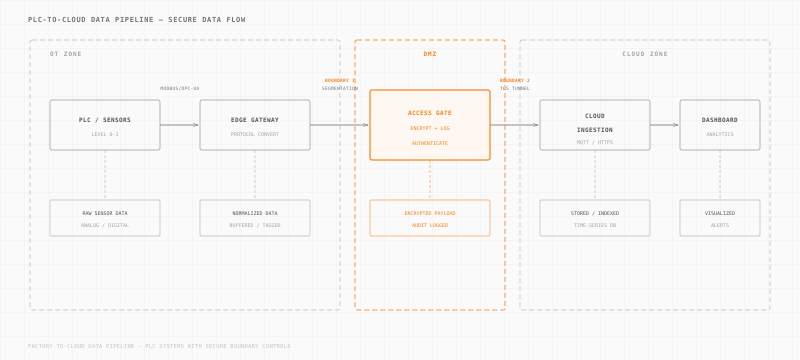
A secure data pipeline from PLCs to cloud systems requires addressing both the technology stack and the operational procedures around it.
Step 1: Network Segmentation
Implementing network segmentation is vital to protect PLCs from unauthorized access. By dividing the network into smaller, isolated segments, you reduce the risk of lateral movement by an attacker. This aligns with the NIST Cybersecurity Framework's principle of limiting data flow paths, thereby enhancing security.
Step 2: Secure Data Transmission
Utilize secure communication protocols, such as TLS and IPsec, to encrypt data transmitted between PLCs and cloud systems. This ensures data confidentiality and integrity, meeting CMMC Level 2 requirements for protecting Controlled Unclassified Information (CUI).
Step 3: Data Filtering and Validation
Incorporate data filtering mechanisms to validate and sanitize data before it reaches the cloud. This prevents malformed data from corrupting analytics systems and aligns with best practices in maintaining data integrity.
Step 4: Compliance Monitoring
Regular compliance audits are required to ensure ongoing adherence to standards like NIS2. Automated compliance tools can help monitor and report on the status of data pipelines, ensuring that security controls are effectively implemented.
Leveraging Cloud Services for Enhanced Analytics
Once data is securely transmitted to the cloud, leveraging cloud-native services can enhance data processing and analytics capabilities.
Real-Time Data Processing
Cloud platforms offer services for real-time data processing, enabling organizations to gain immediate insights into manufacturing processes. This facilitates proactive decision-making and operational improvements.
Advanced Analytics and Machine Learning
By harnessing machine learning algorithms, organizations can derive predictive insights and enhance process optimization. This is particularly beneficial for predictive maintenance and quality control.
Scalability and Flexibility
Cloud systems provide scalability and flexibility, allowing organizations to adjust resources based on demand. This ensures that data processing capabilities can grow with the organization's needs without significant capital investment.
Ensuring Ongoing Security and Compliance
Maintaining security and compliance is a continuous process, not a one-time project. Organizations must remain vigilant and proactive in managing their data pipelines.
Regular Security Assessments
Conduct regular security assessments to identify vulnerabilities and ensure that security controls remain effective. This includes penetration testing and vulnerability scanning.
Continuous Training and Awareness
Provide ongoing training for staff to ensure they are aware of the latest security best practices and compliance requirements. This helps maintain a culture of security within the organization.
Incident Response Planning
Develop and regularly update incident response plans to quickly address any security breaches. Having a well-defined plan reduces the impact of incidents and ensures a coordinated response.
Conclusion
Building a PLC-to-cloud data pipeline requires treating the OT/IT boundary as a security enforcement point, not just a network connection. Segment your PLC network from the DMZ and cloud zones, encrypt data in transit with TLS, validate and filter data before it leaves the OT perimeter, and monitor the pipeline continuously for anomalies. Design the pipeline so that data flows out of the OT zone but no commands or sessions flow back in from the cloud.
Full NIS2 on-premise compliance guide → /solutions/nis2-compliance