Introduction
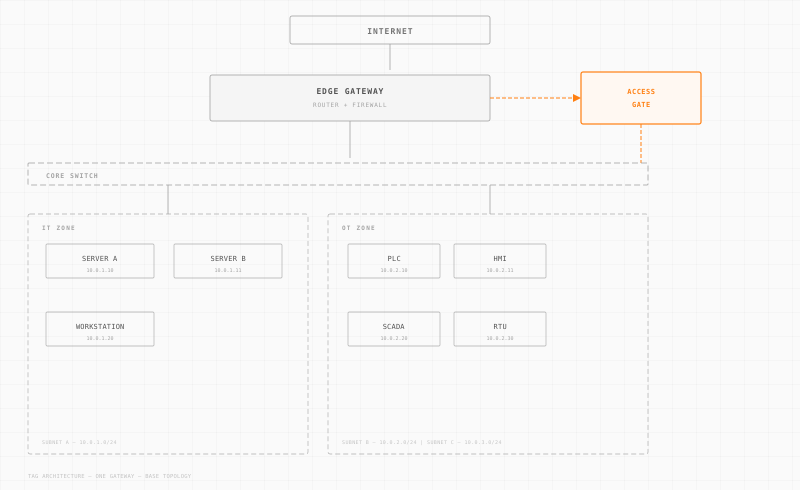
VLANs segment ICS networks into isolated broadcast domains. Each VLAN contains traffic to its own group of devices, which limits lateral movement and reduces the blast radius of a breach. For OT environments running Modbus, EtherNet/IP, or PROFINET, proper VLAN design is one of the most effective first steps toward network segmentation and compliance with NIST 800-171, CMMC, and NIS2. This post covers how to design VLANs for ICS security, from device grouping and traffic flow analysis to inter-VLAN routing and access control.
Understanding VLANs in ICS
What are VLANs?
VLANs are a method of creating distinct broadcast domains within a network. They allow for the segmentation of network traffic, irrespective of the physical topology. This means you can have devices on the same VLAN, even if they're located in different physical locations, as long as they're part of the same network infrastructure.
Importance of VLANs in ICS Security
In the context of ICS, VLANs serve multiple security functions:
- Traffic Segmentation: By isolating different types of traffic, VLANs help in mitigating the risk of unauthorized access and potential breaches.
- Minimized Attack Surface: By segmenting the network, VLANs reduce the number of devices exposed to potential threats.
- Improved Traffic Management: VLANs enable more efficient traffic management, reducing congestion and improving overall network performance.
Key Considerations for VLAN Design in ICS
Assessing Network Requirements
Before designing your VLAN architecture, conduct a thorough assessment of your network's requirements. Consider the following:
- Device Inventory: Identify all devices within your ICS network and categorize them based on their function and security needs.
- Traffic Flow Analysis: Understand the typical traffic patterns and data flow within your network to ensure efficient segmentation.
- Compliance Requirements: Align your VLAN design with compliance frameworks such as NIST 800-171, CMMC, and NIS2 which emphasize network segmentation as a core security principle.
Defining VLAN Structure
When defining the VLAN structure, consider the following best practices:
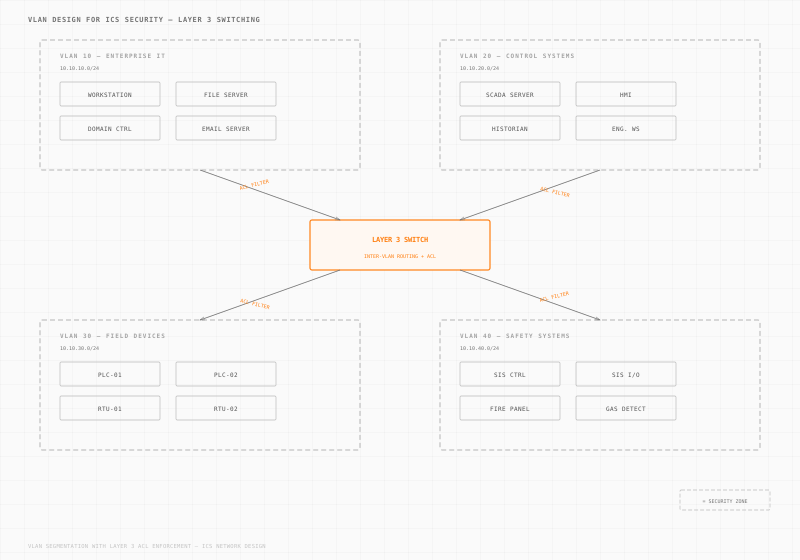
- Functional Segmentation: Group devices based on their function, such as separating control systems from office networks.
- Security Zones: Establish VLANs that align with security zones, such as separating operational technology (OT) from information technology (IT).
- Access Control: Implement VLANs to enforce access control policies, ensuring that only authorized devices can communicate with each other.
VLAN Configuration Best Practices
To maximize the security benefits of VLANs, adhere to these configuration best practices:
- Consistent Naming Conventions: Use clear and descriptive names for VLANs to avoid confusion and facilitate management.
- Proper IP Addressing: Assign IP addresses strategically to align with VLANs, making network management and troubleshooting easier.
- Monitor and Adjust: Regularly monitor VLAN performance and adjust configurations as needed to respond to changes in the network environment.
Implementing VLANs for Enhanced ICS Security
Step-by-Step VLAN Implementation
- Plan and Design: Begin with a detailed plan and design phase, mapping out VLANs based on your network assessment.
- Configure Network Devices: Set up switches and routers to support VLANs, ensuring compatibility and proper configuration.
- Test and Validate: Before full deployment, test VLAN configurations in a controlled environment to validate functionality and security.
- Deploy Across Network: Roll out VLAN configurations across the network, starting with less critical areas to minimize risk.
- Ongoing Management: Continuously monitor and manage VLANs, adjusting as necessary to maintain optimal security posture.
VLAN Limitations in ICS Environments
VLANs are a solid starting point for segmentation, but they come with real operational limits in OT networks:
- Limited visibility: VLANs isolate broadcast domains but provide no built-in inspection or logging of traffic within a VLAN. You know which VLAN a device belongs to, but not what it is doing inside that VLAN.
- No granular ACLs within the LAN: Access control lists operate at the inter-VLAN routing layer (Layer 3), not within the VLAN itself. Two devices on the same VLAN can communicate freely with no policy enforcement between them.
- Inter-VLAN routing complexity: As the number of VLANs grows, inter-VLAN ACLs multiply fast. Each new VLAN pair requires explicit rules. At 10+ VLANs, the ACL matrix becomes difficult to maintain and audit.
- Subnet/VLAN coupling: In most deployments, each VLAN maps to a single IP subnet. Redesigning VLAN boundaries means re-addressing devices, updating firewall rules, and reconfiguring routing. For OT devices with hardcoded IPs or devices that cannot tolerate downtime, this makes VLAN restructuring costly and risky.
- No session-level control: VLANs segment at the network level but cannot enforce per-session authentication, time-limited access, or session recording. A device with network access to a VLAN has persistent, unmonitored access to every other device in that VLAN.
Where VLANs stop, zero trust segmentation starts. VLANs define boundaries. Access gates enforce policy within and between those boundaries: per-session authentication, protocol inspection, and full session recording, without re-addressing your network.
Integrating VLANs with Zero Trust Architecture
VLANs and zero trust are complementary. VLANs provide the Layer 2 broadcast isolation. Zero trust adds identity verification, session control, and inspection at every connection point.
- Keep existing VLANs: No need to redesign your VLAN/subnet layout. Place access gates at inter-VLAN routing points to add authentication and logging.
- Add intra-VLAN enforcement: For high-risk VLANs (e.g., safety controllers, critical PLCs), deploy access gates within the VLAN to enforce per-device policies without changing IP addresses.
- Session recording: Every connection through an access gate is authenticated, inspected, and recorded. This fills the visibility gap that VLANs alone cannot address.
Conclusion
VLANs are foundational to ICS network segmentation. They isolate broadcast domains, reduce attack surface, and support compliance with NIST 800-171 and CMMC. But VLANs alone do not provide visibility, granular access control, or session-level enforcement.
For OT environments that need more than broadcast isolation, layer zero trust segmentation on top of your existing VLAN design. Trout Access Gates deploy at VLAN boundaries and within VLANs to enforce per-session policies, inspect traffic, and record every connection. No re-addressing, no agents, no downtime.
Full NIS2 on-premise compliance guide → /solutions/nis2-compliance