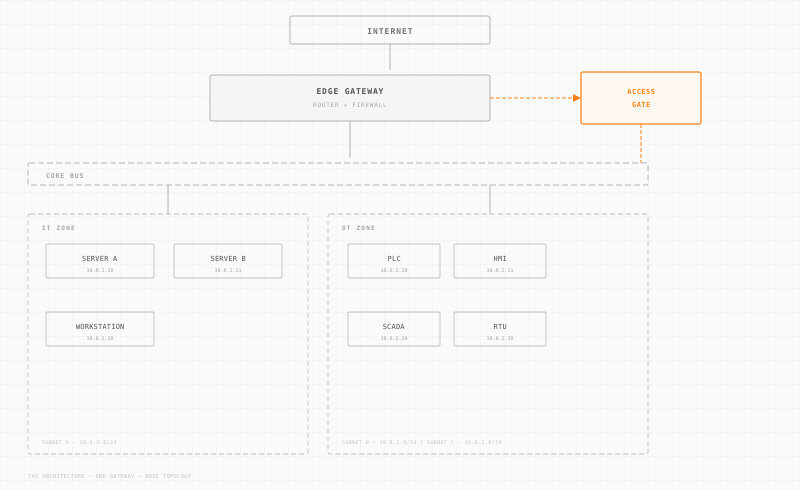
The integration of operational technology (OT) and information technology (IT) networks in manufacturing is no longer a luxury but a necessity. However, this convergence brings with it significant cybersecurity challenges. Microsegmentation addresses these challenges by providing granular control over network traffic -- isolating individual workloads and devices rather than relying on broad network boundaries. This technical guide will explore how microsegmentation can be effectively implemented in manufacturing networks, bolstering OT security and ensuring compliance with industry standards such as NIST 800-171, CMMC, and NIS2.
Understanding Microsegmentation
What is Microsegmentation?
Microsegmentation is a security technique that divides a network into smaller, isolated segments or zones. Unlike traditional network segmentation, which often separates networks into broad categories, microsegmentation allows for granular control of traffic between individual workloads or devices. This approach enhances security by ensuring that even if one segment is compromised, the breach does not spread laterally across the network.
Importance in Manufacturing Networks
In manufacturing environments, where OT security is critical, microsegmentation mitigates risks by isolating critical assets and processes. This is crucial for protecting proprietary manufacturing processes, sensitive data, and ensuring the integrity of production lines.
Implementing Microsegmentation in Manufacturing
Steps to Implement Microsegmentation
-
Asset Inventory and Classification:
- Begin by conducting a comprehensive inventory of all network-connected assets including PLCs, HMIs, and IoT devices. Classify these assets based on their functions and risk levels.
-
Define Security Policies:
- Establish clear security policies that dictate how and when different segments can communicate. Use the principle of least privilege to minimize unnecessary access.
-
Segment the Network:
- Utilize VLANs, firewalls, and access control lists (ACLs) to create isolated segments. Each segment should be tailored to the specific security requirements of the devices and applications it contains.
-
Implement Traffic Monitoring:
- Deploy network traffic analysis tools to monitor communications across segments. This ensures compliance with security policies and helps detect anomalous behavior.
-
Regular Audits and Updates:
- Conduct regular security audits to ensure that the segmentation strategy remains effective. Update policies and configurations as necessary to adapt to new threats and operational changes.
Tools and Technologies
Several technologies can facilitate microsegmentation in manufacturing networks:
- Software-Defined Networking (SDN): Centralizes control over network traffic, allowing for dynamic policy enforcement and efficient traffic flow management.
- Next-Generation Firewalls (NGFWs): Provide advanced filtering capabilities to manage traffic between segments effectively.
- Network Access Control (NAC): Ensures that only authorized devices can access specific network segments.
Compliance with Industry Standards
NIST 800-171 and CMMC
Microsegmentation aligns with NIST 800-171 and CMMC requirements by providing controlled access to sensitive data and systems. By isolating segments, organizations can enforce strict access controls and audit trails, critical for compliance audits.
NIS2 Directive
The NIS2 Directive emphasizes the importance of robust network security measures for critical infrastructure. Microsegmentation helps organizations meet these requirements by protecting essential services from cyber threats.
Benefits of Microsegmentation
Enhanced Security
Microsegmentation significantly reduces the attack surface by limiting lateral movement within the network. If an attacker gains access to one segment, their ability to impact other areas is restricted.
Improved Compliance
By isolating sensitive data and applying stringent access controls, organizations can more easily comply with regulatory requirements, reducing the risk of penalties and breaches.
Operational Efficiency
Microsegmentation allows for more precise troubleshooting and maintenance, as network issues can be isolated to specific segments, minimizing downtime and impact on production.
Challenges and Considerations
Complexity of Implementation
Implementing microsegmentation can be complex, requiring a thorough understanding of the network architecture and careful planning to avoid disruptions to operations.
Continuous Monitoring
Effective microsegmentation requires ongoing monitoring and management. Organizations must invest in tools and personnel to maintain and optimize their segmentation strategy.
Integration with Legacy Systems
Manufacturing networks often include legacy systems that may not support advanced segmentation techniques. Careful planning and perhaps even network redesign may be necessary to accommodate these systems.
Conclusion
Microsegmentation in manufacturing follows five steps: inventory and classify all network-connected assets, define security policies based on least privilege, segment using VLANs/firewalls/ACLs, deploy traffic monitoring across segments, and audit regularly. Start with non-critical segments to validate your approach before applying it to production-critical zones. The result is a network where a breach in one segment stays contained, and compliance evidence is built into the architecture.
Full NIS2 on-premise compliance guide → /solutions/nis2-compliance