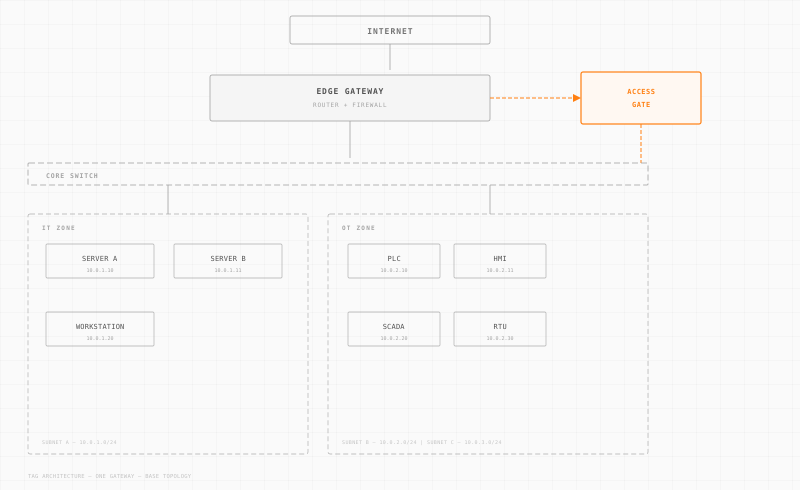
Microsegmentation is rapidly becoming a cornerstone of OT security strategies in industrial environments. As operational technology continues to converge with IT systems, the need for granular network segmentation becomes more pressing. This practical guide will walk you through the essential steps for implementing microsegmentation in OT environments, ensuring your network is secure and compliant with standards like NIST 800-171, CMMC, and NIS2.
Understanding Microsegmentation in OT
Microsegmentation involves dividing a network into isolated segments at a granular level. This method enhances security by limiting lateral movement within the network, thus containing potential breaches. In OT environments, where legacy systems and industrial protocols are prevalent, microsegmentation can significantly improve the security of critical infrastructure without disrupting operations.
Why Microsegmentation Matters
- Enhanced Security: By creating isolated segments, microsegmentation limits the spread of malware and restricts unauthorized access.
- Compliance: Aligns with regulatory requirements from frameworks like NIST 800-171 and CMMC, which emphasize controlled access and data protection.
- Visibility and Control: Provides detailed insights into network traffic and device interactions, essential for monitoring and managing OT security.
Getting Started with Microsegmentation
Implementing microsegmentation in an OT environment requires a strategic approach. Here are the steps to guide you through the process:
1. Assess Your Network
Begin with a comprehensive assessment of your current network infrastructure. Identify all assets, including legacy devices, and map out existing communication flows. This stage is crucial for understanding the network's baseline and identifying areas that would benefit most from segmentation.
Actionable Steps:
- Conduct a thorough asset inventory.
- Use network mapping tools to visualize communication paths.
- Identify critical assets that require protection.
2. Define Security Policies
Develop security policies that dictate how segments will interact. These policies should be based on the principle of least privilege, ensuring each segment only has access to necessary resources.
Actionable Steps:
- Establish baseline security policies aligned with regulatory requirements.
- Use role-based access controls (RBAC) to enforce policies.
- Document all policies for compliance purposes.
3. Choose the Right Tools
Selecting the appropriate tools for microsegmentation is vital. Look for solutions that are specifically designed for OT environments, offering compatibility with industrial protocols and minimal disruption to operations.
Considerations:
- Compatibility: Ensure tools support protocols like Modbus, DNP3, and OPC UA.
- Scalability: Tools should be able to grow with your network.
- Ease of Integration: Choose solutions that integrate seamlessly with existing security infrastructure.
4. Implement Segmentation Gradually
Start implementing microsegmentation in phases to minimize disruptions. Begin with non-critical segments to test and refine your strategy before moving on to more crucial areas.
Actionable Steps:
- Pilot segmentation in a controlled environment.
- Monitor the impact on network performance and adjust as needed.
- Gradually expand segmentation across the network.
5. Monitor and Adjust
Once microsegmentation is in place, continuous monitoring is essential. Use network monitoring tools to detect anomalies and ensure compliance with established policies.
Actionable Steps:
- Set up real-time alerts for policy violations.
- Regularly review logs and reports for insights.
- Adjust policies and segmentation as the network evolves.
Best Practices for Effective Microsegmentation
- Involve Cross-Functional Teams: Engage IT, OT, and security teams to ensure a holistic approach.
- Regular Training: Educate staff on new protocols and security measures.
- Continuous Improvement: Treat microsegmentation as a dynamic process, continually refining strategies based on feedback and technological advancements.
Conclusion
Microsegmentation is not a product you install -- it is an architecture you build incrementally. Assess your network, define policies, choose OT-compatible tools, pilot in non-critical zones, expand gradually, and monitor continuously. Each phase reduces your attack surface and generates compliance evidence. Start with the segment that has the highest risk and the lowest operational complexity, then build from there.
Full NIS2 on-premise compliance guide → /solutions/nis2-compliance