Introduction
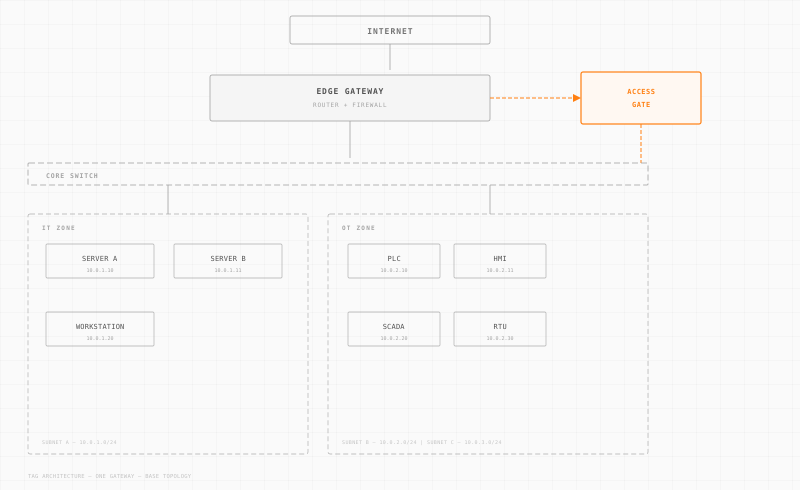
Most OT networks were built for reliability, not security. Rearchitecting them from scratch is rarely feasible. Overlay networks solve this by adding a secure virtual layer on top of existing infrastructure, enabling encrypted microsegmentation and Zero Trust access controls without replacing switches or rewiring the plant floor.
What Are Overlay Networks?
Overlay networks are virtual network layers built on top of existing physical network infrastructures. They allow for the abstraction of network functions and services, enabling more flexible and dynamic network management. In the context of OT environments, overlay networks provide a means to enhance security by segregating traffic and implementing policies that govern network access and data flow.
Benefits of Overlay Networks in OT
- Enhanced Security: Overlay networks enable the implementation of advanced security measures such as encryption, micro-segmentation, and policy enforcement, which are crucial for protecting sensitive OT systems.
- Scalability: They allow for easy expansion and adaptation of network infrastructure without the need for extensive physical reconfiguration.
- Flexibility: Overlay networks provide the ability to quickly adjust to changing security requirements and operational needs.
- Cost-Effectiveness: By utilizing existing infrastructure, overlay networks can reduce the need for additional hardware investments.
Overlay Networks and Zero Trust Architecture
Overlay networks are a natural fit for a Zero Trust approach, which is increasingly being adopted in OT environments. Zero Trust operates on the principle of "never trust, always verify," requiring strict identity verification for every device and user attempting to access resources within the network.
Implementing Zero Trust with Overlay Networks
- Identity and Access Management (IAM): Overlay networks can integrate with IAM systems to ensure that only authenticated devices and users gain access to the network.
- Micro-Segmentation: By dividing the network into smaller, isolated segments, overlay networks can prevent lateral movement of threats, a key principle of Zero Trust.
- Continuous Monitoring: Overlay networks facilitate real-time monitoring and analysis of network traffic, enabling rapid detection and response to potential threats.
Practical Steps for Deploying Overlay Networks in OT
- Assess Current Infrastructure: Evaluate existing network architecture to understand the capabilities and limitations of your current setup.
- Define Security Policies: Establish clear policies that dictate access controls, data flow, and security protocols.
- Select Appropriate Tools: Choose network overlay solutions that align with your security requirements and operational objectives.
- Integrate with Existing Systems: Ensure that overlay networks seamlessly integrate with existing IT and OT systems to maintain operational continuity.
- Monitor and Optimize: Continuously monitor network performance and security, making adjustments as necessary to address emerging threats and operational changes.
Overlay Networks and Compliance Standards
Compliance with standards such as NIST 800-171, CMMC, and NIS2 is critical for organizations operating in regulated industries. Overlay networks directly support compliance by enforcing encrypted communication paths and providing audit-ready visibility into network operations.
How Overlay Networks Aid Compliance
- Data Protection: Overlay networks support encryption and secure data transmission, helping meet data protection requirements.
- Access Control: They facilitate the implementation of granular access controls, a key component of many compliance frameworks.
- Auditability: Overlay networks improve the ability to log and audit network activities, essential for demonstrating compliance with regulatory standards.
Conclusion
Assess your current OT network for segments that lack encryption or access controls. Deploy an overlay network on your highest-risk segment first, validate that it does not introduce latency issues for real-time traffic, and expand from there.