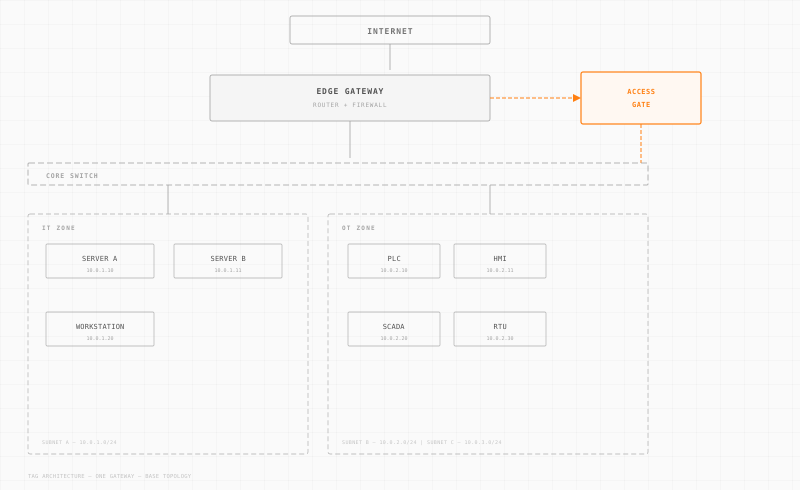
Introduction to Microsegmentation and Zero Trust in ICS
When attackers breach an ICS network, their first move is lateral: from the compromised engineering workstation to the PLCs, from one zone to every zone. Microsegmentation stops that lateral movement by isolating each device or group into its own controlled segment. Combined with Zero Trust, it transforms your ICS network from one large target into hundreds of individually defended zones. By minimizing the attack surface and enforcing stringent access controls, these strategies are reshaping how organizations secure their ICS environments.
Understanding Microsegmentation
Microsegmentation is a security technique that involves dividing a network into smaller, isolated segments or "microsegments." This approach ensures that even if one segment is compromised, the threat cannot easily move laterally across the network. Here are some key benefits of microsegmentation:
- Enhanced Security: By isolating critical assets and controlling communication between segments, microsegmentation limits the potential impact of a breach.
- Improved Visibility: Organizations gain granular insights into traffic patterns and interactions between network components.
- Regulatory Compliance: Segmentation can help meet compliance requirements outlined in standards like NIST 800-171, CMMC, and NIS2.
Implementing Microsegmentation in ICS
Implementing microsegmentation in an ICS environment requires careful planning and execution. Here are practical steps to consider:
- Asset Inventory: Identify and categorize all assets within the ICS, focusing on their roles and communication needs.
- Network Mapping: Use tools to map current network flows to understand dependencies and interactions.
- Define Security Policies: Establish policies that dictate which devices can communicate, minimizing unnecessary connections.
- Segmentation Strategy: Deploy virtual LANs (VLANs) and access control lists (ACLs) to create microsegments.
- Continuous Monitoring: Implement real-time monitoring to detect and respond to unauthorized access attempts.
Zero Trust Architecture in ICS
The Zero Trust model operates on the principle of "never trust, always verify," requiring strict identity verification for every person and device attempting to access resources. In ICS, this approach is critical for safeguarding sensitive operational technology (OT) assets.
Core Principles of Zero Trust
- Least Privilege Access: Grant users and devices the minimum level of access required to perform their functions.
- Continuous Verification: Regularly verify user and device identities, utilizing techniques like multi-factor authentication (MFA).
- Assume Breach: Design systems with the assumption that attackers may already be inside the network, implementing detection and response mechanisms accordingly.
Integrating Zero Trust in ICS
- Identity and Access Management: Deploy strong authentication mechanisms to secure access to ICS components.
- Network Isolation: Use microsegmentation to enforce strict boundaries around critical systems.
- Threat Intelligence: Leverage threat intelligence to continuously update security policies and responses to emerging threats.
- Audit and Compliance: Regularly audit network activities and maintain compliance with relevant standards.
The Role of Network Isolation in ICS Security
Network isolation is a key component of both microsegmentation and Zero Trust strategies. By isolating network segments, organizations can prevent the lateral movement of threats. This isolation is particularly important in ICS environments, where the consequences of a breach can be severe.
Strategies for Effective Network Isolation
- Demilitarized Zones (DMZs): Implement DMZs to separate ICS networks from external networks, reducing exposure to threats.
- Firewalls and Gateways: Use firewalls and protocol-specific gateways to control traffic between network segments.
- Physical Isolation: In some cases, physical separation of critical assets may be necessary to ensure security.
Practical Advice for ICS Security Professionals
For those responsible for ICS security, microsegmentation and Zero Trust offer powerful tools to enhance protection. Here are actionable tips to get started:
- Conduct Risk Assessments: Regularly evaluate the security posture of your ICS environment to identify vulnerabilities.
- Educate and Train: Ensure that all personnel understand the importance of security protocols and their roles in maintaining them.
- Adopt a Layered Approach: Combine microsegmentation and Zero Trust with IDS, monitoring, and access controls for defense in depth.
Conclusion
Start with an asset inventory and network flow map. Identify your highest-value ICS assets, deploy microsegmentation around them first, and enforce Zero Trust access policies at every segment boundary. Expand outward from there.
For more Zero Trust OT resources, architecture guides, and comparisons, visit the Zero Trust for OT Networks hub.