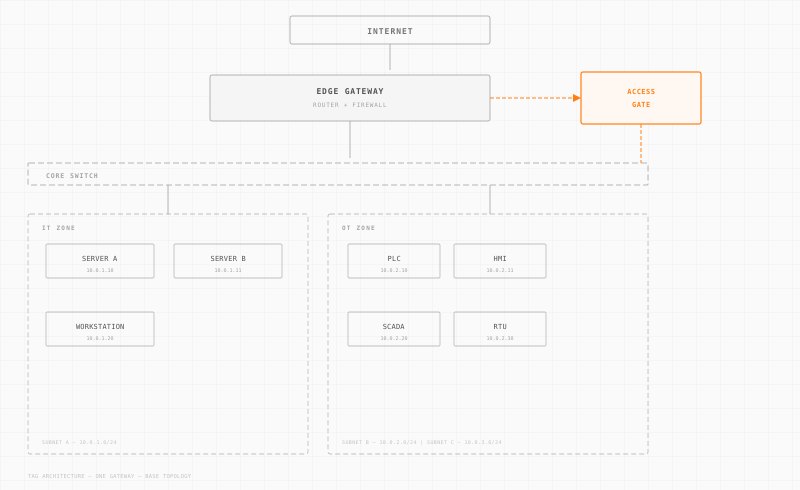
Access Control is a fundamental component of cybersecurity that determines who is allowed to access and interact with resources within a network. In the context of OT/IT cybersecurity, access control mechanisms are essential for safeguarding sensitive data and systems from unauthorized access, especially in industrial, manufacturing, and critical infrastructure environments.
Understanding Access Control in OT/IT Cybersecurity
In operational technology (OT) and information technology (IT) environments, access control is a crucial defensive measure that ensures only authorized individuals or systems can access specific resources. These controls are part of a broader strategy known as Identity Access Management (IAM), which focuses on managing users' identities and their access to resources.
Access control can be implemented via various methods, including:
- Role-Based Access Control (RBAC): Assigns access permissions based on the user's role within an organization, ensuring that employees can only access data necessary for their work.
- Mandatory Access Control (MAC): Involves strict protocols where access is based on fixed policies set by a central authority, often used in environments requiring high security.
- Discretionary Access Control (DAC): Allows the owner of the information to set access policies, providing a more flexible, albeit less secure, approach.
In the era of digital transformation, Zero Trust Access has emerged as a pivotal model. It operates on the principle of "never trust, always verify," ensuring that trust is not granted implicitly, even to devices or users within the network perimeter. This approach is especially relevant in OT/IT environments where traditional perimeter defenses are inadequate due to the increasing convergence of IT and OT systems.
Why It Matters for Industrial, Manufacturing & Critical Environments
In industrial, manufacturing, and critical infrastructure sectors, the stakes for maintaining robust access control are particularly high. These environments often involve complex networks of legacy systems, modern IT, and OT components, which are attractive targets for cyber threats. Effective access control helps in:
- Preventing Unauthorized Access: By ensuring that only authorized personnel can access sensitive systems and data, the risk of data breaches and operational disruptions is significantly reduced.
- Ensuring Compliance: Regulatory standards such as NIST 800-171, CMMC, and IEC 62443 mandate stringent access control measures to safeguard sensitive information and systems. Adhering to these standards is crucial for compliance and operational integrity.
- Protecting Critical Infrastructure: Access control mechanisms help prevent malicious actors from sabotaging critical systems that, if compromised, could have significant implications for public safety and national security.
In Practice
An example of effective access control in practice is a manufacturing plant that employs a Zero Trust framework to manage access to its network. Each user and device must be authenticated and authorized before gaining access to any part of the network, regardless of their location. This might involve multi-factor authentication (MFA) for accessing critical systems, ensuring that even if credentials are compromised, unauthorized access is thwarted.
Additionally, a refinery might implement RBAC to ensure that only maintenance personnel can access certain operational controls, while data scientists can access performance metrics without interfering with operational processes.