
Understanding DNP3 in SCADA Systems
The Distributed Network Protocol version 3 (DNP3) is a set of communications protocols used between components in process automation systems. It was developed to facilitate interoperability and robust communications in Supervisory Control and Data Acquisition (SCADA) systems, particularly in environments where reliability and security are critical. With targeted attacks against industrial control systems growing in both frequency and specificity -- from protocol-aware malware to man-in-the-middle interception of SCADA commands -- securing DNP3 communications is critical to maintaining operational integrity and safety.
The Importance of SCADA Security
SCADA systems are integral to industrial operations, controlling everything from water treatment plants to electrical grids. A breach in these systems can lead to catastrophic consequences, including service disruptions and safety hazards. As such, SCADA security is not just a technical requirement but a vital component of national security and public safety.
Challenges of Securing DNP3
Legacy Protocol Vulnerabilities
DNP3, like many industrial protocols, was not originally designed with cybersecurity in mind. This legacy nature presents several challenges:
- Lack of Encryption: Traditional DNP3 communications are not encrypted, making them susceptible to interception and unauthorized access.
- Unauthenticated Commands: Without proper authentication mechanisms, malicious actors can inject commands into the network, potentially causing dangerous operations.
Operational Technology (OT) Cybersecurity Concerns
Securing DNP3 involves tackling the broader challenges of OT cybersecurity, including:
- System Downtimes: Implementing security measures must not disrupt operations, which are often required to run 24/7.
- Complex Environments: SCADA systems often involve a mix of legacy and modern devices, complicating uniform security implementations.
Best Practices for Implementing DNP3 Security
Employ Secure DNP3 Variants
Utilize newer versions of DNP3 that incorporate security features such as:
- DNP3 Secure Authentication: This feature adds cryptographic authentication of messages, preventing unauthorized commands.
- Transport Layer Security (TLS): Implementing TLS can secure data in transit, ensuring confidentiality and integrity.
Network Segmentation
- Segment Networks: Use network segmentation to isolate critical SCADA components from less secure areas, reducing lateral movement opportunities for attackers.
- Implement Firewalls: Deploy firewalls to control traffic flow between segments, allowing only necessary communications.
Multi-Factor Authentication (MFA)
- Access Control: Strictly control access to SCADA systems using MFA, ensuring that only authorized personnel can interact with critical components.
Regular Audits and Monitoring
- Conduct Security Audits: Regular audits help identify vulnerabilities and ensure compliance with standards like NIST 800-171 and CMMC.
- Continuous Monitoring: Utilize tools for real-time monitoring of DNP3 traffic to detect anomalies that could indicate potential security breaches.
Update and Patch Management
- Timely Updates: Regularly update SCADA software and firmware to patch known vulnerabilities and improve resilience against attacks.
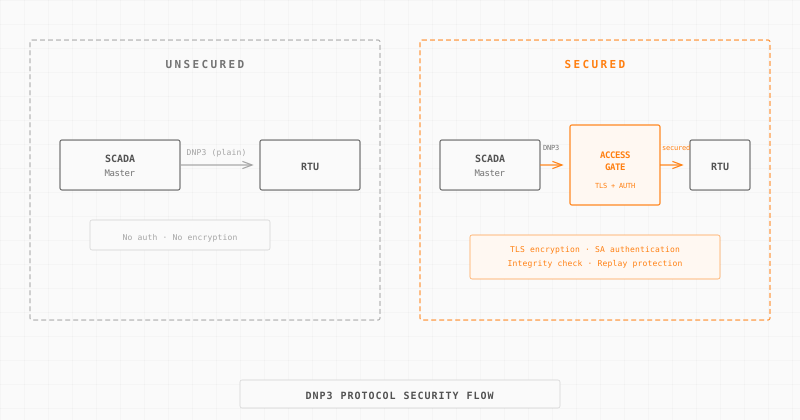
Unsecured DNP3 vs Secured DNP3
| Capability | Unsecured DNP3 | Secured DNP3 (with Access Gate) |
|---|---|---|
| Authentication | None -- commands accepted without verification | DNP3 Secure Authentication (SA) with HMAC |
| Encryption | Plain text -- data readable on the wire | TLS 1.3 encrypts all traffic in transit |
| Integrity check | None -- packets can be modified undetected | Cryptographic message authentication codes |
| Replay protection | None -- captured packets can be re-sent | Challenge-response with session nonces |
| Compliance | Fails NIST 800-171, CMMC, NIS2 requirements | Meets NIST 800-171, CMMC Level 2, NIS2 |
Compliance with Relevant Standards
NIST 800-171
The National Institute of Standards and Technology (NIST) Special Publication 800-171 provides guidelines to protect controlled unclassified information in non-federal systems. Key requirements relevant to SCADA security include:
- Access Control: Implementing least privilege and MFA
- Audit and Accountability: Maintaining logs and audit trails for all access and actions
CMMC
The Cybersecurity Maturity Model Certification (CMMC) mandates cybersecurity practices for defense contractors, emphasizing:
- Asset Management: Keeping an inventory of SCADA components and ensuring their security
- Incident Response: Developing plans to respond to and recover from security incidents
NIS2 Directive
The NIS2 Directive aims to enhance the cybersecurity of network and information systems across the EU. Compliance involves:
- Risk Management: Implementing processes to manage security risks effectively
- Incident Reporting: Timely reporting of incidents to relevant authorities
Conclusion
Securing DNP3 in SCADA systems requires combining protocol-level upgrades (Secure Authentication, TLS) with network-level defenses (segmentation, continuous monitoring) and organizational practices (patch management, audit logging). Start by enabling DNP3 Secure Authentication on master stations and outstations that support it. For legacy devices that do not, place an enforcement point between them and the network to authenticate and inspect traffic. Map your progress against NIST 800-171 and CMMC controls to close compliance gaps at the same time.