Introduction
A PLC manufactured in 2005 has no authentication, no encryption, and no firmware update mechanism -- yet it still controls a production line worth millions in daily output. Replacing it costs six figures and weeks of downtime. This is the reality across manufacturing, energy, and utilities: thousands of legacy PLCs connected to modern networks that were never designed to defend against current threats. Here is how to protect them without ripping them out.
Understanding the Vulnerabilities of Legacy PLCs
Lack of Security Features
Legacy PLCs were designed for functionality, not security. This means they often lack encryption, authentication, and other fundamental security measures. As a result, they are susceptible to various cyber threats, including unauthorized access, data manipulation, and Denial of Service (DoS) attacks.
Integration Challenges
Incorporating legacy PLCs into modern networks can introduce vulnerabilities. Many of these devices rely on outdated communication protocols that are not designed to interact with current IT security systems, creating blind spots for network monitoring and control.
Compliance Issues
Compliance with standards like NIST 800-171, CMMC, and NIS2 is critical for organizations handling sensitive information. Legacy PLCs, however, can complicate compliance efforts due to their inherent security limitations and the difficulty of applying modern security controls.
Strategies for Securing Legacy PLCs
Implement Network Segmentation
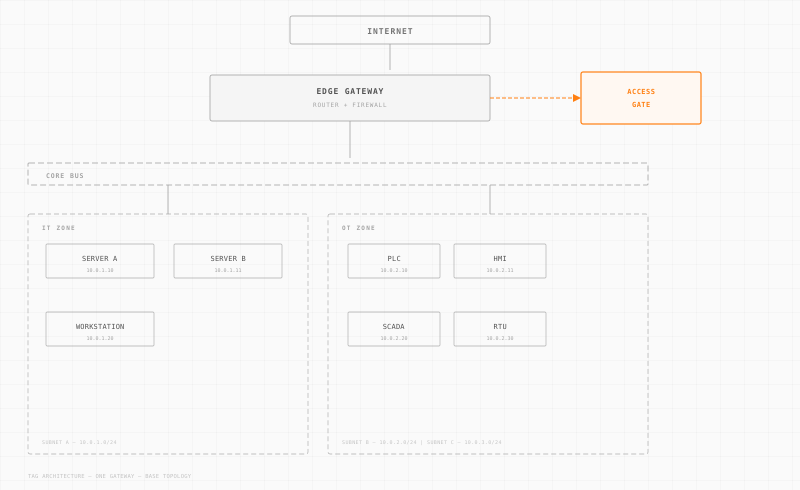
Network segmentation is a powerful strategy for isolating legacy PLCs from other parts of the network. By creating secure zones and conduits, as outlined in the ISA/IEC 62443 standard, you can limit the exposure of PLCs to potential threats. This approach minimizes the attack surface and can prevent lateral movement within the network.
Use Protocol Gateways
Protocol gateways can help bridge the gap between legacy PLCs and modern network protocols. By converting outdated protocols to more secure, contemporary ones, these gateways enable better integration and monitoring of legacy devices within modern network infrastructures.
Employ Intrusion Detection Systems (IDS)
Implementing an Intrusion Detection System (IDS) specifically designed for OT environments can enhance the visibility of legacy PLC traffic. These systems can detect unusual activity or potential threats in real-time, allowing for prompt incident response.
Implement Strong Access Controls
Restricting access to PLCs using strong, role-based access controls (RBAC) is essential. Ensure that only authorized personnel have access to critical systems and data. Implementing Multi-Factor Authentication (MFA) can further enhance security by requiring additional verification steps for sensitive operations.
Leveraging Modern Technologies
VPNs and Secure Remote Access
Establishing secure remote access solutions, such as Virtual Private Networks (VPNs), can protect data transmitted between legacy PLCs and external systems. Ensure that these solutions comply with the latest security standards to prevent unauthorized access.
Zero Trust Architecture
Adopting a Zero Trust architecture can significantly bolster the security of legacy PLCs. By assuming that threats exist both inside and outside the network, Zero Trust principles require continuous verification of every device and user attempting to access network resources.
Regular Patch Management
While patching legacy systems can be challenging, it is critical for maintaining security. Develop a structured patch management strategy that includes regular updates and testing in a controlled environment to avoid disrupting operations.
Compliance Considerations
Adhering to NIST 800-171
Teams responsible for legacy PLCs must ensure they comply with NIST 800-171 requirements, which mandate protecting Controlled Unclassified Information (CUI) in non-federal systems. Implementing the outlined security controls can help mitigate risks associated with legacy devices.
Achieving CMMC Compliance
For defense contractors, CMMC compliance is non-negotiable. Ensure that legacy PLCs are part of your overall cybersecurity strategy to meet CMMC requirements, particularly focusing on access control, incident response, and configuration management.
Meeting NIS2 Directive
The NIS2 Directive emphasizes the security of network and information systems across the EU. Organizations operating legacy PLCs must align their security practices with the directive's requirements, focusing on risk management, incident response, and supply chain security.
Conclusion
Securing 20-year-old PLCs requires compensating controls at the network layer since the devices themselves cannot be hardened. Start with segmentation to isolate PLCs from the broader network. Add protocol gateways to bridge legacy protocols to modern, monitorable ones. Deploy IDS for real-time visibility and enforce RBAC through external access controls. These steps protect legacy devices without requiring replacement, while building the compliance evidence that NIST 800-171, CMMC, and NIS2 demand.