A CAGE Code (Commercial and Government Entity Code) is a five-character alphanumeric identifier that the Defense Logistics Agency (DLA) assigns to each supplier, contractor, or facility that does business with the United States government. It ties one legal entity at one physical address to its records across federal procurement systems. No contract award, payment, or facility clearance moves forward without it.
What is a CAGE Code?
The code is five characters, mixing letters and numbers, and it is unique to a single location. A company with three plants gets three CAGE Codes, one per site. The DLA's Contractor and Government Entity (CAGE) program issues and maintains them, and foreign suppliers receive an NCAGE (NATO CAGE) code through the same NATO Codification System.
The code does not carry meaning in its characters. It is a pointer. Everything about the entity, its address, its ownership, its business types, lives in the federal databases the code links to.
How do you get a CAGE Code?
You do not apply for a CAGE Code on its own. It is generated when you register in the System for Award Management (SAM.gov). During SAM registration the DLA validates your business name and physical address, then assigns or confirms your CAGE Code automatically. The registration also produces your Unique Entity ID (UEI), which replaced the old DUNS number in 2022.
The practical sequence for a new defense supplier looks like this:
- Register the entity in SAM.gov with a validated legal name and address.
- Receive the Unique Entity ID and CAGE Code once DLA validation completes.
- Renew the SAM registration every year, or the CAGE Code goes inactive and awards stall.
Who needs a CAGE Code?
Any organization that wants a federal contract, grant, or facility security clearance. That covers prime contractors, subcontractors, manufacturers in the defense industrial base, and service providers. If you handle Controlled Unclassified Information under a DoD contract, your CAGE Code is the thread that connects your entity record to your cybersecurity assessment posture in the Supplier Performance Risk System.
How does a CAGE Code relate to CMMC and NIST 800-171?
The CAGE Code itself is an identity token, not a security control. But it is the key that federal systems use to attach your compliance state to your company. Your NIST SP 800-171 self-assessment score is posted against your CAGE Code and UEI. When CMMC certification data flows into government systems, it references the same identifiers. Getting the code is table stakes; the security work behind it is what actually wins and keeps the contract.
Where Trout fits
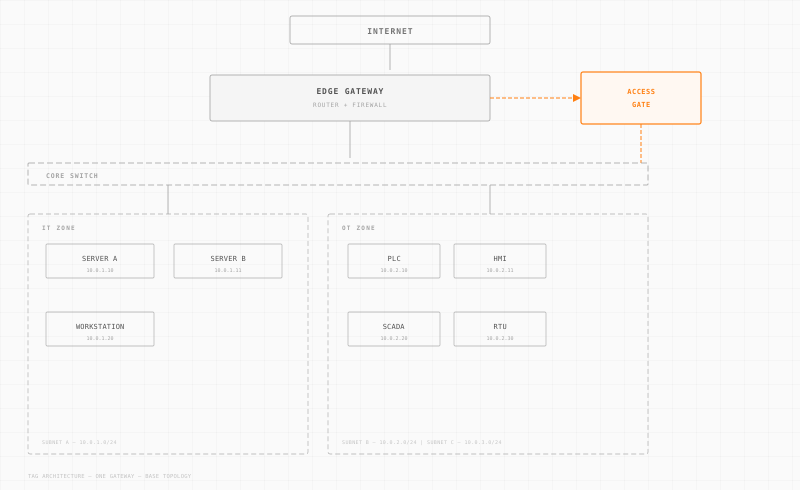
A CAGE Code is a registration step, not a security posture. Where Access Gate helps is later: once you hold Controlled Unclassified Information under a contract, it enforces identity-based access and segmentation on the systems that store it, including the OT assets many defense manufacturers overlook.