Cloud backup refers to the practice of copying data to a remote, cloud-based server to ensure its protection and availability in the event of data loss, corruption, or disaster. This method of backup is crucial for maintaining business continuity and safeguarding sensitive information against potential threats.
Cloud Backup in OT/IT Cybersecurity
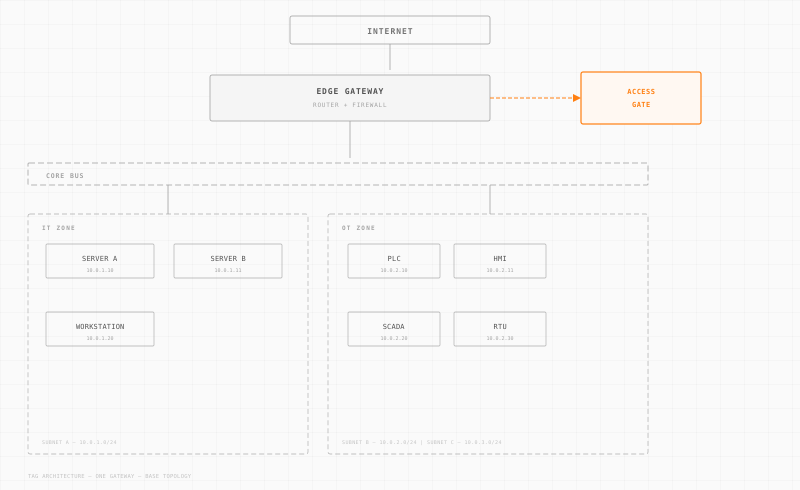
In the context of Operational Technology (OT) and Information Technology (IT) cybersecurity, cloud backup plays a pivotal role. OT systems, which manage industrial operations, and IT systems, which handle data and communications, are both vital to the functioning of industrial, manufacturing, and critical infrastructure environments. The integration of these systems through Industrial Internet of Things (IIoT) technologies has created new opportunities but also increased vulnerabilities. Cloud backup services ensure that both OT and IT data are securely stored offsite, reducing the risk of data loss due to cyberattacks, equipment failure, or natural disasters.
Why It Matters for Industrial, Manufacturing & Critical Environments
In industrial and manufacturing settings, continuity and reliability are non-negotiable. Any disruption can lead to significant financial loss, safety hazards, or even environmental damage. Cloud backup solutions provide a reliable means of disaster recovery by ensuring that even if a local system fails, data can be restored quickly and effectively from the cloud. This is essential for maintaining the integrity and availability of critical systems.
Cloud backup also aligns with regulatory standards such as NIST SP 800-171, CMMC, and NIS2, which emphasize the protection of Controlled Unclassified Information (CUI) and the resilience of critical infrastructure. By using cloud backup, organizations can demonstrate compliance with these standards by showing they have measures in place to protect sensitive data against unauthorized access and loss.
Relevant Standards in Cloud Backup
- NIST SP 800-171: This standard provides guidelines for protecting CUI in non-federal systems, including the use of secure backup solutions.
- CMMC (Cybersecurity Maturity Model Certification): This framework requires organizations to implement cybersecurity practices, including maintaining backup copies of data to ensure its availability in case of system failure.
- NIS2 Directive: Aimed at enhancing cybersecurity across the EU, this directive mandates that organizations within its scope implement appropriate and proportionate technical and organizational measures, such as secure data backup.
In Practice
Consider a manufacturing plant that uses a combination of OT systems for machine control and IT systems for data analysis. If a cyberattack were to compromise the facility’s operations, a cloud backup would allow the plant to restore its systems with minimal downtime. This is achieved by regularly updating the cloud backup with the latest data from both OT and IT environments, ensuring that the most recent and relevant data is available during recovery.
Furthermore, cloud backup solutions can be automated, reducing the burden on IT staff while providing an additional layer of security through encryption and access controls. This is particularly beneficial for small and medium-sized enterprises (SMEs) that may lack extensive IT resources but still require robust data protection measures.