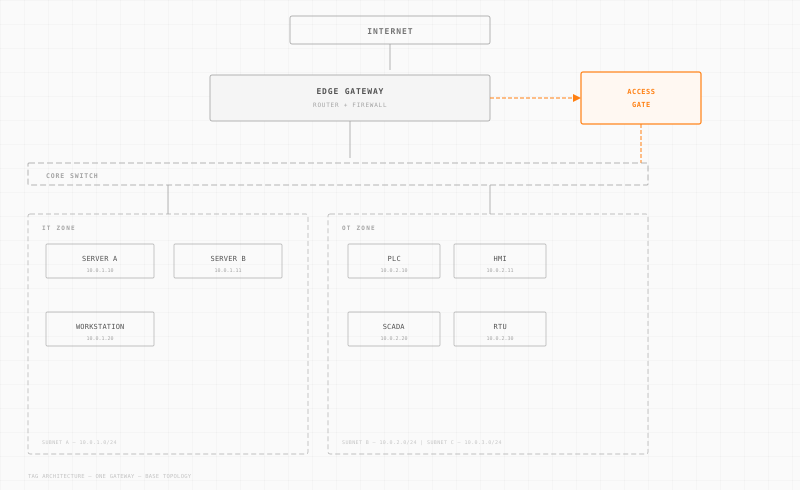
Remote access refers to the ability to access a computer, network, or system from a remote location, typically over the internet. In the context of OT/IT cybersecurity, secure remote access is crucial for managing and maintaining industrial systems without needing physical presence on-site.
Understanding Remote Access in OT/IT Cybersecurity
In operational technology (OT) environments, such as manufacturing plants, power stations, and critical infrastructure, remote access enables operators, engineers, and IT professionals to monitor and control systems from afar. This capability is vital for troubleshooting, maintenance, and ensuring continuity of operations without requiring personnel to be physically present. However, the remote nature of these connections necessitates stringent security measures to protect sensitive systems from unauthorized access and cyber threats.
Secure Remote Access
Secure remote access involves implementing robust security protocols to safeguard connections over potentially insecure networks, such as the internet. This includes using Virtual Private Networks (VPNs), multi-factor authentication (MFA), encryption, and network segmentation to ensure that only authorized individuals can access critical systems. These measures help mitigate risks associated with remote connections, such as data breaches and unauthorized access.
Why It Matters for Industrial, Manufacturing & Critical Environments
In industrial and manufacturing settings, the ability to remotely access systems can significantly enhance efficiency and response times. For instance, if a machine in a factory experiences a fault, a technician can diagnose and address the issue remotely, minimizing downtime and production losses. In critical infrastructure sectors, such as energy or water utilities, remote access is vital for managing dispersed assets across vast geographical areas, ensuring that systems remain operational even during emergencies or travel restrictions.
However, the importance of secure remote access cannot be overstated. These environments often house legacy OT systems that were not designed with modern cybersecurity threats in mind. As such, they are particularly vulnerable to attacks if not properly protected. The adoption of standards such as NIST SP 800-171, CMMC, and IEC 62443 provides frameworks for implementing secure remote access in compliance with regulatory requirements and best practices.
Relevant Standards
- NIST SP 800-171: This standard provides guidelines for protecting controlled unclassified information in non-federal systems and organizations, emphasizing the need for secure access controls.
- CMMC (Cybersecurity Maturity Model Certification): A framework for assessing the cybersecurity posture of defense contractors, which includes provisions for secure remote access.
- IEC 62443: A series of standards focusing on the cybersecurity of industrial automation and control systems, offering guidance on secure remote access practices.
In Practice
Consider a utility company tasked with maintaining vast networks of power lines and substations. Using secure remote access, engineers can monitor system performance, apply patches, and respond to alerts in real-time, regardless of their physical location. This not only enhances operational efficiency but also reduces the risk of service disruptions. Similarly, in a manufacturing context, remote access can streamline equipment diagnostics and repairs, allowing for timely interventions without the need for on-site specialists.
Implementing secure remote access strategies, such as using VPNs and MFA, helps protect these critical operations from cyber threats. Furthermore, by adhering to established cybersecurity standards, organizations can ensure that their remote access solutions are robust and compliant, thereby safeguarding both their operations and sensitive data.