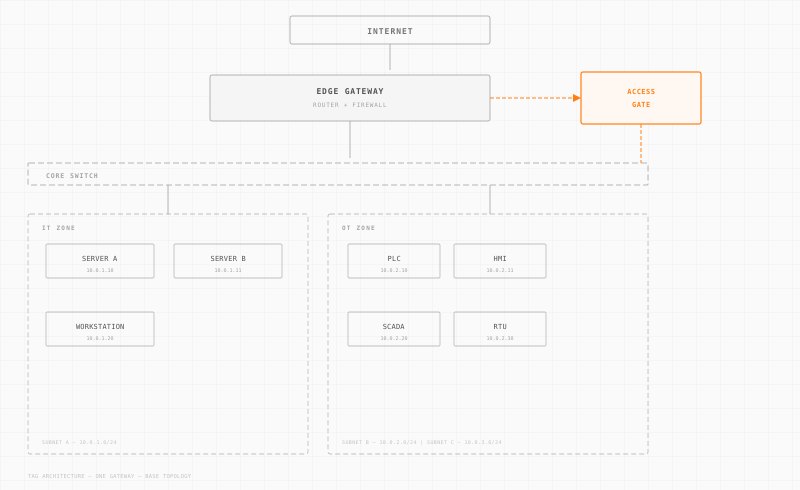
A Virtual Private Network (VPN) is a technology that creates a secure and encrypted connection over a less secure network, such as the internet. It is commonly used to ensure secure remote access to a private network, protecting the integrity and confidentiality of data transmission.
Understanding VPNs in OT/IT Cybersecurity
In the context of Operational Technology (OT) and Information Technology (IT) cybersecurity, a VPN serves as a critical tool for maintaining secure communications. By encrypting data traffic, a VPN prevents unauthorized access and eavesdropping, which is particularly crucial in industrial environments where sensitive operational data is transmitted.
VPNs can be deployed in various configurations to protect both internal communications within an organization and remote access from external locations. For instance, employees working from home or technicians accessing industrial control systems remotely can use VPNs to securely connect to their company’s network, ensuring that their interactions are shielded from potential cyber threats.
Importance for Industrial, Manufacturing, and Critical Environments
In industrial, manufacturing, and critical infrastructure sectors, maintaining the security of data and systems is paramount. These environments often rely on a mix of legacy systems and modern technologies, making them susceptible to cyber threats. A VPN aids in safeguarding these systems by:
- Protecting Sensitive Data: VPNs encrypt data being transmitted across networks, reducing the risk of interception by malicious actors.
- Ensuring Compliance: Standards such as NIST SP 800-171 and CMMC require robust measures to protect Controlled Unclassified Information (CUI). VPNs can help meet these compliance requirements by securing data in transit.
- Facilitating Secure Remote Access: With the rise of remote work and the need for remote maintenance of industrial systems, VPNs provide a secure channel for accessing critical systems, thus supporting operational continuity.
Standards and Compliance
Several cybersecurity standards emphasize the importance of secure data transmission, where VPNs play a vital role:
- NIST SP 800-171: This standard outlines security requirements for protecting CUI in non-federal systems, which includes encrypting data in transit, a capability provided by VPNs.
- CMMC (Cybersecurity Maturity Model Certification): VPNs contribute to achieving compliance levels by ensuring secure remote access and data protection.
- IEC 62443: This series of standards focuses on securing Industrial Automation and Control Systems (IACS), with VPNs being a recommended practice for secure communications.
Why It Matters
The deployment of VPNs in industrial and critical environments is not just about enabling remote access but is a strategic component of a comprehensive cybersecurity posture. As cyber threats continue to evolve, having encrypted communication channels helps to mitigate risks associated with data breaches, industrial espionage, and other cyber incidents. The ability to protect sensitive operational data and ensure compliance with relevant standards makes VPNs indispensable in today's interconnected industrial landscape.
In Practice
Consider a manufacturing plant that needs to allow remote engineers to access its control systems for maintenance. Using a VPN, the plant can ensure that these engineers connect securely to its network, thus preventing unauthorized access and safeguarding its operational integrity. This setup not only enhances security but also supports flexibility in operations, allowing for efficient remote support and troubleshooting.