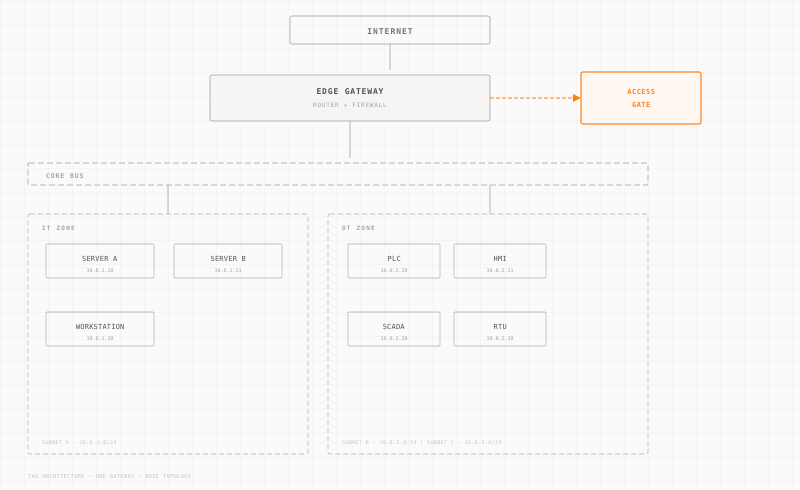
Digital Transformation in Manufacturing refers to the integration of digital technologies into all areas of manufacturing, fundamentally changing how businesses operate and deliver value to customers. This transformation is a core element of Industry 4.0 and is characterized by the adoption of smart manufacturing processes, leveraging the Internet of Things (IoT), cloud computing, artificial intelligence, and analytics.
Digital Transformation in Manufacturing
The Concept
The concept of digital transformation in manufacturing involves using digital technologies to revolutionize traditional manufacturing processes. This transformation facilitates the creation of smart factories where machinery and equipment are interconnected through the internet, enabling real-time data collection, processing, and analysis to optimize production processes. Such advancements allow for greater flexibility, efficiency, and responsiveness in production lines, contributing to enhanced product quality and reduced operational costs.
Components of Digital Transformation
-
IoT and Connectivity: IoT devices gather data from various points in the manufacturing process. The connectivity enables machines to communicate with each other, allowing for seamless automation and monitoring.
-
Cloud Computing: Offers scalable resources for data storage and processing, facilitating the management of vast amounts of data generated by manufacturing operations.
-
Artificial Intelligence and Machine Learning: Enhance decision-making by providing insights derived from data analytics, predicting maintenance needs, and optimizing operations.
-
Cybersecurity: As manufacturing becomes more interconnected, securing data and systems from cyber threats has become critical. Standards like NIST 800-171 and IEC 62443 provide guidelines to protect sensitive information and ensure system integrity.
-
Digital Twins: Virtual models of physical assets that allow manufacturers to simulate processes and predict outcomes, leading to more informed decision-making.
Why It Matters
Digital transformation is crucial for industrial, manufacturing, and critical environments because it directly impacts competitiveness, efficiency, and sustainability. By adopting digital technologies, manufacturers can:
-
Increase Efficiency: Automated systems reduce human error and enhance production speed.
-
Enhance Flexibility: Rapidly adapt to changes in demand and customize products with minimal downtime.
-
Improve Quality Control: Real-time monitoring and analytics help in maintaining consistent product quality.
-
Reduce Costs: Predictive maintenance and resource optimization lower operational expenses.
-
Strengthen Cybersecurity: Implementing robust security protocols protects critical infrastructure from cyber threats, aligning with compliance standards like CMMC and NIS2.
In Practice
A practical example of digital transformation is a smart factory where robotic arms are integrated with IoT sensors to monitor their performance. Data collected is analyzed to predict maintenance schedules, reducing unexpected breakdowns. Additionally, AI-driven quality control systems can detect defects in real-time, ensuring only top-quality products reach the market.
Overall, digital transformation supports sustainability by minimizing waste and energy consumption, thereby contributing to more environmentally friendly manufacturing practices.
Related Concepts
- Industry 4.0
- Smart Manufacturing
- IoT in Manufacturing
- Cyber-Physical Systems
- Artificial Intelligence in Manufacturing