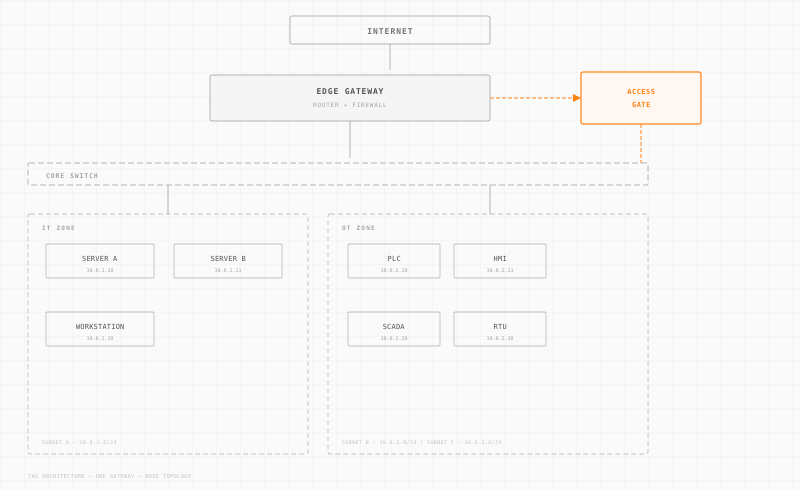
An Access Control List (ACL) is a set of rules that determines which users or systems are granted or denied access to specific resources within a network. ACLs are crucial for managing permissions and maintaining security within both IT and OT environments, particularly in industrial and critical infrastructure settings.
Understanding Access Control Lists
An ACL is typically used to filter network traffic by controlling which packets are allowed to pass through a network interface. This is achieved by specifying conditions based on IP addresses, protocols, or ports, and assigning permissions such as "allow" or "deny." ACLs can be implemented on various network devices, including routers, switches, and firewalls, to enforce security policies.
Context in OT/IT Cybersecurity
In the context of Operational Technology (OT) and Information Technology (IT) cybersecurity, ACLs play a vital role in safeguarding critical systems. OT environments, such as those found in manufacturing plants and utility services, often involve legacy systems and proprietary protocols that require tailored security measures. ACLs help control access to sensitive systems and data, thereby reducing the risk of unauthorized access and potential cyber threats.
Implementation and Standards
Implementing ACLs in industrial and critical environments must align with established cybersecurity standards. For instance, NIST 800-171 outlines requirements for protecting controlled unclassified information in non-federal systems, emphasizing the need for access controls. Similarly, the Cybersecurity Maturity Model Certification (CMMC) includes access control as one of its core domains, ensuring that organizations have robust mechanisms for managing user permissions.
IEC 62443 provides guidelines for implementing cybersecurity in industrial automation and control systems, including detailed recommendations for setting up effective ACLs.
Why It Matters
Access control lists are critical in industrial, manufacturing, and critical environments because they help prevent unauthorized access to essential systems and data. By carefully defining and managing ACLs, organizations can protect their networks from various threats, including data breaches, malware, and insider attacks. Effective ACLs contribute to a layered security approach, enhancing the overall cybersecurity posture of an organization.
In Practice
Consider a manufacturing facility that uses ACLs to restrict access to its production control systems. By allowing only specific IP addresses or user roles to interact with these systems, the facility reduces the risk of unauthorized changes that could disrupt operations or compromise safety. Similarly, a utility provider might use ACLs to ensure that only authenticated users can access critical infrastructure, such as power grid controls, thus maintaining system integrity and stability.
Related Concepts
- Firewall: A network security device that monitors and controls incoming and outgoing network traffic based on predetermined security rules.
- Role-Based Access Control (RBAC): A method of restricting access to authorized users based on their roles within an organization.
- Network Segmentation: The practice of dividing a network into smaller, manageable segments to improve security and performance.
- Zero Trust Architecture: A security model that assumes no user or system is inherently trustworthy and requires continuous verification.
- Identity and Access Management (IAM): A framework for managing digital identities and access rights within an organization.