Just-In-Time (JIT) Manufacturing is a production methodology aimed at reducing flow times within production systems, as well as response times from suppliers and to customers. This approach is integral to lean manufacturing and focuses on producing exactly what is needed, when it is needed, and in the amount needed, thus minimizing waste and enhancing efficiency.
Understanding Just-In-Time Manufacturing
In the context of OT/IT cybersecurity, Just-In-Time manufacturing presents unique challenges and opportunities. As JIT relies heavily on precise timing and synchronization between supply chains and production lines, any disruptions—be it from cyber threats or operational issues—can have significant repercussions. In an industrial setting, ensuring the integrity, availability, and confidentiality of data that drives JIT processes is critical.
Cybersecurity in JIT Manufacturing
Cybersecurity becomes paramount in JIT systems because the real-time exchange of information is essential. Malicious actors can exploit vulnerabilities to cause delays, introduce defects, or even halt production entirely. Thus, implementing robust cybersecurity measures, in compliance with frameworks like NIST SP 800-171 for protecting controlled unclassified information, or adhering to CMMC (Cybersecurity Maturity Model Certification) standards, is crucial for safeguarding these operations.
NIS2 (Network and Information Systems Directive 2) and IEC 62443 further provide guidelines for enhancing security measures in such environments. These standards emphasize the need for a proactive approach to threat management, which includes regular audits, risk assessments, and incident response planning.
Why It Matters
In industrial and manufacturing environments, where JIT manufacturing is prevalent, cybersecurity is not just an IT issue but a critical operational concern. The seamless integration of OT (Operational Technology) and IT systems means that a cyber incident can quickly translate into physical consequences, such as production downtime, compromised product quality, or even safety hazards.
Practical Implications
For instance, consider a smart factory using JIT principles where machines are interconnected and controlled via an integrated OT/IT network. An attack on this network could disrupt the supply chain, leading to delayed deliveries and increased costs, and potentially damaging the company's reputation. Additionally, any data breach could lead to the loss of sensitive proprietary information, further harming competitive advantage.
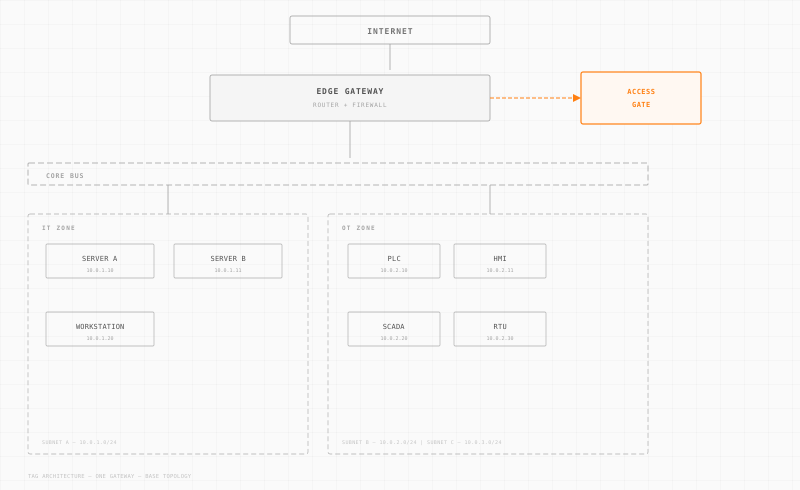
To mitigate such risks, organizations should implement layered security measures, such as network segmentation, real-time monitoring, and access controls, ensuring that only authorized personnel have access to critical systems and data when necessary.
In Practice
Adopting Just-In-Time manufacturing in a cyber-secure manner involves:
- Automating Security Monitoring: Real-time threat detection and response systems to identify and neutralize threats before they impact production.
- Continuous Compliance: Regularly updating security practices to comply with evolving standards like NIST, CMMC, and IEC 62443.
- Employee Training: Ensuring staff are aware of cybersecurity risks and trained in best practices for safeguarding sensitive systems and data.
Given the interconnected nature of modern manufacturing processes, cybersecurity must be integrated into every aspect of JIT systems to ensure continuous, efficient, and safe operations.