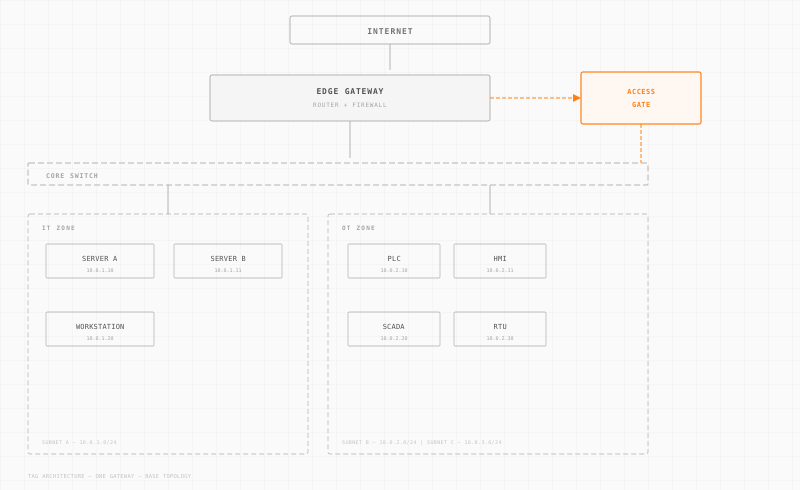
Backup and Restore is the process of copying and archiving data to ensure it can be recovered in the event of data loss, and subsequently retrieving that data to restore normal operations. This critical cybersecurity practice is essential for maintaining the integrity, availability, and continuity of operations in industrial, manufacturing, and other critical environments.
Backup and Restore in OT/IT Cybersecurity
In the context of Operational Technology (OT) and Information Technology (IT) cybersecurity, backup and restore processes play a pivotal role in protecting sensitive data from cyber threats, accidental deletions, and system failures. Industrial environments often rely on a combination of legacy and modern systems, where data integrity is paramount. Here, backups serve as a safety net, ensuring that data pertaining to operations, control systems, and production processes can be recovered quickly to minimize downtime.
Importance in Industrial, Manufacturing & Critical Environments
Industrial and manufacturing sectors, as well as other critical environments, are particularly vulnerable to disruptions caused by data loss. Whether due to a cyberattack, such as ransomware, or physical disasters like fires or floods, losing access to operational data can halt production lines, leading to significant financial losses and safety hazards. Implementing robust backup and restore strategies is a fundamental aspect of disaster recovery planning, ensuring that operations can resume swiftly and securely.
Backup and restore processes are also crucial for compliance with various cybersecurity standards and regulations. For instance, NIST 800-171 emphasizes the protection of Controlled Unclassified Information (CUI) by recommending regular data backups. Similarly, the Cybersecurity Maturity Model Certification (CMMC) requires organizations to establish and maintain backup capabilities as part of their cybersecurity practices. The NIS2 directive and IEC 62443 standards also highlight backup and restore as key components of comprehensive cybersecurity strategies for critical infrastructure.
Practical Examples
-
Ransomware Attack: In an industrial setting, if a ransomware attack encrypts a company’s critical data, the ability to restore data from clean and recent backups can significantly reduce recovery time and negate the ransom demand.
-
System Failure: In manufacturing, a sudden failure in the control system could disrupt the entire production process. Regular backups ensure that the system can be restored to a stable state without significant data loss, thus maintaining production continuity.
-
Compliance Audits: During compliance audits, having a robust backup and restore system demonstrates adherence to cybersecurity frameworks such as NIST 800-171 and CMMC, potentially avoiding penalties and ensuring continued eligibility for government contracts.
Why It Matters
Implementing effective backup and restore strategies is critical for safeguarding operational continuity and data integrity in industrial and critical infrastructure environments. The ability to quickly recover from disruptions not only minimizes operational and financial impacts but also ensures compliance with regulatory requirements. Moreover, with the increasing complexity of cyber threats, a proactive backup strategy acts as a vital defense mechanism, reinforcing the resilience of IT and OT systems.
By regularly reviewing and testing backup and restore procedures, organizations can ensure that they are prepared for any eventuality, thereby enhancing overall cybersecurity posture. This preparedness is key to maintaining trust with stakeholders and ensuring that operations can withstand potential disruptions.
Related Concepts
- Disaster Recovery Plan
- Data Integrity
- Cyber Resilience
- Business Continuity
- Ransomware Protection