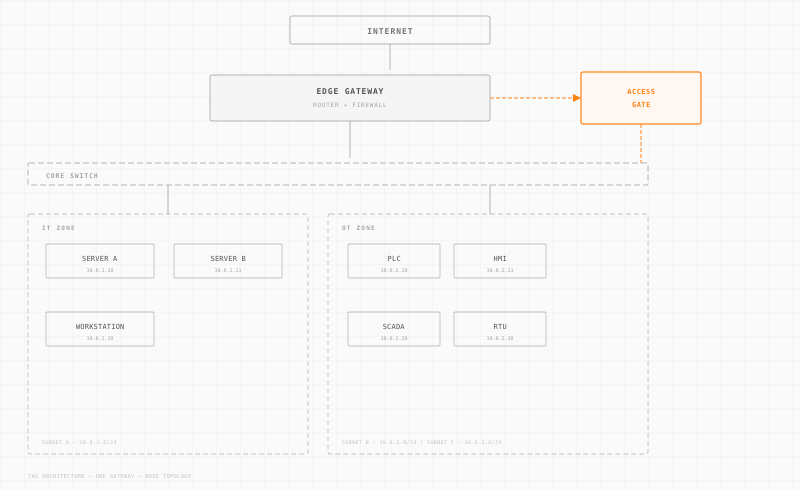
Advanced Cyber Hygiene refers to a comprehensive and proactive approach to maintaining and improving the security posture of an organization by implementing best practices and procedures that go beyond basic cybersecurity measures. It involves regular assessments, continuous monitoring, and the integration of advanced security tools and practices to protect against sophisticated cyber threats, particularly in industrial and critical infrastructure environments.
Understanding Advanced Cyber Hygiene
In the context of OT/IT cybersecurity, advanced cyber hygiene encompasses a range of practices that ensure the secure operation of industrial and critical systems. These practices include the management of security patches, the use of multifactor authentication (MFA), network segmentation, and the deployment of intrusion detection and prevention systems (IDPS). By prioritizing these practices, organizations can better safeguard their systems against increasingly sophisticated cyber threats.
The Role in Industrial and Critical Environments
Industrial and critical environments, such as manufacturing plants, energy grids, and water treatment facilities, are particularly vulnerable to cyber attacks due to their reliance on operational technology (OT) systems, which are often less secure than traditional IT systems. Advanced cyber hygiene is crucial in these environments to protect against disruptions that could lead to operational downtime, safety hazards, or even environmental damage.
NIST SP 800-171, a standard for protecting controlled unclassified information in non-federal systems, emphasizes the importance of implementing strong security hygiene practices. Similarly, the Cybersecurity Maturity Model Certification (CMMC) includes requirements for maintaining good cyber hygiene as a fundamental component of achieving compliance.
Key Components of Advanced Cyber Hygiene
-
Regular Security Assessments: Conducting regular assessments to identify vulnerabilities and gaps in the security posture.
-
Continuous Monitoring: Implementing systems that continuously monitor network activity to detect and respond to suspicious behavior in real-time.
-
Patch Management: Ensuring that all systems and software are kept up-to-date with the latest security patches to protect against known vulnerabilities.
-
Network Segmentation: Dividing a network into smaller, isolated segments to prevent lateral movement by attackers in case of a breach.
-
Employee Training and Awareness: Educating employees about the latest cyber threats and best practices for maintaining security hygiene.
-
Incident Response Planning: Developing and regularly updating an incident response plan to quickly and effectively respond to security breaches.
Why It Matters
Advanced cyber hygiene is essential for safeguarding critical infrastructure and industrial environments against evolving cyber threats. As these environments become increasingly interconnected and reliant on digital systems, the potential impact of a cyber attack becomes more severe. By adopting advanced cyber hygiene practices, organizations can enhance their resilience against attacks, reduce the risk of operational disruptions, and comply with industry standards such as IEC 62443 and NIST SP 800-82.
Related Concepts
- Zero Trust Architecture
- Network Segmentation
- Intrusion Detection and Prevention Systems (IDPS)
- Multifactor Authentication (MFA)
- Patch Management