Contractor evaluation is the systematic process of assessing and approving vendors, suppliers, or contractors to ensure they meet the necessary standards and requirements for a specific project or collaboration. This evaluation focuses on factors such as financial stability, technical capability, compliance with regulations, and past performance.
Understanding Contractor Evaluation
In the realm of OT/IT cybersecurity, contractor evaluation becomes crucial for maintaining the integrity and security of industrial, manufacturing, and critical infrastructure environments. These sectors often rely on third-party vendors to supply equipment, software, and services that are integral to their operations. Evaluating contractors not only helps in selecting the right partners but also mitigates potential risks associated with third-party engagements.
Key Components of Contractor Evaluation
-
Financial Stability: Assessing a contractor's financial health ensures they have the resources to complete projects and maintain operations over time. This involves reviewing financial statements, credit ratings, and past financial performance.
-
Technical Capability: Evaluating a contractor's technical expertise and infrastructure is essential, especially in cybersecurity, where the technical demands are high. This might include verifying certifications, testing technical solutions, and reviewing case studies of past work.
-
Compliance and Regulatory Adherence: Contractors must comply with relevant standards and regulations, such as NIST 800-171 for protecting controlled unclassified information, CMMC for cybersecurity maturity in defense contracts, and IEC 62443 for cybersecurity in industrial automation and control systems.
-
Past Performance and Reputation: Reviewing a contractor’s track record through references, performance reviews, and industry reputation can provide insight into their reliability and trustworthiness.
-
Risk Management Practices: Understanding how a contractor manages risks, including cybersecurity threats, helps in evaluating their readiness to handle potential issues that may arise during a partnership.
Why It Matters
In industrial, manufacturing, and critical environments, the reliability and security of operations are paramount. A failure in any part of the supply chain can lead to significant operational disruptions, financial losses, or even safety hazards. Contractor evaluation minimizes these risks by ensuring that only qualified and compliant vendors are engaged.
Cybersecurity is a significant concern, as contractors can be potential vectors for cyber threats if not thoroughly vetted. For instance, a poorly evaluated vendor could introduce vulnerabilities into a network through compromised hardware or software. This is why adherence to standards like NIST 800-171 or IEC 62443 is so crucial; they provide frameworks for securing information and systems in sensitive environments.
In Practice
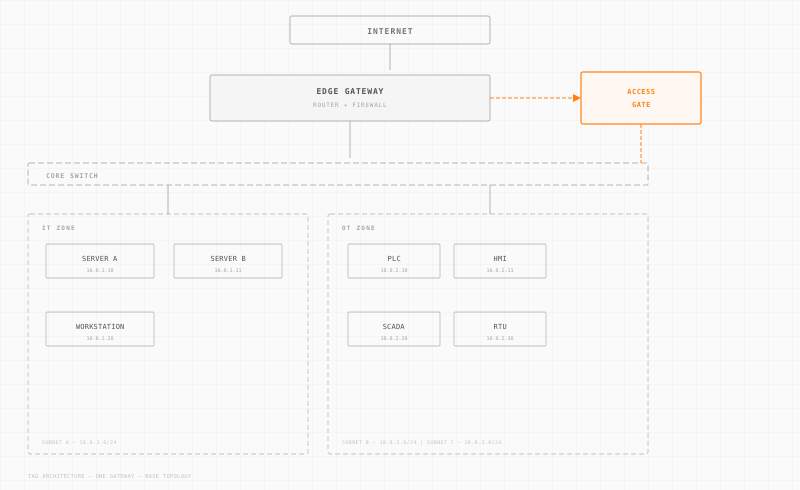
Consider a manufacturing facility that requires a new access control system. The contractor evaluation process would involve assessing potential vendors for their ability to meet technical requirements, adhere to cybersecurity standards, and maintain operational security. By conducting a thorough evaluation, the facility ensures that the selected contractor can deliver a secure, compliant solution without introducing undue risk to the network.
Related Concepts
- Supply Chain Risk Management
- Third-Party Risk Assessment
- Vendor Management
- Compliance Auditing
- Cybersecurity Standards