A compliance framework is a structured set of guidelines and best practices designed to help organizations meet regulatory requirements and manage risks effectively. In the context of OT/IT cybersecurity, compliance frameworks serve as essential tools for ensuring that industrial, manufacturing, and critical infrastructure environments adhere to necessary security standards, thereby safeguarding sensitive data and maintaining operational integrity.
Understanding Compliance Frameworks
In today's interconnected world, the convergence of Operational Technology (OT) and Information Technology (IT) has introduced new cybersecurity challenges. A compliance framework provides a roadmap for organizations to address these challenges by aligning their security practices with recognized standards. This alignment helps mitigate risks associated with cyber threats, data breaches, and unauthorized access, which are particularly concerning for industries that rely heavily on both OT and IT systems.
Compliance frameworks typically encompass various security standards and regulations, such as the NIST 800-171, CMMC, and IEC 62443. These frameworks offer detailed guidelines on how organizations should secure their environments, manage vulnerabilities, and respond to incidents. By following these frameworks, organizations can ensure they remain compliant with legal and regulatory mandates while enhancing their overall security posture.
Key Components of a Compliance Framework
- Risk Assessment and Management: Identifying and evaluating potential threats to the organization's assets and implementing measures to mitigate these risks.
- Access Control: Ensuring that only authorized personnel have access to sensitive systems and information, a critical aspect of Zero Trust security models.
- Incident Response: Developing and maintaining procedures for detecting, responding to, and recovering from security incidents.
- Continuous Monitoring: Implementing ongoing monitoring of systems and networks to detect suspicious activities and ensure compliance with policies.
- Training and Awareness: Educating employees about cybersecurity risks and best practices to foster a security-conscious culture within the organization.
Why It Matters
For industrial and manufacturing sectors, adhering to a compliance framework is not just about avoiding fines or legal penalties; it is about protecting critical infrastructure from potentially devastating cyberattacks. These sectors are often targeted by cybercriminals due to the valuable data and operational capabilities they possess. A robust compliance framework helps these organizations build resilience against attacks, minimizing downtime and ensuring continuity of operations.
Relevant Standards
- NIST 800-171: Provides guidelines for protecting Controlled Unclassified Information in non-federal systems.
- CMMC (Cybersecurity Maturity Model Certification): A unified standard for implementing cybersecurity across the Defense Industrial Base (DIB).
- IEC 62443: A series of standards specifically tailored for industrial automation and control systems security.
In Practice
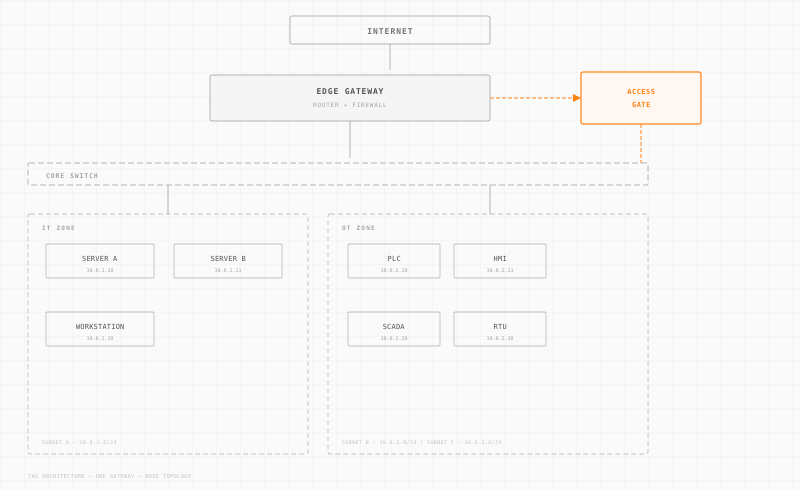
An example of implementing a compliance framework in practice is the use of the Trout Access Gate in industrial environments. This appliance ensures compliance with security standards by providing features such as secure remote access, threat detection, and vulnerability management. By integrating such solutions, organizations can meet their compliance obligations while also enhancing their cybersecurity posture.
Related Concepts
- Cybersecurity Framework: A set of standards and practices for managing cybersecurity-related risks.
- Zero Trust Security: A security model that requires strict identity verification for every person and device attempting to access resources on a network.
- Risk Management: The process of identifying, assessing, and controlling threats to an organization's capital and earnings.
- Incident Response Plan: A structured approach for handling and managing the aftermath of a security breach or cyberattack.
- Security Standards: Agreed-upon norms or requirements established to ensure the safety and security of systems and data.