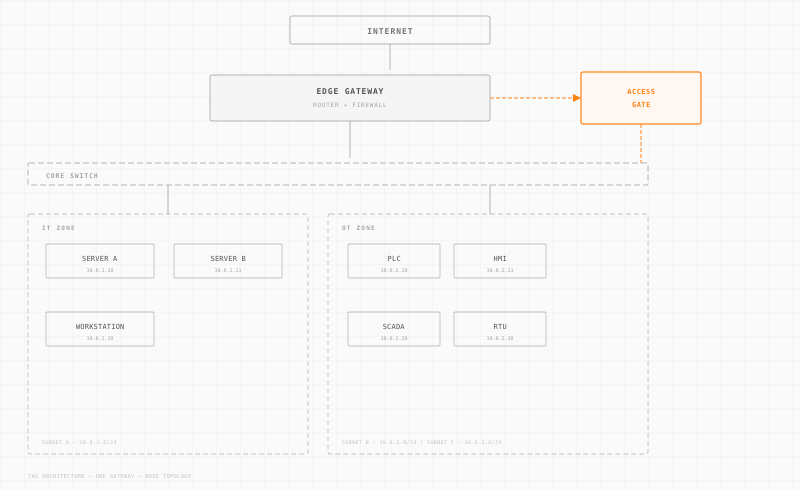
Credential Management refers to the processes and technologies used to securely store, manage, and utilize user credentials such as passwords, security tokens, and digital certificates. It ensures that only authorized users have access to specific resources, playing a critical role in safeguarding sensitive information and maintaining security within IT and OT environments.
Understanding Credential Management in OT/IT Cybersecurity
In the realm of Operational Technology (OT) and Information Technology (IT), credential management is vital due to the complex and interconnected nature of industrial systems. These environments often consist of myriad devices, sensors, and control systems that require secure communication and access control. Credential management systems provide a structured way to handle user identities and access privileges, reducing the risk of unauthorized access and potential security breaches.
Credential Storage and Protection
A key component of credential management is the secure storage of credentials using password vaults. These vaults encrypt credentials, thus protecting them from unauthorized access and potential cyber threats. By storing passwords and other sensitive data in a secure vault, organizations can centralize access control and enhance security posture.
Credential Usage and Rotation
Credential management also involves the regular updating and rotation of credentials to minimize the risk of them being compromised. Implementing credential rotation policies ensures that passwords are changed frequently and that any stolen credentials are rendered useless in a short period. This practice aligns with guidelines outlined in standards like NIST SP 800-171, which emphasize the importance of protecting controlled unclassified information in non-federal systems and organizations.
Why It Matters
Credential management is essential for maintaining the security and integrity of industrial, manufacturing, and critical environments. These sectors are often targeted by cybercriminals due to their critical infrastructure and the sensitive nature of their operations. Effective credential management reduces the likelihood of breaches by ensuring that only authenticated users can access restricted systems.
The Cybersecurity Maturity Model Certification (CMMC) and NIST SP 800-171 underscore the need for robust credential management as part of comprehensive cybersecurity practices. CMMC, for instance, requires organizations to demonstrate their ability to securely manage credentials as a means to protect federal contract information.
In Practice
Consider a manufacturing plant that uses a network of IoT devices to monitor equipment performance. Each device requires credentials to communicate securely with the central management system. Without proper credential management, a compromised device could grant unauthorized access to the entire network, leading to potential operational disruptions or data theft. By employing a strong credential management strategy, including the use of password vaults and regular credential updates, the plant can significantly reduce these risks.
Related Concepts
- Password Vault: A secure repository for storing and managing passwords and other sensitive credentials.
- Access Control: The process of granting or denying specific requests to obtain and use information and related information processing services.
- Identity Management: The organizational process for identifying, authenticating, and authorizing individuals or groups of people to have access to applications, systems, or networks.
- Authentication: The process of verifying the identity of a user or device.
- Digital Certificates: Electronic documents used to prove the ownership of a public key, part of a broader credential management strategy.