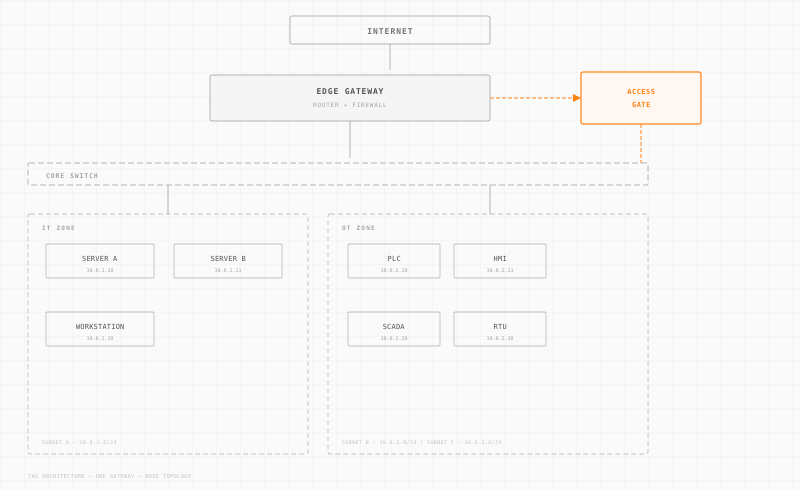
Identity Management refers to the processes and technologies used to manage digital identities, ensuring that the right individuals have appropriate access to resources in IT and OT environments. It involves the creation, maintenance, and deletion of digital identities, as well as the governance of user access rights.
Understanding Identity Management
In the context of OT/IT cybersecurity, identity management is crucial to safeguarding networks from unauthorized access and ensuring that legitimate users can access the necessary resources efficiently. As industrial and manufacturing environments become increasingly digitized, robust identity management systems are essential to protect sensitive data and critical infrastructure.
Identity management encompasses several key components, including identity governance, access management, and privileged access management. These components work together to ensure that digital identities are properly authenticated, authorized, and audited throughout their lifecycle.
Identity Governance
Identity governance is a subset of identity management focused on defining and managing policies related to digital identities. It ensures compliance with industry standards and regulations, such as NIST 800-171 and CMMC, by automating policy enforcement and access reviews. For example, in a manufacturing setting, identity governance might involve ensuring that only certified personnel can operate specific machinery, thereby reducing the risk of human error or sabotage.
Access Management
Access management involves authenticating users and granting them the necessary permissions to access resources. This is particularly important in OT environments where unauthorized access could lead to catastrophic failures or safety breaches. Access management solutions often use multi-factor authentication, single sign-on, and role-based access controls to manage user access efficiently and securely.
Privileged Access Management
Privileged access management (PAM) focuses on controlling and monitoring access to critical systems by users with elevated rights. PAM solutions are essential in industrial environments to prevent misuse of privileged accounts, which could result in significant operational disruptions or data breaches.
Why It Matters
Identity management is a cornerstone of a Zero Trust architecture, which assumes that threats may exist both inside and outside the network. By ensuring that every user's identity is verified and tracked, organizations can significantly reduce the risk of unauthorized access and data breaches.
In industrial and critical environments, the stakes are particularly high. An effective identity management system can prevent unauthorized access to critical systems, protect intellectual property, and ensure compliance with stringent regulations like IEC 62443, which sets forth cybersecurity standards for industrial automation and control systems.
In Practice
Consider a power plant where numerous employees and third-party contractors require access to various systems. Implementing a robust identity management solution helps the facility to:
- Limit access to sensitive systems strictly to authorized personnel based on their roles.
- Ensure compliance with regulations by maintaining detailed access logs and performing regular audits.
- Enhance security by using advanced authentication methods to verify user identities.
- Facilitate incident response by quickly identifying and revoking compromised credentials.
Related Concepts
- Access Control
- Zero Trust Security
- Multi-Factor Authentication
- Role-Based Access Control
- Privileged Access Management