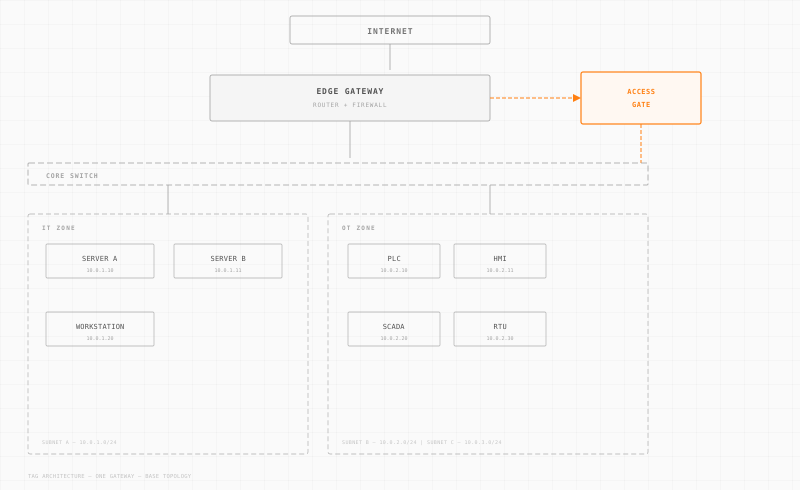
Password Management refers to the processes and technologies used to create, store, secure, and manage passwords and credentials for users, systems, and applications. It is a fundamental component of cybersecurity, providing a first line of defense against unauthorized access to sensitive data and critical systems.
Password Management in OT/IT Cybersecurity
In the context of Operational Technology (OT) and Information Technology (IT) cybersecurity, password management is crucial for safeguarding industrial control systems (ICS), manufacturing environments, and critical infrastructures. These environments often include a mix of legacy systems and modern IT assets that require robust authentication measures to prevent breaches. Implementing effective password management helps in maintaining the integrity and confidentiality of operational processes and data.
Key Components of Password Management
-
Password Policy: Establishing a comprehensive password policy is vital. This includes guidelines on password complexity, length, and expiration to ensure that passwords are not easily guessed or cracked. Standards like NIST SP 800-171 and CMMC provide frameworks for developing such policies.
-
Credential Management: This involves the secure storage and retrieval of passwords and other sensitive credentials. Solutions like password managers can automate this process, reducing human error and exposure. Credential management is especially important in environments where multiple users need access to shared systems.
-
Multi-Factor Authentication (MFA): Implementing MFA adds an extra layer of security by requiring additional verification methods beyond just a password. This is particularly beneficial in OT/IT environments where access to critical systems needs to be tightly controlled.
-
Password Encryption: Ensuring that passwords are stored in an encrypted format prevents unauthorized access, even if the storage medium is compromised. This aligns with compliance requirements such as NIS2 and IEC 62443.
Challenges in Password Management
In industrial and manufacturing settings, password management can be challenging due to the diversity of systems and the need for continuous operations. Legacy systems might not support modern password protocols, and operational disruptions can occur if passwords are not managed effectively. Therefore, regular audits and updates to password policies and management tools are necessary to adapt to evolving threats.
Why It Matters
Effective password management is critical in protecting industrial, manufacturing, and critical environments from cyber threats. Poor password hygiene can lead to data breaches, operational disruptions, and financial losses. For instance, a compromised password on a critical control system could allow malicious actors to alter production processes, leading to defective products or safety hazards. By adhering to established standards like NIST 800-171, organizations can minimize these risks and enhance their overall security posture.
Moreover, with the increasing connectivity between OT and IT networks, the potential attack surface expands, making robust password management even more essential. Compliance with regulations such as CMMC and NIS2 not only helps in maintaining security but also ensures that organizations meet mandatory legal requirements, thus avoiding penalties and reputational damage.
In Practice
Implementing a password management system in a manufacturing plant might involve deploying a centralized password manager that integrates with existing IT and OT systems. Regular training sessions can educate employees about the importance of strong passwords and how to use password management tools effectively. Additionally, periodic reviews of password policies can ensure they remain aligned with the latest security standards and best practices.