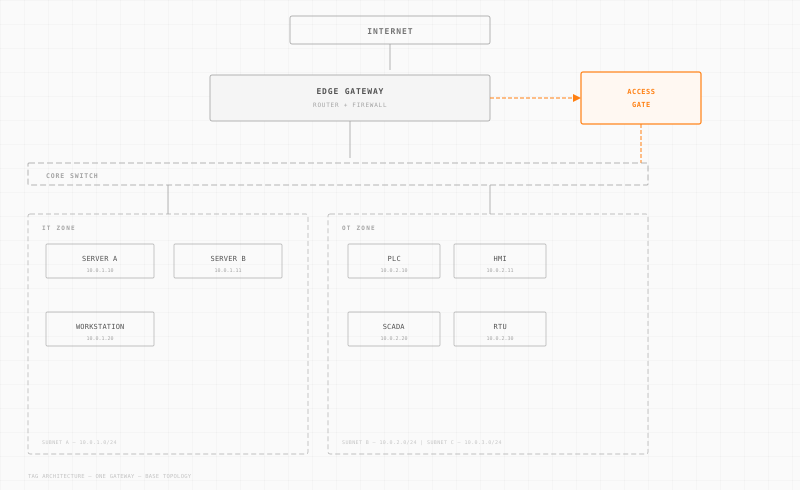
Data Redundancy refers to the practice of storing the same piece of data in multiple locations. This approach ensures that if one data storage location fails, the data can still be retrieved from another, enhancing the reliability and accessibility of information within a network.
Understanding Data Redundancy in OT/IT Cybersecurity
In the context of Operational Technology (OT) and Information Technology (IT) cybersecurity, data redundancy plays a critical role in maintaining the integrity and availability of data across industrial and critical infrastructure environments. These sectors often rely on complex systems that require continuous operation, and any downtime or data loss can have severe repercussions. Thus, implementing data redundancy strategies can be vital for disaster recovery and ensuring business continuity.
Data redundancy can be achieved through various methods, including redundant storage and data replication. Redundant storage involves maintaining multiple copies of data across different physical storage devices or locations. Data replication, on the other hand, involves regularly copying data from one location to another to ensure that all copies remain current and consistent.
Why It Matters for Industrial, Manufacturing & Critical Environments
For industries such as manufacturing, energy, and other critical infrastructure sectors, data redundancy is not just a convenience but a necessity. These environments often operate under stringent regulations and standards, like NIST 800-171, CMMC, NIS2, and IEC 62443, which emphasize the importance of data protection and risk management.
-
Compliance and Risk Management: Adhering to standards such as NIST 800-171 and CMMC requires organizations to implement robust data protection strategies, including redundant storage mechanisms, to safeguard sensitive information from unauthorized access and data loss.
-
Operational Continuity: In manufacturing and other critical sectors, operational disruptions can lead to significant financial and reputational damage. Data redundancy helps prevent data loss due to hardware failures or cyberattacks, ensuring that operations can continue with minimal interruption.
-
Disaster Recovery: With data redundancy, organizations can quickly recover from disasters such as cyberattacks, natural calamities, or system failures. This is crucial for maintaining the trust of stakeholders and customers, as well as for complying with regulatory requirements that mandate data availability and integrity.
Practical Examples
-
Redundant Storage in Manufacturing: A manufacturing plant may store its critical operational data across multiple servers within its facility. In case of a server failure, the data remains accessible from other servers, ensuring that production processes are not halted.
-
Data Replication in Energy Sector: An energy company might replicate its grid management data across multiple data centers. This ensures that if one data center is compromised or experiences downtime, the data can still be accessed from another location, maintaining the stability and reliability of energy distribution.
In Practice
Implementing data redundancy requires careful planning and architecture design to balance costs with the level of redundancy needed. Factors such as the criticality of the data, the potential impact of data loss, and compliance requirements should guide the extent and form of redundancy employed. Using technologies like RAID (Redundant Array of Independent Disks), cloud-based replication, and geographically dispersed data centers can enhance an organization's resilience against data breaches and system failures.
Related Concepts
- Data Backup
- Disaster Recovery
- Data Integrity
- System Resilience
- Business Continuity