Encryption is a cryptographic process that converts information or data into a code, preventing unauthorized access while ensuring confidentiality. In the realm of cybersecurity, especially within OT/IT networks, encryption is a fundamental practice for safeguarding sensitive data against cyber threats.
Understanding Encryption in OT/IT Cybersecurity
In the context of Operational Technology (OT) and Information Technology (IT) cybersecurity, encryption serves as a critical line of defense. As industries become increasingly digitized, they face heightened exposure to cyber threats. This transformation necessitates robust security measures to protect data integrity and confidentiality across systems. Encryption is employed to encode sensitive information, making it unreadable to unauthorized users, thus preserving the data's confidentiality and integrity.
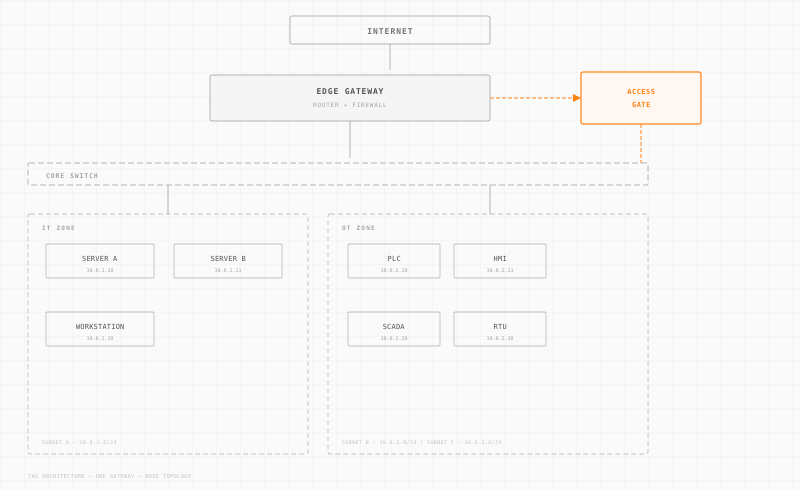
In OT environments, which include industrial and manufacturing systems, encryption ensures that communication between devices, control systems, and networks remains secure. This is crucial for preventing unauthorized access or data breaches that could disrupt operations or lead to safety hazards.
Importance in Industrial, Manufacturing, and Critical Environments
Encryption is particularly important in industrial sectors where the compromise of data can have severe consequences, including operational disruptions, financial losses, and even threats to human safety. For example, in a manufacturing setting, encrypted communication helps protect proprietary industrial processes from espionage or sabotage.
Moreover, critical environments such as power grids, water treatment facilities, and transportation systems rely heavily on encryption to secure communications and control commands. These sectors are often targets for cyber-attacks aimed at causing widespread disruption or extracting sensitive information.
Relevant Standards and Compliance
Several standards address the need for encryption in cybersecurity frameworks, ensuring organizations implement adequate measures to protect sensitive information:
-
NIST 800-171: This standard provides guidelines for protecting Controlled Unclassified Information (CUI) in non-federal systems, emphasizing the use of encryption to safeguard data both at rest and in transit.
-
Cybersecurity Maturity Model Certification (CMMC): For organizations within the Defense Industrial Base, CMMC mandates encryption practices to protect Federal Contract Information (FCI) and CUI.
-
IEC 62443: This international standard provides a framework for secure industrial automation and control systems, advocating for encryption as a means to secure data communication and protect against cyber threats.
Why It Matters
The increasing sophistication of cyber threats underscores the necessity for robust encryption practices. Without encryption, sensitive data is vulnerable to interception, manipulation, or theft, posing significant risks to operational continuity and security. Encryption helps mitigate these risks by ensuring that even if data is intercepted, it remains inaccessible and unusable to unauthorized entities.
For industries handling sensitive information, from proprietary designs in manufacturing to critical operational data in utilities, encryption is not just a security measure but a business imperative. Implementing encryption in line with industry standards not only protects data but also ensures compliance with regulatory requirements, fostering trust and reliability.
Related Concepts
- Cryptography: The broader field of study that encompasses encryption techniques and methodologies.
- Data Integrity: The assurance that data remains accurate and unaltered during storage or transmission.
- Access Control: Mechanisms that restrict access to data and systems to authorized users.
- Network Security: Policies and practices aimed at protecting network infrastructure from unauthorized access or attacks.
- Data at Rest: Information that is stored on a device or network, requiring encryption to prevent unauthorized access.