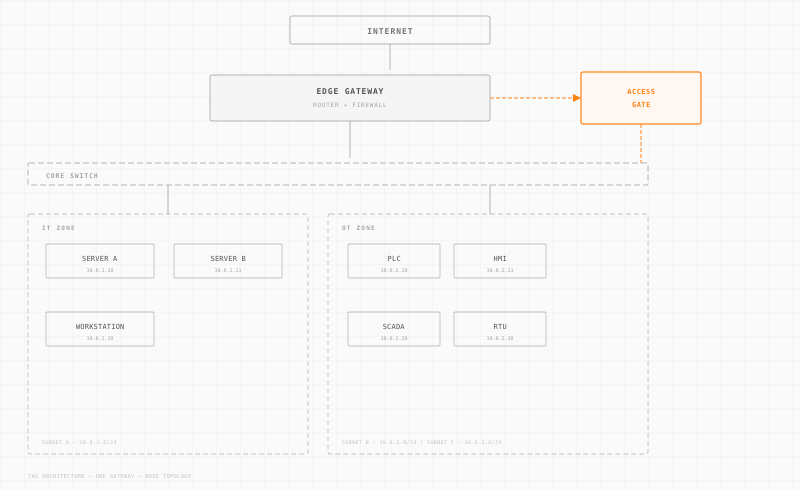
Network Security is a broad term encompassing the policies, processes, and technologies designed to protect the integrity, confidentiality, and accessibility of computer networks. In the context of OT/IT cybersecurity, network security is crucial for safeguarding industrial control systems, critical infrastructure, and manufacturing environments from cyber threats.
Understanding Network Security in OT/IT Cybersecurity
In the realm of Operational Technology (OT) and Information Technology (IT), network security involves measures to defend against unauthorized access, misuse, or malfunction of a networked system. It is particularly important in environments where both IT systems and OT systems must coexist, as these systems often interface with machinery and control mechanisms critical to industrial operations.
Network security in OT/IT settings includes a variety of techniques and tools, such as firewalls, intrusion detection systems, and encryption protocols, to protect data in transit and at rest. It also involves continuous monitoring and the implementation of Zero Trust architecture to ensure that each device and user accessing the network is verified and authenticated.
Why It Matters for Industrial and Critical Environments
Industrial, manufacturing, and critical environments are often targets for cyber threats due to the high value and sensitivity of their operations. A cyber attack on such environments can lead to significant operational disruptions, safety hazards, and financial losses. Implementing robust network security measures helps to mitigate these risks.
Compliance and Standards
Network security is also a key component of several cybersecurity standards and frameworks. Organizations in critical sectors often need to comply with standards like:
- NIST 800-171, which provides guidelines for protecting controlled unclassified information in non-federal systems.
- CMMC (Cybersecurity Maturity Model Certification), a standard for assessing cybersecurity maturity in defense contractors.
- IEC 62443, a series of standards focusing on the cybersecurity of industrial automation and control systems.
These standards emphasize the need for comprehensive network protection strategies to ensure both compliance and security.
In Practice
Consider a manufacturing plant where network security is paramount. The plant's network connects various components, from programmable logic controllers (PLCs) to enterprise resource planning (ERP) systems. A robust network security strategy would include:
- Segmenting the network to isolate critical systems from less secure ones.
- Implementing firewalls to control traffic between network segments.
- Using intrusion detection systems to monitor network activity and alert administrators to potential threats.
- Ensuring regular updates and patches to all networked devices to protect against vulnerabilities.
- Employing encryption to secure data transmitted across the network.
By implementing these measures, the plant can protect its operations from cyber threats while maintaining compliance with relevant standards.
Related Concepts
- Zero Trust Architecture: A security model that assumes no implicit trust and requires verification for each access request.
- Intrusion Detection System (IDS): A technology used to detect unauthorized access or anomalies in network traffic.
- Firewall: A system designed to prevent unauthorized access to or from a private network.
- Data Encryption: The process of converting data into a code to prevent unauthorized access.
- Network Segmentation: Dividing a network into smaller parts to improve security and performance.