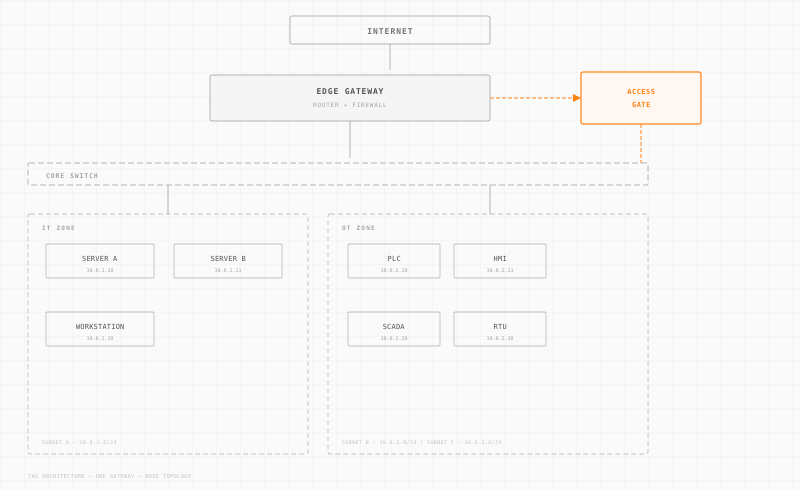
ISO/IEC 27001 is an international standard that outlines the requirements for establishing, implementing, maintaining, and continually improving an Information Security Management System (ISMS). The goal of ISO/IEC 27001 is to help organizations protect their information assets by using a systematic approach to managing sensitive company information, ensuring it remains secure.
Understanding ISO/IEC 27001 in OT/IT Cybersecurity
In the realm of operational technology (OT) and information technology (IT) cybersecurity, ISO/IEC 27001 provides a robust framework for managing and protecting information assets. It applies to all types of organizations, including those operating in industrial, manufacturing, and critical infrastructure sectors, where the protection of sensitive information is paramount. By adopting ISO/IEC 27001, organizations can ensure that their cybersecurity practices are comprehensive and aligned with global standards, which is crucial for maintaining trust with customers and partners.
ISO/IEC 27001 requires organizations to systematically examine their information security risks, taking into account the threats, vulnerabilities, and impacts. It mandates the implementation of a coherent and comprehensive suite of information security controls and risk treatment methods. These controls are part of the broader ISMS, which also includes processes, policies, and structures designed to protect information confidentiality, integrity, and availability.
Why ISO/IEC 27001 Matters for Industrial, Manufacturing & Critical Environments
In industrial and manufacturing environments, where OT systems are increasingly integrated with IT networks, the security of information systems is critical. ISO/IEC 27001 helps organizations in these sectors address unique cybersecurity challenges by providing a structured framework to protect information assets effectively.
Implementing ISO/IEC 27001 can aid in compliance with other regulations and standards such as NIST SP 800-171, CMMC, and IEC 62443. These frameworks require organizations to demonstrate robust information security practices, which ISO/IEC 27001 supports by providing a clear pathway to developing an effective ISMS.
For critical environments, where operational disruptions can have significant consequences, ISO/IEC 27001 ensures that information security risks are managed proactively. This standard helps organizations prepare for and respond to incidents that could compromise sensitive data, thus safeguarding both operational continuity and security.
Relevant Standards
ISO/IEC 27001 is often used in conjunction with other standards to form a comprehensive security strategy. For instance, IEC 62443 focuses on the security of industrial automation and control systems, making it particularly relevant for organizations in sectors like manufacturing and critical infrastructure. By aligning with both ISO/IEC 27001 and IEC 62443, organizations can ensure that they are addressing both IT and OT security requirements comprehensively.
In Practice
To implement ISO/IEC 27001 effectively, organizations must first gain management commitment and define the scope of the ISMS. This involves identifying and evaluating information assets, assessing risks, and determining the necessary controls. For example, a manufacturing company might identify its production line data as a critical asset and implement controls to protect this information from unauthorized access or alteration.
The standard also requires regular audits and reviews to ensure that the ISMS remains effective and relevant. This continuous improvement process allows organizations to adapt to new threats and vulnerabilities as they arise, ensuring ongoing protection.
ISO/IEC 27001 certification can also be a valuable marketing tool, demonstrating to clients and partners that an organization takes information security seriously and is committed to maintaining high standards.
Related Concepts
- Information Security Management System (ISMS)
- NIST SP 800-171
- CMMC (Cybersecurity Maturity Model Certification)
- IEC 62443