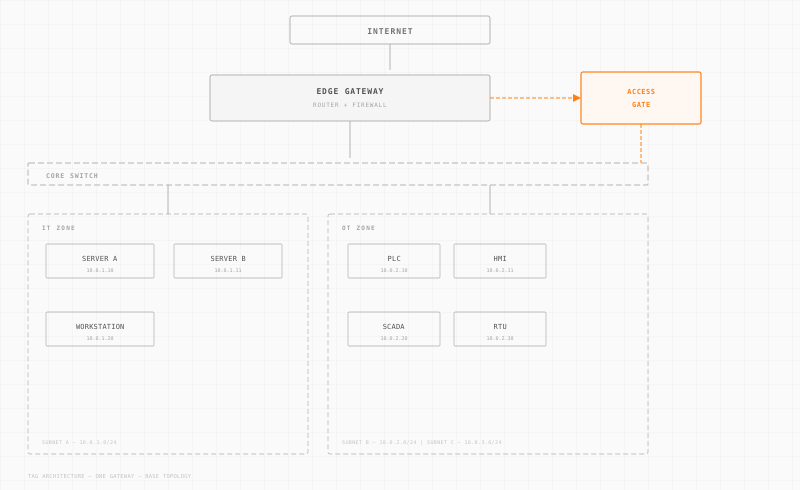
A production order is a formal request or instruction to produce a specified quantity of a particular product or assembly within a manufacturing setting. It serves as a critical component in the orchestration of manufacturing processes, dictating the what, when, and how of production activities to ensure efficiency and consistency.
Understanding Production Orders in OT/IT Cybersecurity
In the context of OT (Operational Technology) and IT (Information Technology) cybersecurity, the integrity and security of production orders are paramount. These documents not only guide the manufacturing processes but also contain sensitive and proprietary information that, if compromised, could lead to disruptions in production, financial loss, or intellectual property theft.
Role in Manufacturing Environments
Manufacturing environments rely on production orders to coordinate complex operations across various departments, including procurement, production, quality control, and logistics. They ensure that every aspect of production aligns with organizational standards and customer requirements. The integration of IT systems in OT environments has digitized these orders, enhancing real-time tracking and management but also introducing cybersecurity risks.
Why It Matters
In industrial, manufacturing, and critical environments, maintaining the confidentiality, integrity, and availability of production orders is crucial. Cyber threats targeting these documents can disrupt production schedules, leading to costly downtime and damaging a company’s reputation. Moreover, unauthorized access to production orders can result in counterfeit products entering the market or the loss of competitive advantage.
Compliance with Industry Standards
Adhering to standards such as NIST 800-171, CMMC, NIS2, and IEC 62443 is essential for protecting production orders. These standards provide guidelines for safeguarding controlled unclassified information, ensuring network security, and managing cybersecurity risks. For example, NIST 800-171 outlines measures for protecting sensitive information stored in non-federal systems, which can be directly applied to the security of digital production orders.
In Practice
Consider a smart factory where production orders are transmitted across a network of interconnected devices. Ensuring these orders are encrypted and authenticated protects them from unauthorized access and manipulation. Implementing robust access controls and regularly auditing access logs are practical measures to safeguard these critical documents. Additionally, training employees on recognizing phishing attempts and securing their credentials is vital to prevent unauthorized access to production systems.
Related Concepts
- Work Order: A document that provides specific instructions about tasks to be completed, often used in maintenance or repair contexts.
- Manufacturing Execution System (MES): A system that monitors and controls production on the factory floor, ensuring that production orders are executed efficiently.
- Supply Chain Management: The handling of the entire production flow of a good or service, including the security of information exchanged throughout the supply chain.
- Critical Infrastructure Protection (CIP): Measures taken to protect essential systems and assets that are vital to a country's security, economy, and public health and safety.
- Zero Trust Architecture: A security framework that assumes no user or system is inherently trusted, crucial for safeguarding access to production orders in a networked environment.