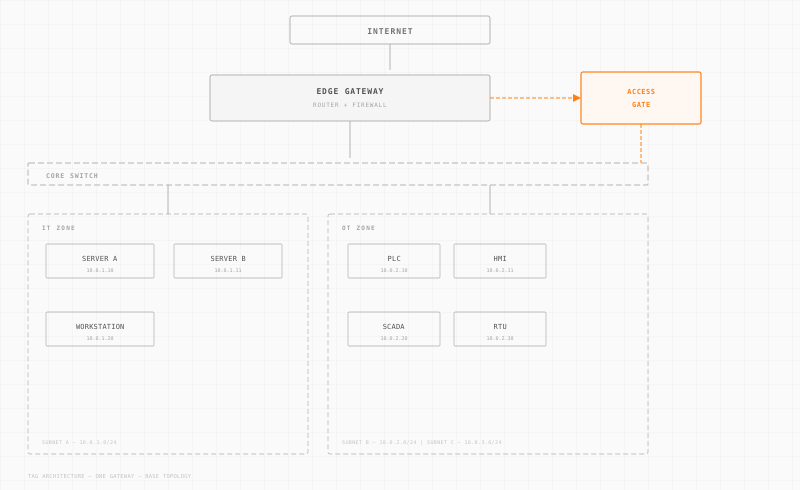
A work order is a formal document or digital request that outlines tasks or services to be performed, typically in maintenance, repair, or operational contexts. In cybersecurity, particularly within OT/IT environments, work orders are crucial for managing and tracking maintenance activities that ensure the integrity and security of critical systems.
Understanding Work Orders in OT/IT Cybersecurity
In industrial and operational technology (OT) settings, work orders serve as a bridge between the planning and execution of maintenance tasks. They are essential for documenting the specifics of maintenance work, including the scope, required resources, timelines, and responsible personnel. This meticulous documentation helps maintain the reliability and security of systems that are integral to industrial operations.
Work orders are used not only for routine maintenance tasks but also for addressing unexpected issues or implementing updates and patches necessary for cybersecurity. In OT/IT cybersecurity, the timely and accurate completion of a maintenance work order is critical to prevent vulnerabilities and ensure compliance with security standards like NIST 800-171, CMMC, and NIS2.
The Importance of Work Orders in Industrial and Critical Environments
Ensuring System Reliability
In environments where OT and IT converge, such as in manufacturing or critical infrastructure, maintaining system reliability is paramount. A well-managed work order process ensures that all maintenance activities are scheduled and executed without overlooking any critical system components. This reduces the risk of unscheduled downtimes that could compromise both operational efficiency and security.
Supporting Compliance and Security Standards
Work orders are integral to satisfying various cybersecurity and compliance standards. For instance, NIST 800-171 requires that organizations implement maintenance processes that include documented procedures for system modifications and repairs. Similarly, CMMC mandates consistent monitoring and maintenance of systems to protect controlled unclassified information. A detailed work order system supports these requirements by providing a clear audit trail of all maintenance activities.
Enhancing Incident Response and Recovery
In the event of a cybersecurity incident, having a detailed history of work orders can accelerate the incident response process. It allows cybersecurity teams to quickly trace back to any recent changes or maintenance activities that might have affected system security. This historical data is invaluable for diagnosing issues and implementing corrective measures efficiently.
Why It Matters
In practice, a maintenance work order in an industrial environment might involve the routine update of firewall settings or the replacement of aging hardware. By documenting these tasks in a work order, organizations can ensure that all necessary steps are followed, the right personnel are assigned, and any potential impacts on the network are considered in advance.
In critical sectors such as utilities or transportation, the stakes are even higher. A well-executed service order can be the difference between a minor service interruption and a major outage that affects thousands of users. Therefore, the discipline of creating, managing, and reviewing work orders is not just about operational efficiency but is a key component of risk management and cybersecurity posture.
Related Concepts
- Preventive Maintenance: Scheduled maintenance activities aimed at preventing unexpected equipment failures and extending the lifespan of systems.
- Change Management: A systematic approach to managing all changes made to a product or system, ensuring minimal impact on service quality.
- Incident Response: The process of identifying, managing, and mitigating security breaches or cyber attacks.
- Asset Management: The systematic tracking and management of an organization's assets to enhance security and operational efficiency.
- Compliance Auditing: Regular evaluations to ensure that an organization adheres to regulatory and industry standards.