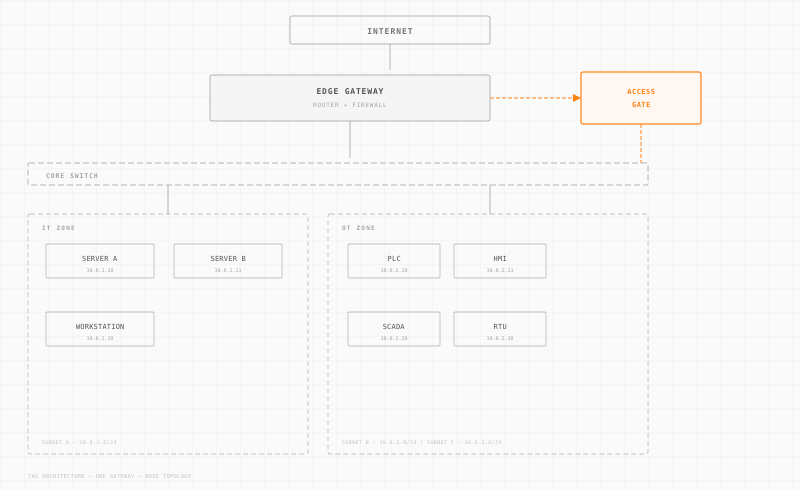
Single Sign-On (SSO) is an authentication process that allows a user to access multiple applications with one set of login credentials. It streamlines the user experience by eliminating the need to remember multiple username and password combinations for different applications and systems.
Understanding Single Sign-On
In the context of OT/IT cybersecurity, Single Sign-On (SSO) is particularly significant because it simplifies access management across complex networks that often span both operational technology (OT) and information technology (IT) environments. By deploying SSO, organizations can ensure that users, whether they are employees, contractors, or partners, can securely access required resources without the hassle of multiple logins.
An SSO system typically works by establishing a trusted relationship between disparate systems. When a user logs into the SSO system, a session token is generated and used to authenticate the user across connected applications. This token eliminates the need to re-enter passwords, thus reducing the risk of password fatigue and related security vulnerabilities.
Importance in Industrial, Manufacturing, and Critical Environments
For industries such as manufacturing, utilities, and other critical infrastructure sectors, SSO is crucial for maintaining robust security measures while ensuring operational efficiency. These environments often involve a wide range of applications and systems, from enterprise resource planning (ERP) solutions to specialized OT systems, that require secure access control.
Security and Efficiency
Security: SSO enhances security by reducing the attack surface associated with multiple credentials. By centralizing authentication, organizations can more easily implement stringent security policies, such as multi-factor authentication (MFA), across all applications.
Efficiency: In industrial settings, time is often critical. SSO reduces the time spent on logging into multiple systems, allowing personnel to focus on critical tasks without administrative delays.
Relevant Standards
SSO supports compliance with several cybersecurity standards and frameworks, including:
-
NIST 800-171: This standard focuses on protecting Controlled Unclassified Information (CUI) within non-federal systems. SSO can help maintain the confidentiality of CUI by ensuring secure user access.
-
CMMC (Cybersecurity Maturity Model Certification): SSO aligns with CMMC requirements by facilitating controlled access to systems that process Federal Contract Information (FCI) and CUI.
-
IEC 62443: This set of standards addresses cybersecurity in industrial automation and control systems (IACS). SSO helps in achieving compliance by providing secure and efficient access management.
In Practice
Consider a manufacturing plant that operates 24/7 with a diverse workforce. Technicians need to access different systems on the factory floor, such as machine control panels, maintenance systems, and supply chain management applications. Implementing SSO allows them to authenticate once and gain access to all necessary systems without repeatedly entering credentials.
Additionally, in the event of a security breach, IT administrators can swiftly revoke access across all systems by disabling a single user account, thereby minimizing potential damage.
Related Concepts
- Authentication: The process of verifying the identity of a user or system.
- Multi-Factor Authentication (MFA): An authentication method that requires two or more verification factors.
- Access Control: The selective restriction of access to data or systems.
- Identity and Access Management (IAM): A framework for managing digital identities and access rights.
- Federated Identity: A system that allows the sharing of identity information across multiple systems or organizations.