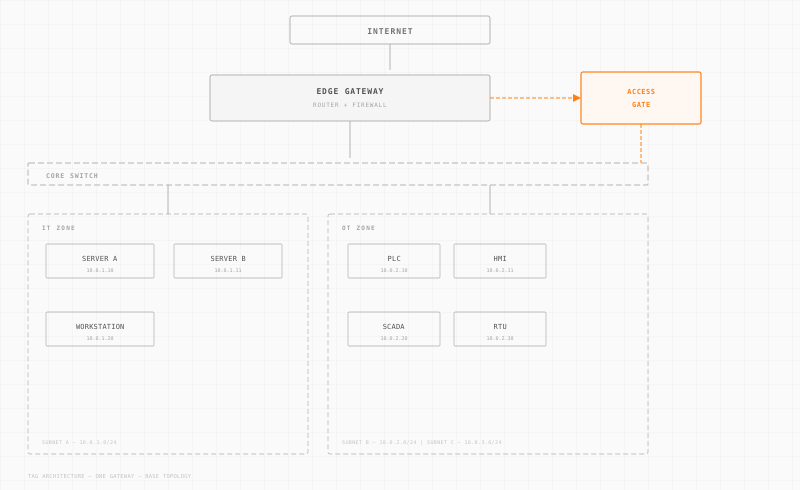
Subcontractor management refers to the systematic approach of overseeing and coordinating subcontractors within a company's supply chain to ensure compliance, security, and efficiency in operations. This process is especially crucial in sectors involving operational technology (OT) and information technology (IT) where subcontractors may have access to sensitive systems and data.
Understanding Subcontractor Management in OT/IT Cybersecurity
In the context of OT/IT cybersecurity, subcontractor management involves the implementation of security protocols and compliance measures to mitigate risks posed by third-party subcontractors. Subcontractors often perform critical roles, such as maintenance, software development, or system integration, which require access to a company’s network and data. This access can introduce vulnerabilities if not properly managed.
Key Components
- Vendor Assessment: Evaluating the security practices of subcontractors before engagement to ensure they meet required standards.
- Contractual Agreements: Establishing clear contracts that define cybersecurity responsibilities and compliance requirements.
- Access Control: Limiting subcontractor access to only necessary systems and data, often using principles of least privilege.
- Monitoring and Auditing: Continuously monitoring subcontractor activities and performing regular audits to detect and respond to any security incidents.
Why It Matters
In industrial, manufacturing, and critical environments, subcontractors are integral to operations but also represent significant security risks if not managed properly. Poor subcontractor management can lead to data breaches, operational disruption, and non-compliance with regulatory standards. For example, a compromised subcontractor could become an entry point for cyber attackers, jeopardizing not only the immediate operations but also the entire supply chain.
Standards and Compliance: Effective subcontractor management is also essential for meeting cybersecurity standards such as NIST 800-171 and CMMC, which emphasize the protection of Controlled Unclassified Information (CUI) in non-federal systems. Similarly, the NIS2 Directive and IEC 62443 standards focus on securing network and information systems across the EU, underscoring the need for stringent subcontractor management practices.
In Practice
In practice, subcontractor management involves a combination of policy, technology, and human oversight. For example, a manufacturing company might implement a vendor management system to track subcontractor compliance with cybersecurity protocols. They might also conduct regular security training for subcontractors and perform penetration testing to identify and mitigate potential vulnerabilities introduced by third-party services.
Related Concepts
- Supply Chain Management: Involves the broader management of all entities involved in the delivery of goods and services, including subcontractors.
- Third-Party Risk Management: Focuses on assessing and mitigating risks associated with third-party service providers.
- Access Control: The practice of restricting and managing access to systems and data to authorized individuals only.
- Compliance Management: Ensures that an organization adheres to legal standards, industry regulations, and internal policies.
- Incident Response: The structured approach to managing and addressing security breaches or cyber threats.