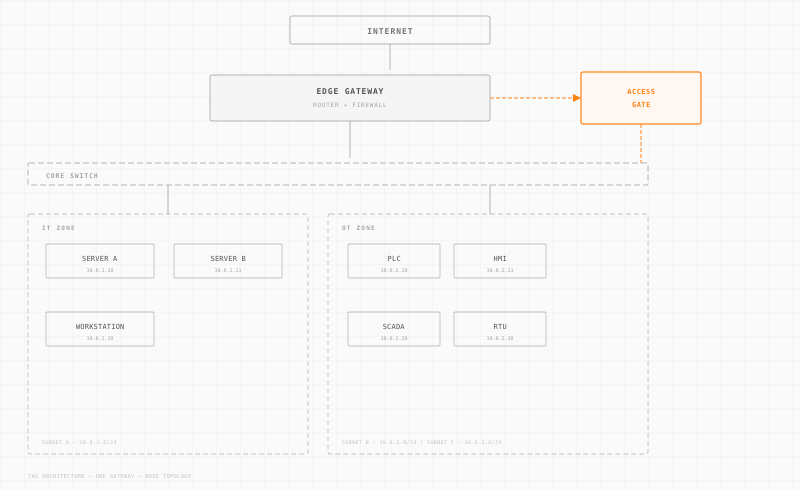
Third-Party Risk Management (TPRM) refers to the process of identifying, assessing, and mitigating risks associated with third parties or vendors that an organization relies on to perform services, provide products, or support operations. This practice is critical in ensuring that these external entities do not become potential points of vulnerability that could compromise the security and integrity of the organization’s IT and OT environments.
Understanding Third-Party Risk in OT/IT Cybersecurity
In the context of OT/IT cybersecurity, third-party risk management is crucial because industrial, manufacturing, and critical infrastructure environments often rely on external vendors for hardware, software, and services. These third-party entities can introduce cybersecurity risks through insecure products, inadequate data protection practices, or insufficient compliance with industry standards.
Unlike traditional IT environments, Operational Technology (OT) involves systems that monitor and control industrial equipment, processes, and events. The integration of IT and OT systems increases the attack surface, making it imperative to manage third-party risks effectively. The complexity of these environments requires a comprehensive TPRM strategy that addresses both the technical and operational aspects of cybersecurity.
Why It Matters
Third-party risk management is vital for several reasons:
-
Supply Chain Security: Industrial and critical environments are heavily dependent on supply chains. A breach or vulnerability in a third-party system can disrupt operations and lead to significant financial and reputational damage.
-
Regulatory Compliance: Compliance with standards such as NIST 800-171, CMMC, and IEC 62443 often requires organizations to ensure that third-party vendors adhere to specific security controls and practices. Failing to manage third-party risks can result in non-compliance, potentially leading to fines and penalties.
-
Data Protection: Third parties often have access to sensitive data. Ensuring that these entities implement adequate data protection measures is crucial for safeguarding intellectual property and personal information.
-
Operational Continuity: A cybersecurity incident involving a third party can interrupt business operations, especially in environments where uptime is critical, such as in manufacturing plants or energy grids.
Standards and Frameworks
Several standards and frameworks provide guidelines for effective third-party risk management:
-
NIST 800-171: This publication offers guidelines for protecting controlled unclassified information (CUI) in non-federal systems, focusing on security requirements for safeguarding information shared with third parties.
-
CMMC (Cybersecurity Maturity Model Certification): This model includes specific practices and processes for managing third-party risks, ensuring that vendors meet defined cybersecurity capabilities.
-
IEC 62443: An international standard that provides a comprehensive framework for cybersecurity in industrial automation and control systems, including vendor risk considerations.
In Practice
Implementing a robust third-party risk management program involves several key steps:
-
Risk Assessment: Evaluate the security posture of third-party vendors before and during the business relationship. This may involve reviewing security policies, conducting audits, and assessing compliance with industry standards.
-
Contractual Obligations: Ensure that contracts with third parties include specific cybersecurity requirements, such as data protection measures and incident response protocols.
-
Continuous Monitoring: Establish processes for ongoing monitoring of third-party vendors to detect changes in risk levels and ensure compliance with security policies.
-
Incident Response Planning: Develop joint incident response procedures with critical third-party vendors to ensure a coordinated approach in the event of a cybersecurity incident.
Related Concepts
- Vendor Risk Management
- Supply Chain Risk Management
- Operational Technology (OT) Security
- Cybersecurity Maturity Model Certification (CMMC)
- IEC 62443 Compliance