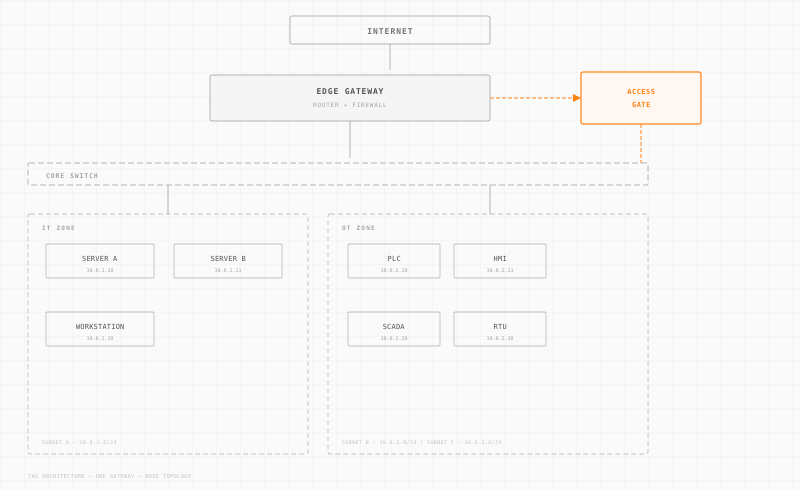
Network segmentation divides a network into smaller, isolated zones so a threat that lands in one zone cannot move freely into the rest. Instead of a single flat network where any device can talk to any other, you get controlled boundaries with explicit rules about what crosses them. It is the difference between a compromised laptop infecting one subnet and the same laptop reaching the machines that run the production line.
What is network segmentation?
Segmentation groups systems by function, sensitivity, or trust level and places controls between the groups. A classic split isolates the corporate IT network from the operational technology network, then subdivides the OT side further into zones for control, supervision, and safety. Each zone has its own access rules. Traffic between zones is inspected and allowed only when a policy says so.
How does microsegmentation differ from network segmentation?
Traditional segmentation draws boundaries at the subnet or VLAN level: coarse zones separated by firewalls. Microsegmentation pushes the boundary down to the individual workload or device and enforces policy by identity rather than by IP address or physical port. The result is finer control: a single sensor can be allowed to reach exactly one historian and nothing else, even if they sit in the same broadcast domain. In OT, where the Purdue model has long defined the zones, microsegmentation is how you enforce those layers without re-cabling the plant.
Why does network segmentation matter for OT?
Because lateral movement is how OT incidents turn catastrophic. Attackers rarely land directly on a controller. They phish an office user, get onto the IT network, and then pivot sideways toward the systems that move physical mass. A flat network hands them that path. Segmentation removes it. It contains an outbreak, limits the blast radius, and gives responders time to isolate an affected zone instead of watching malware sweep the whole site. It also carries direct compliance weight:
- NIST SP 800-171 requires isolating Controlled Unclassified Information from other traffic. See NIST SP 800-171.
- CMMC makes segmentation part of the access-control practices defense suppliers are audited on. See CMMC.
- IEC 62443 builds its whole model on zones and conduits, which is segmentation by another name. See IEC 62443.
How is network segmentation different from a firewall?
A firewall is a tool. Segmentation is the strategy that tells the firewall what to do. You can own a firewall and still run a flat, unsegmented network behind it, which is exactly the mistake that lets one intrusion become a plant-wide event. Segmentation is the architecture; firewalls, VLANs, and identity-based overlays are ways to implement it.
How does Access Gate help?
Access Gate delivers microsegmentation as an agent-free software overlay, so you can carve a flat OT network into identity-defined zones without replacing switches, re-addressing devices, or scheduling the outage that inline firewall projects demand. It enforces least-privilege access between zones, proxies remote and vendor sessions, and forwards east-west traffic to your SIEM so you can see movement inside the perimeter, not just at the edge. See Industrial DMZ architecture.