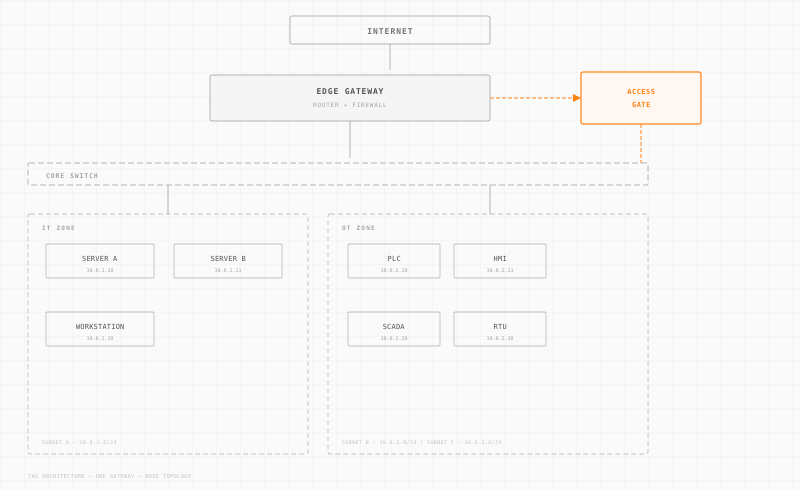
Cybersecurity frameworks are structured sets of guidelines and best practices designed to help organizations manage and reduce cybersecurity risks. They provide a strategic approach to securing information systems, ensuring compliance, and implementing effective security measures across various industries, including the critical sectors of industrial, manufacturing, and operational technology (OT) environments.
Understanding Cybersecurity Frameworks in OT/IT Cybersecurity
In the context of OT/IT cybersecurity, frameworks are vital as they offer a comprehensive outline that organizations can adopt to protect their operational technology networks, which are often interconnected with information technology (IT) systems. These frameworks are particularly crucial in OT environments where the risks not only affect data confidentiality, integrity, and availability but also the physical operations of critical infrastructure.
Key Frameworks
Several cybersecurity frameworks are widely recognized and applied across industries:
-
NIST Cybersecurity Framework (CSF): Developed by the National Institute of Standards and Technology, this framework provides a policy framework of computer security guidance for how private sector organizations in the United States can assess and improve their ability to prevent, detect, and respond to cyber attacks. It is widely adopted due to its flexibility and comprehensive nature.
-
CMMC (Cybersecurity Maturity Model Certification): Specifically tailored for the defense industry, the CMMC framework is designed to protect Federal Contract Information (FCI) and Controlled Unclassified Information (CUI) within the supply chain of the Department of Defense (DoD).
-
IEC 62443: This is a series of standards specifically designed for industrial automation and control systems (IACS). It provides guidelines to secure OT environments against cyber threats.
Why It Matters
Industrial and Manufacturing Sectors
In industrial and manufacturing sectors, the implementation of a cybersecurity framework is not just about protecting data, but also about safeguarding the operational integrity and safety of physical processes. A successful cyber attack on an OT system could lead to severe disruptions, financial losses, or even threats to human safety. By adopting a robust cybersecurity framework, organizations can systematically address vulnerabilities, enhance resilience, and ensure continuous operation.
Compliance and Risk Management
Adhering to recognized cybersecurity frameworks helps organizations meet regulatory requirements and industry standards. For instance, compliance with frameworks such as NIST 800-171 is mandatory for businesses handling sensitive federal information in the United States. Similarly, NERC CIP compliance is mandatory for owners and operators of the North American bulk electric system. These frameworks help organizations to not only achieve compliance but also to manage and mitigate risks more effectively.
Practical Example
Consider a manufacturing facility that relies on interconnected machines and systems for production. By implementing the NIST Cybersecurity Framework, the facility can develop a comprehensive security posture that encompasses identifying potential threats, protecting systems with appropriate security controls, detecting breaches, responding to incidents effectively, and recovering from disruptions swiftly. This holistic approach ensures that both IT and OT environments are safeguarded against cyber threats.
In Practice
Cybersecurity frameworks provide a roadmap for organizations to follow, enabling them to build a robust cybersecurity culture. They encourage ongoing assessment and improvement, promoting resilience and adaptability in the face of evolving cyber threats. Organizations that proactively adopt and adapt these frameworks can benefit from improved security postures, greater trust from stakeholders, and enhanced operational reliability.
Related Concepts
- Zero Trust Architecture
- Incident Response Plan
- Risk Management Framework
- Data Protection Regulations
- Security Operations Center (SOC)