Data Loss Prevention (DLP) refers to a set of tools and strategies designed to prevent the unauthorized access, use, transmission, or destruction of sensitive data within an organization. In the realm of OT/IT cybersecurity, DLP is critical for safeguarding proprietary information, ensuring compliance with regulatory standards, and mitigating risks associated with data breaches and leaks.
Understanding Data Loss Prevention in OT/IT Cybersecurity
In operational technology (OT) and information technology (IT) environments, data loss prevention is a cornerstone of comprehensive security strategies. DLP solutions monitor, detect, and block sensitive data from being transferred outside the organizational network. This process involves identifying critical data, monitoring data activity, and enforcing protective measures to mitigate the risk of data leaks.
Key Components of DLP
-
Data Identification and Classification: Before protecting data, organizations must identify and classify it based on sensitivity and importance. This often involves scanning systems for sensitive information such as intellectual property, financial data, and personal identifiable information (PII).
-
Data Monitoring: Continuous monitoring of data at rest, in motion, and in use is essential. DLP tools track data flow across the network, detect anomalies, and alert security teams to potential breaches or policy violations.
-
Policy Enforcement: DLP solutions enforce security policies designed to prevent unauthorized data access or transfer. This may include encryption, access controls, and measures to block unauthorized email attachments or uploads to external sites.
-
Incident Response: Effective DLP strategies include mechanisms for responding to security incidents. This involves identifying breaches swiftly, containing them, and taking corrective action to prevent future occurrences.
Why Data Loss Prevention Matters
In industrial, manufacturing, and critical environments, the loss or exposure of sensitive data can have catastrophic consequences. Data leaks can lead to operational downtime, financial loss, and reputational damage. Moreover, industries such as manufacturing are often targeted by cyber attackers seeking proprietary technology or disrupting operations.
Compliance and Standards
DLP is essential for meeting various regulatory requirements:
-
NIST 800-171: This standard outlines the protection of Controlled Unclassified Information (CUI) in non-federal systems, emphasizing data security and DLP measures.
-
CMMC: The Cybersecurity Maturity Model Certification requires contractors to implement DLP as part of maintaining cybersecurity hygiene and protecting Federal Contract Information (FCI).
-
IEC 62443: As a series of standards aimed at securing industrial automation and control systems, IEC 62443 highlights the importance of protecting sensitive data within OT environments.
In Practice
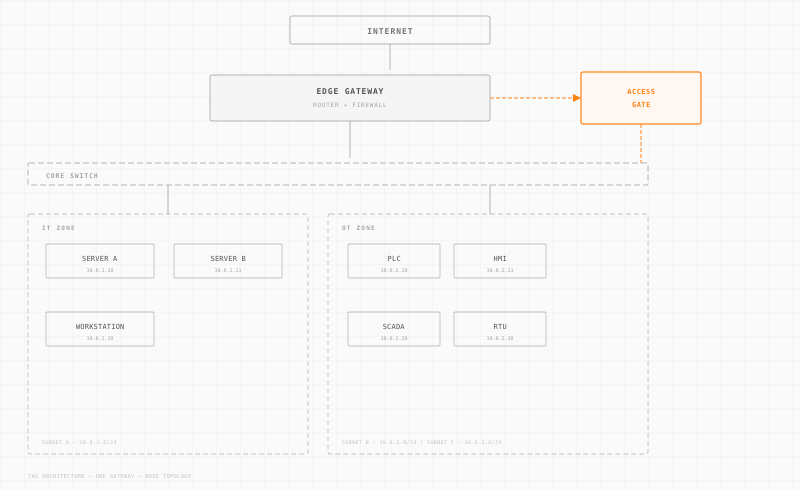
Implementing a DLP solution in an industrial setting often involves integrating DLP tools with existing OT/IT systems. For example, a manufacturing plant might deploy a DLP system to monitor data flow between its control systems and external networks, ensuring that sensitive design specifications are not leaked.
Consider a scenario where a DLP system alerts the security team to an unauthorized attempt to upload critical production data to a cloud service. The team can quickly verify the threat, block the transfer, and conduct a forensic analysis to understand and rectify the breach.
Related Concepts
- Access Control
- Encryption
- Data Classification
- Incident Response
- Network Monitoring