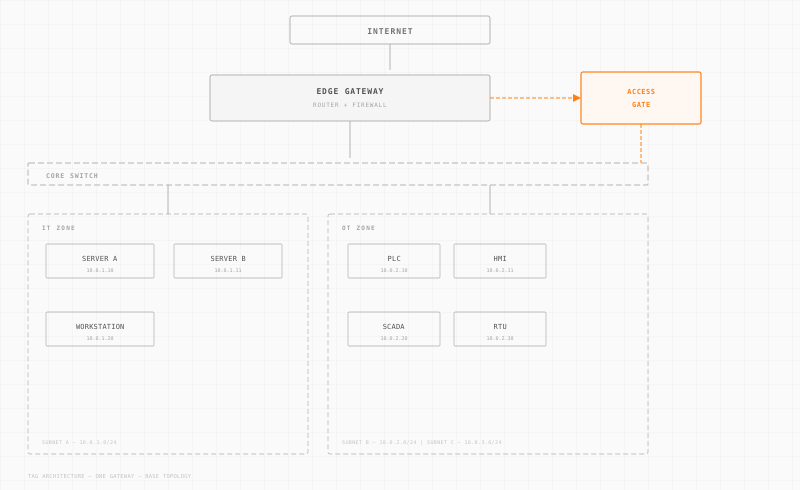
Information Technology Security refers to the practices and tools used to protect information systems and data from unauthorized access, misuse, disclosure, destruction, or disruption. It encompasses a range of protective measures to ensure the confidentiality, integrity, and availability of information, particularly in the context of IT and digital environments.
Context in OT/IT Cybersecurity
In the realm of Operational Technology (OT) and Information Technology (IT), IT security is crucial for safeguarding sensitive data and ensuring the safe operation of critical systems. This is particularly vital in environments where IT and OT systems converge, such as industrial control systems (ICS), manufacturing operations, and critical infrastructure sectors. The security of IT systems directly impacts the reliability and safety of OT operations, making robust cybersecurity practices essential.
Key Elements of IT Security
-
Confidentiality: Ensuring that sensitive information is accessible only to those authorized to have access. This is achieved through encryption, access controls, and data masking techniques.
-
Integrity: Protecting information from being altered by unauthorized individuals, ensuring the accuracy and trustworthiness of the data.
-
Availability: Guaranteeing that information and resources are accessible to authorized users when needed. This involves implementing robust backup systems and maintaining network uptime.
-
Authentication and Authorization: Verifying the identity of users and determining their access rights to resources within the network.
-
Incident Response and Recovery: Developing a plan to quickly address and recover from security breaches, minimizing damage and restoring normal operations.
Why It Matters
For industrial, manufacturing, and critical environments, IT security is not just about protecting data but ensuring operational continuity and safety. A breach in IT security can lead to operational downtime, financial losses, and even physical harm if critical systems are compromised.
-
Compliance: Adhering to standards like NIST 800-171, CMMC, and NIS2 is essential for organizations that handle sensitive information, especially those working with government or critical infrastructure partners. These frameworks provide guidelines for implementing effective cybersecurity measures.
-
Risk Management: Proactive IT security measures help in identifying potential vulnerabilities and threats, allowing organizations to mitigate risks before they escalate into serious incidents.
-
Trust and Reputation: Organizations that prioritize IT security build trust with their clients and partners, ensuring long-term business relationships and maintaining a strong reputation in the industry.
In Practice
Consider a manufacturing company that integrates IT and OT systems to streamline operations. Implementing robust IT security practices, such as network segmentation, firewalls, and intrusion detection systems, helps prevent unauthorized access to sensitive data and control systems. Additionally, regular security audits and employee training ensure that security protocols are up-to-date and effectively enforced.
Organizations often deploy security information and event management (SIEM) systems to monitor and analyze security alerts from across their networks, enabling quicker detection and response to potential threats.
Related Concepts
- Cybersecurity
- Operational Technology (OT) Security
- Network Security
- Data Protection
- Access Control