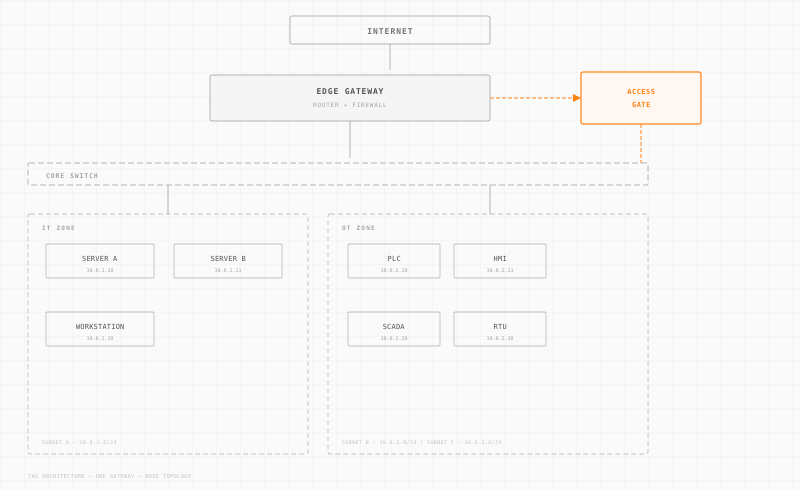
Insider Threat refers to the risk that an organization's employees, contractors, or business partners could exploit their authorized access to systems and data for malicious purposes. This can involve the theft of confidential information, sabotage of systems, or other actions that could harm the organization.
Understanding Insider Threat in OT/IT Cybersecurity
In the realm of Operational Technology (OT) and Information Technology (IT) cybersecurity, insider threats pose a significant challenge due to the unique access and knowledge insiders have of critical systems. Unlike external threats, insider threats originate from individuals within the organization who have, or previously had, authorized access to the organization’s networks and systems. This access can be misused intentionally or unintentionally, leading to potentially severe consequences.
Types of Insider Threats
Insider threats can be categorized into several types:
- Malicious Insiders: Individuals who intentionally exploit their access for personal gain or to harm the organization. This could involve stealing intellectual property or sabotaging systems.
- Negligent Insiders: Employees who inadvertently compromise security through careless actions, such as falling for phishing attacks or mishandling sensitive information.
- Compromised Insiders: Employees whose credentials or access have been hijacked by an external actor, often without their knowledge.
Why It Matters for Industrial, Manufacturing & Critical Environments
In industrial and manufacturing sectors, as well as other critical environments, the impact of insider threats can be particularly devastating. These sectors rely heavily on OT systems, which control physical processes and operations. A malicious or negligent insider could disrupt operations, cause physical damage, or expose proprietary processes and technologies.
Standards and Compliance
Compliance with cybersecurity standards is critical in mitigating insider threats:
- NIST SP 800-171 provides guidelines for protecting controlled unclassified information (CUI) in non-federal systems, emphasizing the importance of managing insider threats.
- CMMC (Cybersecurity Maturity Model Certification) requires organizations to maintain comprehensive security measures, including strategies to detect and mitigate insider threats.
- IEC 62443 focuses on security for industrial automation and control systems, highlighting the need for robust insider threat mitigation strategies.
In Practice
Organizations can mitigate insider threats by implementing a combination of technical, procedural, and organizational measures:
- Access Controls: Limit access to sensitive systems and data based on the principle of least privilege, ensuring employees only have access necessary for their roles.
- Monitoring and Auditing: Continuously monitor network activity and conduct regular audits to detect unusual behavior that may indicate insider threats.
- Employee Training: Conduct regular training sessions to educate employees about security policies and the risks associated with insider threats.
- Incident Response Plans: Develop and maintain comprehensive incident response plans to quickly address and mitigate any insider threat incidents.
Related Concepts
- Access Control
- Security Awareness Training
- Network Monitoring
- Incident Response
- Data Loss Prevention