Internet Protocol (IP) is a set of rules governing the format of data sent over the internet or local network. It is a fundamental protocol within the suite of internet standards known as TCP/IP and is essential for directing packets of data from a source to a destination across networks.
Understanding Internet Protocol in OT/IT Cybersecurity
In the context of operational technology (OT) and information technology (IT) cybersecurity, the Internet Protocol is crucial for ensuring reliable and efficient data communication across complex network environments. IP is responsible for two primary functions: addressing and routing. Each device on a network is assigned an IP address, which serves as a unique identifier, enabling devices to locate and communicate with each other. Routing involves the determination of the path data packets take across interconnected networks, ensuring they reach their intended destination.
IP Versions
The most common versions of Internet Protocol are IPv4 and IPv6. IPv4 is the fourth version of IP and remains widely used; however, the limited address space (approximately 4.3 billion unique addresses) has led to the development and implementation of IPv6, which provides a substantially larger address space to accommodate the growing number of internet-connected devices.
Security Considerations
In OT/IT environments, the secure configuration and management of IP are critical due to the susceptibility of these networks to cyber threats. Misconfigured IP settings can lead to unauthorized access, data breaches, and network disruptions. Standards such as NIST SP 800-171 and the Cybersecurity Maturity Model Certification (CMMC) provide guidelines for securing IP networks by recommending practices like network segmentation, IP filtering, and the use of virtual private networks (VPNs) to protect data in transit.
Why It Matters for Industrial, Manufacturing & Critical Environments
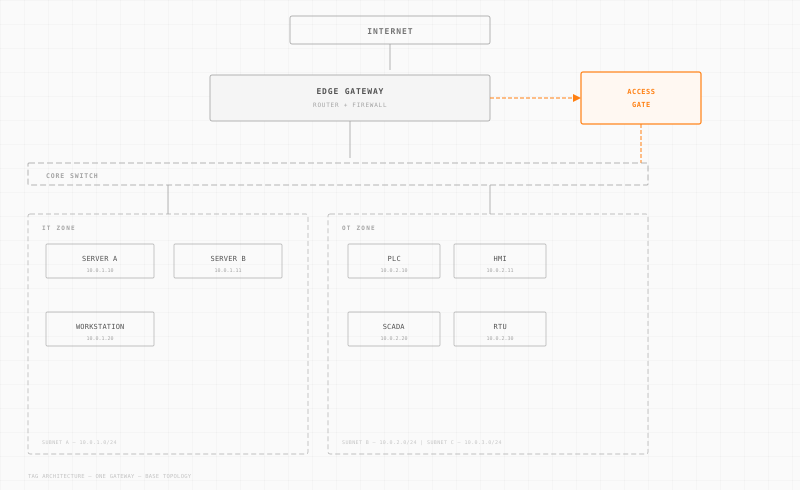
The reliance on IP in industrial and critical infrastructure environments, such as manufacturing plants and utility grids, underscores its importance. These sectors often utilize a mix of legacy OT systems and modern IT solutions, creating a complex network landscape where IP plays a pivotal role in ensuring interoperability and communication.
A failure to properly manage and secure IP traffic can lead to severe consequences, including operational downtime, safety hazards, and significant financial losses. For instance, a cyber attack exploiting weaknesses in IP configuration could disrupt the control systems of a factory, leading to halted production and compromised safety.
Compliance and Standards
The Network and Information Systems Directive (NIS2) and IEC 62443 are also critical standards that emphasize the importance of protecting IP networks within critical infrastructure sectors. These regulations mandate robust cybersecurity measures to safeguard networks and highlight the role of IP in achieving compliance and enhancing network resilience.
In Practice
To illustrate the significance of IP, consider a manufacturing company that uses automated robotic systems controlled over a network. The IP addresses assigned to these systems ensure that commands are accurately sent and received, maintaining seamless operations. Implementing IP-based access controls can prevent unauthorized network access, while IP monitoring can detect anomalies indicative of a potential cyber threat.
Additionally, transitioning from IPv4 to IPv6 can enhance security and scalability, facilitating the integration of more devices and enabling advanced security features inherent in IPv6, such as mandatory support for IPsec (Internet Protocol Security).
Related Concepts
- TCP/IP: A suite of communication protocols used to interconnect network devices on the internet.
- Network Segmentation: Dividing a network into smaller, isolated sections to enhance security.
- VPN (Virtual Private Network): A technology that creates a secure connection over a less secure network, such as the internet.
- IPv6: The most recent version of the Internet Protocol, designed to replace IPv4.
- IPsec (Internet Protocol Security): A suite of protocols for securing IP communications by authenticating and encrypting each IP packet.