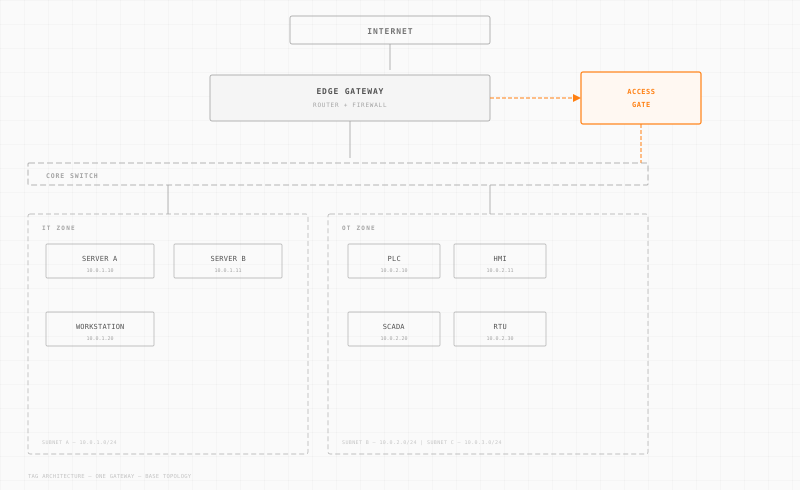
Transmission Control Protocol (TCP) is a fundamental communication protocol used for transmitting data over networks. It is part of the TCP/IP suite, which is essential for internet and network communications, ensuring reliable and ordered delivery of data between applications.
Understanding TCP in OT/IT Cybersecurity
In the context of OT/IT cybersecurity, Transmission Control Protocol (TCP) plays a crucial role in facilitating secure and efficient communication across networks that interconnect operational technology (OT) and information technology (IT) systems. These environments often require robust communication protocols to handle data exchanges between various devices and systems, from industrial control systems to enterprise IT applications.
TCP operates by establishing a connection between the sender and receiver before any data is transmitted, ensuring that all data packets arrive in order and without errors. This is particularly important in industrial and manufacturing settings, where data integrity and reliability are critical for maintaining operational continuity and safety.
Importance in Industrial, Manufacturing & Critical Environments
In industrial and manufacturing environments, the use of TCP is pivotal for several reasons:
-
Reliability and Order: TCP ensures that data packets are delivered reliably and in the correct order. This is crucial in environments where commands and data must be executed in a precise sequence to maintain system integrity and safety.
-
Error Checking: TCP includes mechanisms to check for errors in data transmission, which helps in identifying and correcting errors before they affect the system's operations, thus supporting consistent and secure communication.
-
Flow Control: By managing the rate of data transmission between sender and receiver, TCP helps prevent network congestion, which can be particularly beneficial in environments with limited bandwidth or high traffic.
-
Interoperability: As part of the TCP/IP suite, TCP is compatible with a wide range of devices and systems, making it an ideal choice for integrating diverse technologies within OT and IT infrastructures.
Relevant Standards
Several cybersecurity frameworks and standards highlight the importance of secure communication protocols like TCP:
-
NIST SP 800-171: This standard addresses the protection of Controlled Unclassified Information (CUI) in non-federal systems, emphasizing the need for secure and reliable communication protocols.
-
CMMC: The Cybersecurity Maturity Model Certification includes practices that require the implementation of secure communications, aligning with TCP's capabilities for ensuring data integrity and confidentiality.
-
NIS2 Directive: A European directive focusing on improving the cybersecurity of networks and information systems across the EU, highlighting the need for secure communications in critical sectors.
-
IEC 62443: This set of standards provides guidelines for securing industrial automation and control systems, emphasizing the role of protocols like TCP in establishing secure and reliable communication channels.
In Practice
Consider a manufacturing plant with a distributed control system (DCS) that uses TCP to manage communication between sensors, controllers, and monitoring stations. Reliable data transmission is vital for operations such as real-time monitoring, automated control, and data logging. Any disruption or error in the communication flow could lead to operational inefficiencies or even safety risks. By leveraging TCP, the plant ensures that data is transmitted accurately and efficiently, maintaining both productivity and safety.