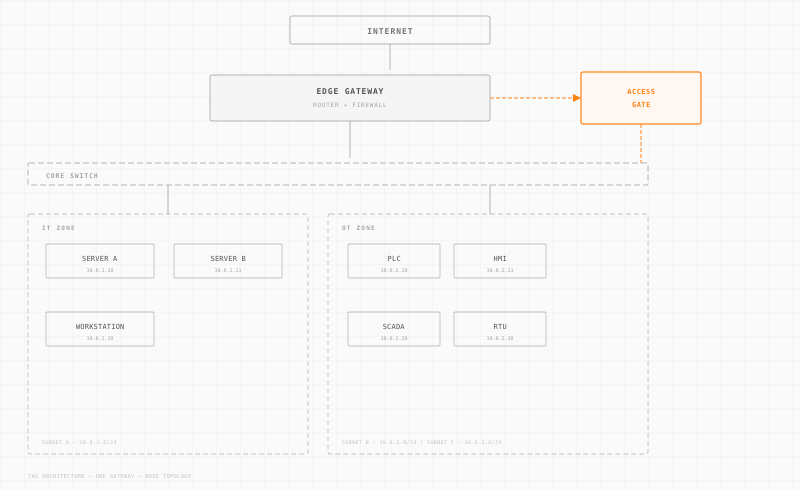
Intrusion Detection System (IDS) is a cybersecurity solution designed to monitor network traffic for suspicious activity and potential threats, alerting administrators to any anomalies. These systems play a crucial role in protecting both Operational Technology (OT) and Information Technology (IT) environments by identifying potential breaches and facilitating timely responses.
Understanding Intrusion Detection Systems
An Intrusion Detection System (IDS) can be categorized primarily into two types: Network-based IDS (NIDS) and Host-based IDS (HIDS). Network-based systems monitor all traffic on a network segment, whereas host-based systems are installed on individual devices to analyze activities specific to that host. Both types aim to detect unauthorized access or anomalies that could indicate a security incident.
IDS in OT/IT Cybersecurity
In the context of OT/IT cybersecurity, IDS plays a pivotal role in safeguarding industrial, manufacturing, and critical infrastructure environments. These sectors often rely on a combination of legacy systems and modern technologies, making them susceptible to cyber threats. An IDS helps bridge the security gap by continuously monitoring for irregularities and providing an additional layer of defense beyond traditional firewalls.
Relevance to Standards
Various cybersecurity standards recognize the importance of IDS in maintaining robust security postures:
-
NIST 800-171: This standard outlines requirements for protecting Controlled Unclassified Information (CUI) in non-federal systems, and IDS is an essential tool for monitoring and reporting unauthorized information system use.
-
CMMC: The Cybersecurity Maturity Model Certification emphasizes continuous monitoring, where IDS can support achieving compliance by providing necessary security alerts and logs.
-
IEC 62443: As a standard for securing Industrial Automation and Control Systems (IACS), IEC 62443 recommends employing technologies like IDS to detect and respond to incidents effectively.
Why It Matters
The significance of IDS in industrial and critical environments cannot be overstated. These sectors are increasingly targeted by sophisticated cyber-attacks designed to disrupt operations, steal sensitive data, or cause physical harm. An IDS helps by continuously monitoring for signs of intrusion, enabling rapid response to mitigate damages.
For example, in a manufacturing plant, an IDS might detect unusual traffic patterns indicating a possible data exfiltration attempt. By alerting security personnel promptly, the IDS allows them to investigate and address the issue before it escalates into a full-scale breach.
In Practice
Deploying an IDS involves configuring it to recognize legitimate network behaviors and flag deviations. This requires regular updates and tuning to maintain effectiveness and minimize false positives. Moreover, integrating IDS with other security tools, such as Security Information and Event Management (SIEM) systems, enhances its capabilities by correlating data from multiple sources for a comprehensive security overview.
Related Concepts
- Network Security: Protecting the integrity and usability of your network and data.
- Firewall: A network security system that monitors and controls incoming and outgoing network traffic.
- Security Information and Event Management (SIEM): A solution that aggregates data from various sources to provide real-time analysis of security alerts.
- Threat Intelligence: The knowledge of cyber threats that can help organizations prevent or mitigate attacks.
- Incident Response: The approach to managing and mitigating the effects of a cybersecurity incident.