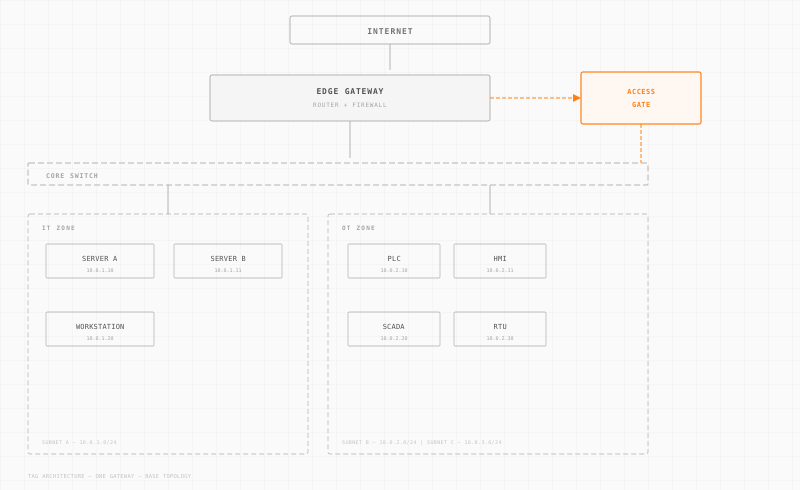
Physical Security Information Management (PSIM) refers to a software platform that integrates and manages multiple unconnected security applications and devices through one comprehensive user interface. It allows organizations to collect, analyze, and manage information from a wide variety of physical security systems, including video surveillance, access control, sensors, and alarms.
Understanding PSIM in the Context of OT/IT Cybersecurity
In the realm of industrial control systems (ICS) and operational technology (OT), PSIM serves as a crucial component of cybersecurity by bridging the gap between disparate security measures. Traditionally, security systems in critical infrastructure environments operate in silos, with minimal interaction between them. PSIM software facilitates the seamless integration of these systems, allowing for a more holistic view of security operations.
PSIM plays a pivotal role in cyber-physical systems by ensuring that physical security measures are not only reactive but also proactive. By integrating with IT networks and cybersecurity protocols, PSIM can help preemptively identify potential threats and vulnerabilities, thus bolstering the security framework of an organization.
Importance for Industrial, Manufacturing & Critical Environments
In industrial and manufacturing settings, the consequences of a security breach, whether physical or cyber, can be catastrophic. Critical infrastructure sectors, such as energy, water, and transportation, rely heavily on the continuous and secure operation of their systems. PSIM provides these environments with the capability to:
-
Enhance Situational Awareness: By consolidating data from various systems into a centralized platform, PSIM provides security operators with a comprehensive view of the facility's security posture. This real-time overview is vital for prompt decision-making during emergencies.
-
Improve Incident Response: With automated workflows and alerts, PSIM enables faster and more coordinated responses to incidents. This is particularly important in environments where the delay in response can lead to significant operational disruptions or even safety hazards.
-
Ensure Regulatory Compliance: For industries bound by stringent regulations such as NIST 800-171, CMMC, NIS2, and IEC 62443, PSIM can facilitate compliance by providing audit trails and ensuring that security protocols are consistently enforced across all systems.
PSIM and Security Standards
Adherence to security standards is crucial in maintaining robust security practices, and PSIM can be instrumental in achieving this. For instance, NIST 800-171 outlines requirements for protecting controlled unclassified information, which PSIM can help manage by ensuring that physical access to sensitive areas is tightly controlled and monitored. Similarly, IEC 62443 provides guidelines for security in industrial automation and control systems, areas where PSIM's integration capabilities are particularly beneficial.
In Practice
Consider a manufacturing plant using PSIM to integrate its access control systems with its cybersecurity protocols. If an unauthorized access attempt is detected, the PSIM platform can automatically alert security personnel while simultaneously initiating a network lockdown to prevent potential data breaches. By doing so, PSIM not only protects physical assets but also safeguards digital information, thus providing a comprehensive security solution.
Another practical application can be seen in energy sectors, where PSIM integrates surveillance and alarm systems. In the event of an intrusion, the PSIM platform can trigger video feeds, providing operators with immediate visual confirmation and enabling them to take swift action.
Related Concepts
- Integrated Security Systems
- Cyber-Physical Systems
- Access Control Management
- Security Information and Event Management (SIEM)
- Operational Technology Security