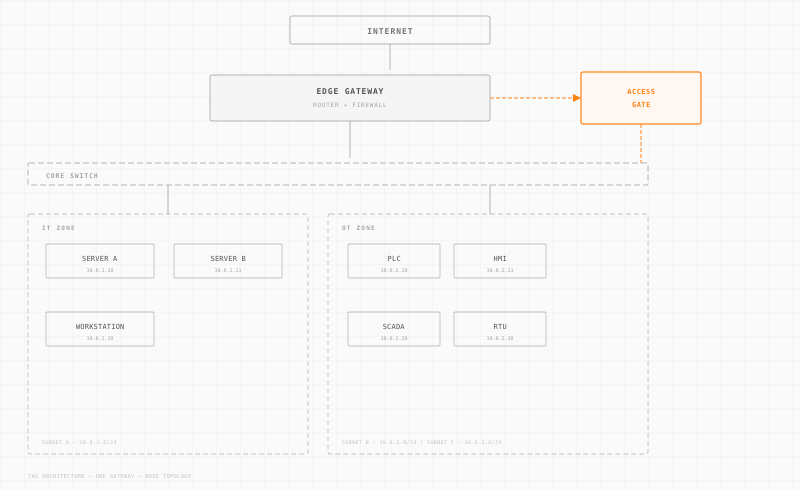
Security Information and Event Management (SIEM) refers to a comprehensive cybersecurity solution that aggregates, analyzes, and manages security data from across an organization's IT and OT environments. By providing real-time monitoring, historical analysis, and advanced threat detection, SIEM systems are vital for maintaining security integrity in complex networks.
Context in OT/IT Cybersecurity
In the realm of Operational Technology (OT) and Information Technology (IT), SIEM systems play a crucial role by bridging the gap between traditional IT networks and industrial control systems. OT environments, often found in industries such as manufacturing, energy, and critical infrastructure, require specialized security measures due to their unique vulnerabilities and operational priorities. SIEM solutions collect data from various devices, applications, and systems across both IT and OT networks, allowing organizations to maintain a holistic view of their security posture.
Why It Matters for Industrial, Manufacturing & Critical Environments
SIEM is particularly important in industrial and critical environments because it helps manage the complexities of securing diverse networks. These environments often use legacy systems that are not designed with security in mind, making them susceptible to cyber threats. SIEM solutions provide the visibility and analytics necessary to detect anomalies and potential breaches, thereby safeguarding against disruptions that could have severe operational and safety implications.
Compliance with Standards
SIEM solutions facilitate compliance with various cybersecurity standards and frameworks:
- NIST SP 800-171: Emphasizes the need for organizations to monitor and control access to sensitive information, a feature that SIEM systems enhance through detailed logging and alerting.
- CMMC (Cybersecurity Maturity Model Certification): Requires continuous monitoring and incident response capabilities, both of which are core SIEM functionalities.
- IEC 62443: Addresses security for industrial automation and control systems, where SIEM systems contribute by enabling comprehensive security monitoring and incident management.
In Practice
Consider a manufacturing plant where both IT systems (like enterprise resource planning software) and OT systems (such as programmable logic controllers) are integral to operations. A SIEM solution would collect logs from these diverse systems, correlating data to identify potential security incidents. For instance, if an unauthorized user attempts access to a control system, the SIEM can trigger an alert, allowing for immediate investigation and response. This proactive approach minimizes downtime and helps protect against threats that could disrupt production.
Related Concepts
- Intrusion Detection System (IDS)
- Security Operations Center (SOC)
- Network Security Monitoring (NSM)
- Incident Response
- Log Management