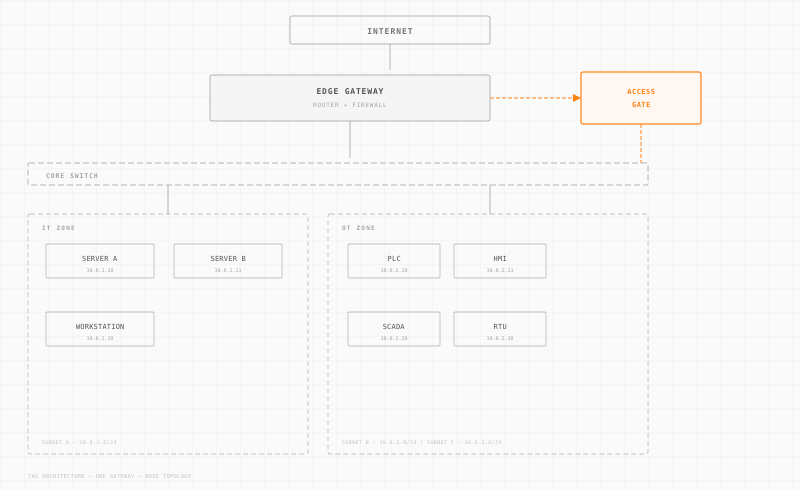
User Access Management refers to the processes and technologies used to control and monitor user access to an organization's systems, applications, and data. It encompasses the entire lifecycle of user access, from initial access provisioning to regular audits and eventual access revocation.
The Role of User Access Management in OT/IT Cybersecurity
In the realm of Operational Technology (OT) and Information Technology (IT) cybersecurity, User Access Management is crucial for safeguarding sensitive information and maintaining the integrity of industrial control systems. These environments require stringent security measures due to the critical nature of their operations, which often include the management of infrastructure and manufacturing processes.
Effective User Access Management ensures that only authorized personnel have the necessary access to perform their roles, minimizing the risk of unauthorized access and potential cyber threats. In secure environments, access needs to be meticulously controlled and monitored to prevent disruptions that could lead to operational downtime or safety hazards.
Key Components of User Access Management
Access Provisioning
Access provisioning is the initial step in the User Access Management lifecycle. It involves granting the appropriate level of access to users based on their job roles and responsibilities. This process must be aligned with organizational policies and compliance requirements, such as those outlined in NIST 800-171 and CMMC standards, which emphasize controlled access based on the principle of least privilege.
User Lifecycle Management
User lifecycle management encompasses the continuous oversight of user access from the moment an account is created until it is deactivated. This includes regular reviews and updates to access rights to reflect changes in job responsibilities or employment status. Automation tools can assist in this process by providing alerts for access review timelines and facilitating the deactivation of accounts that are no longer needed.
Access Monitoring and Auditing
Monitoring and auditing user access is essential to detect and address potential security incidents promptly. Audit logs should be regularly reviewed to ensure compliance with standards such as IEC 62443 and NIST 800-171, which require thorough documentation of access control measures. These logs help identify unusual access patterns that could indicate a security breach or misuse of privileges.
Why It Matters
User Access Management is critical in industrial, manufacturing, and critical environments due to the potential consequences of unauthorized access. Effective management helps:
-
Prevent Data Breaches: By ensuring that only authorized users can access sensitive systems and data, organizations can significantly reduce the risk of data breaches.
-
Maintain Compliance: Adhering to standards like NIST 800-171 and CMMC is crucial for regulatory compliance, protecting organizations from legal and financial penalties.
-
Enhance Operational Security: Proper access controls help maintain the security and reliability of operational systems, preventing disruptions that could impact production or safety.
In Practice
Consider a manufacturing plant where access to the control systems for assembly line robots is restricted to technicians and engineers. Through effective User Access Management, each user is granted access only to the systems necessary for their tasks, and access is regularly reviewed to ensure compliance with evolving security policies. This approach minimizes the risk of unauthorized changes to the system that could halt production or compromise product quality.
Related Concepts
- Identity and Access Management (IAM)
- Role-Based Access Control (RBAC)
- Privileged Access Management (PAM)
- Access Control Policies
- Authentication and Authorization