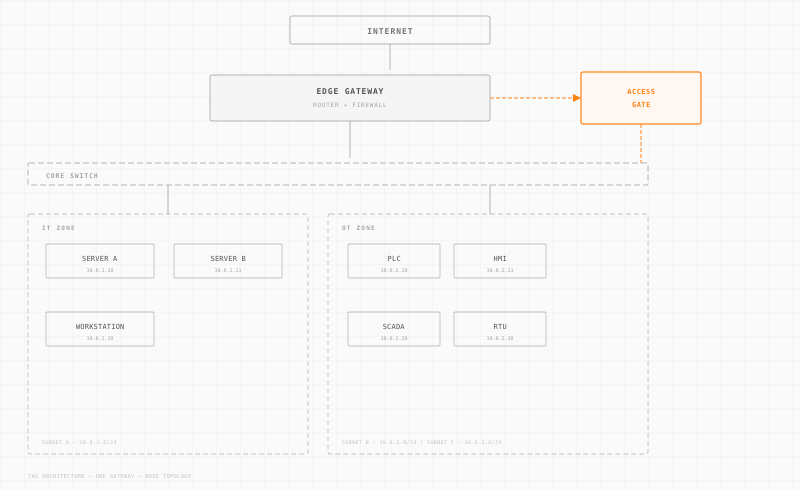
Vulnerability Assessment involves the systematic review and evaluation of a computer system, network, or application to identify and quantify security vulnerabilities. In the context of OT/IT cybersecurity, it is a crucial process that helps organizations protect their critical environments from potential threats and ensure compliance with various security standards.
Understanding Vulnerability Assessment in OT/IT Cybersecurity
In industrial and manufacturing settings, the integration of Operational Technology (OT) with Information Technology (IT) introduces unique security challenges. Systems that were once isolated are now interconnected, increasing the attack surface and the potential for security breaches. Vulnerability assessments in these environments aim to identify weaknesses that could be exploited by malicious actors to gain unauthorized access or disrupt operations.
A vulnerability assessment typically involves several steps:
- Asset Identification: Cataloging all devices and systems within the network, including both IT and OT assets.
- Vulnerability Scanning: Using automated tools to scan for known vulnerabilities in systems, applications, and network components.
- Analysis and Evaluation: Assessing the potential impact of identified vulnerabilities and prioritizing them based on risk.
- Reporting: Documenting findings in a comprehensive report that includes recommendations for remediation.
Why It Matters for Industrial, Manufacturing & Critical Environments
For industrial, manufacturing, and critical infrastructure environments, the stakes are high. A successful cyber attack could result in downtime, safety hazards, financial loss, and damage to reputation. Vulnerability assessments are vital because they:
- Enhance Security Posture: By proactively identifying and addressing vulnerabilities, organizations can strengthen their defenses against cyber threats.
- Ensure Compliance: Standards such as NIST 800-171, CMMC, and IEC 62443 require organizations to implement regular vulnerability assessments as part of their security programs.
- Protect Critical Infrastructure: In sectors where operational continuity is essential, such as energy, water, and transportation, safeguarding systems against vulnerabilities is paramount.
Relevant Standards
- NIST 800-171: Specifies requirements for protecting Controlled Unclassified Information (CUI) in non-federal systems, including regular vulnerability assessments.
- CMMC: The Cybersecurity Maturity Model Certification emphasizes the need for continuous monitoring and vulnerability management.
- IEC 62443: This international standard addresses security for industrial automation and control systems, including vulnerability assessments as a key component.
In Practice
Implementing a successful vulnerability assessment program requires a combination of automated tools and expert analysis. For example, security scanning tools might identify a list of vulnerabilities, but it takes skilled professionals to assess the potential impact on the production environment and prioritize remediation efforts. Regularly scheduled assessments, combined with real-time security monitoring, form a comprehensive approach to managing vulnerabilities.
Related Concepts
- Penetration Testing: A simulated cyber attack to evaluate the security of a system.
- Threat Modeling: Identifying and evaluating potential threats to a system.
- Security Patch Management: The process of managing updates for software and systems to fix vulnerabilities.
- Risk Assessment: The process of identifying, analyzing, and evaluating risk.
- Incident Response: The approach to managing and addressing security breaches and attacks.