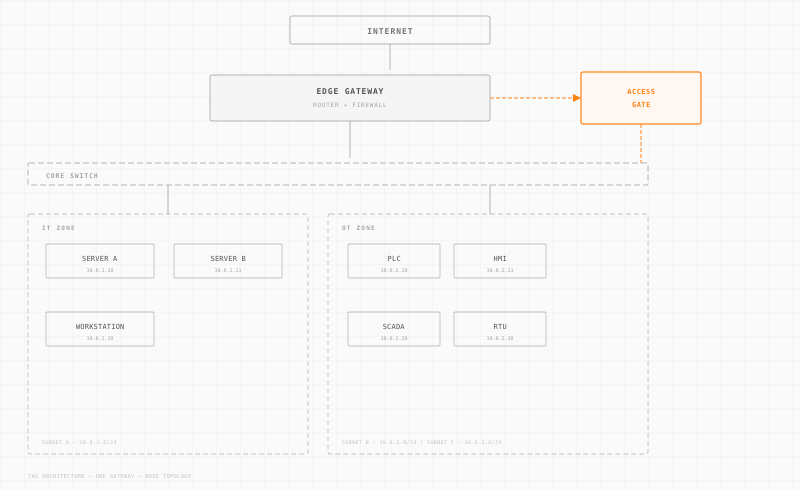
Risk assessment is a systematic process of identifying, evaluating, and prioritizing risks to an organization's operations, assets, and individuals. In the context of OT/IT cybersecurity, risk assessment involves analyzing potential security threats and vulnerabilities that could impact both operational technology (OT) and information technology (IT) environments.
Risk Assessment in OT/IT Cybersecurity
In OT/IT environments, risk assessment is crucial due to the convergence of these two domains, where traditional IT systems connect with industrial control systems (ICS) and other OT infrastructure. This integration increases the attack surface, necessitating a comprehensive approach to identifying and mitigating risks. Security risk assessments help organizations understand the potential impact of cyber threats on critical operations and guide the implementation of appropriate security controls.
Within this context, a security risk assessment typically involves several steps:
- Asset Identification: Cataloging all assets, including hardware, software, data, and network connections.
- Threat Identification: Determining potential sources of threats, such as malicious actors, natural disasters, or internal vulnerabilities.
- Vulnerability Assessment: Identifying weaknesses in the system that could be exploited by threats.
- Impact Analysis: Evaluating the potential consequences of identified risks on business operations and safety.
- Risk Evaluation: Prioritizing risks based on their likelihood and potential impact, often through a risk matrix or similar tool.
Why It Matters for Industrial, Manufacturing & Critical Environments
For industrial, manufacturing, and critical infrastructure sectors, conducting thorough risk assessments is essential due to the potential for severe impacts on safety, productivity, and compliance. Disruptions in these environments can lead to dangerous situations, financial losses, and damage to an organization's reputation.
- Safety: In industrial settings, compromised systems could lead to unsafe conditions, endangering human lives.
- Productivity: Cyber incidents can halt operations, causing significant downtime and loss of revenue.
- Compliance: Regulatory frameworks like NIST 800-171, CMMC, and IEC 62443 mandate risk assessments as part of their security requirements. These standards guide organizations in implementing a robust risk management framework, ensuring that they are prepared to handle various cyber threats.
Relevant Standards
- NIST 800-171: Focuses on protecting controlled unclassified information (CUI) in non-federal systems, requiring regular risk assessments.
- CMMC: The Cybersecurity Maturity Model Certification mandates risk management practices, including risk assessments, as part of its maturity levels.
- IEC 62443: Provides a framework for ensuring security in industrial automation and control systems, highlighting the importance of risk assessments.
In Practice
A practical example of risk assessment in a manufacturing environment might involve evaluating the cybersecurity risks associated with connecting new IoT devices to legacy industrial control systems. The assessment would identify potential vulnerabilities introduced by these devices, evaluate the threat landscape, and propose mitigation strategies such as network segmentation or enhanced access controls to protect critical operations.
Related Concepts
- Threat Modeling: An approach to identifying and prioritizing potential threats to a system.
- Vulnerability Assessment: The process of identifying, quantifying, and prioritizing vulnerabilities in a system.
- Risk Management: The overall process of identifying, assessing, and controlling threats to an organization.
- Incident Response: The approach to managing and mitigating cybersecurity incidents.
- Compliance Auditing: The process of ensuring adherence to regulatory standards and policies.