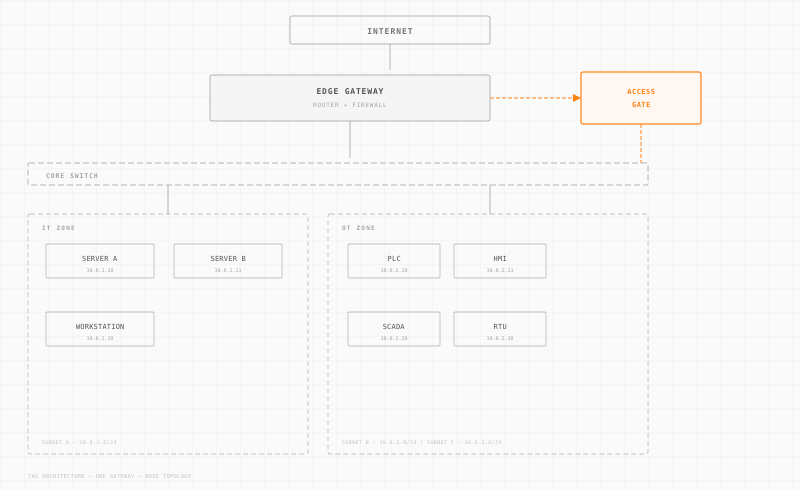
Authentication methods are techniques used to verify the identity of a user, device, or system before granting access to a network or application. In the context of OT/IT cybersecurity, these methods are crucial for ensuring that only authorized entities can interact with critical network components and data.
Understanding Authentication in OT/IT Cybersecurity
In industrial, manufacturing, and critical environments, authentication serves as the first line of defense against unauthorized access. It is a cornerstone of Zero Trust security models, which presume that threats could exist both outside and inside the network perimeter. As such, robust authentication mechanisms are essential for maintaining secure operations and protecting sensitive information.
Authentication methods in OT/IT networks must be designed to accommodate the unique characteristics of these environments, such as the presence of legacy systems, real-time operational requirements, and a mix of IT and operational technology (OT) systems. The integration of authentication into these systems helps ensure compliance with various cybersecurity standards and regulations, such as NIST 800-171, which mandates protecting controlled unclassified information in non-federal systems, and CMMC, which sets cybersecurity standards for defense contractors.
Common Authentication Methods
Password-Based Authentication
Password-based authentication is one of the simplest and most widely used methods. Users enter a secret word or phrase to gain access. While easy to implement, password-based systems are vulnerable to attacks like phishing, brute force, and credential stuffing. In OT environments, where operational downtime can be costly, these vulnerabilities emphasize the need for more secure, multifactor authentication solutions.
Multifactor Authentication (MFA)
MFA enhances security by requiring two or more verification factors to gain access. These factors typically include something you know (a password), something you have (a smartphone or hardware token), and something you are (biometric verification). MFA significantly reduces the risk of unauthorized access, making it a recommended practice in standards like IEC 62443 and NIST SP 800-82 for critical infrastructure protection.
Biometric Authentication
Biometric authentication uses unique biological characteristics, such as fingerprints, facial recognition, or iris scans, to verify identity. This method offers high security and convenience, as biometric traits are difficult to replicate. However, implementing biometric systems in industrial settings requires careful consideration of privacy concerns and system integration challenges.
Certificate-Based Authentication
This method involves the use of digital certificates issued by a trusted certificate authority (CA) to authenticate a user or device. Certificate-based authentication is particularly effective in industrial environments where machine-to-machine communication is prevalent, ensuring that only authorized devices can communicate within the network.
Token-Based Authentication
Token-based authentication uses software or hardware tokens to generate time-sensitive codes that users must input to gain access. This method is often used in conjunction with passwords for additional security. In OT settings, hardware tokens can be advantageous due to their offline capability and resistance to network-based attacks.
Why It Matters
Authentication methods are integral to safeguarding industrial networks and protecting critical infrastructure from cyber threats. As these environments increasingly interconnect with IT systems, the risk of cyber intrusions grows. Implementing robust authentication strategies helps mitigate these risks by ensuring that only verified users and devices access critical systems. This is crucial for maintaining operational continuity, avoiding costly downtimes, and achieving compliance with cybersecurity standards like IEC 62443, which provides a framework for securing industrial automation and control systems.
Related Concepts
- Authorization: The process of determining what an authenticated user or device is permitted to do within a system.
- Zero Trust Security: A security framework that requires all users, whether inside or outside the organization, to be authenticated and continuously verified.
- Identity Management: The policies and technologies used to manage digital identities and ensure that access privileges are correctly assigned.
- Access Control: The selective restriction of access to a place or resource based on predetermined criteria.
- Encryption: The process of encoding information to prevent unauthorized access, often used in conjunction with authentication to protect data in transit.